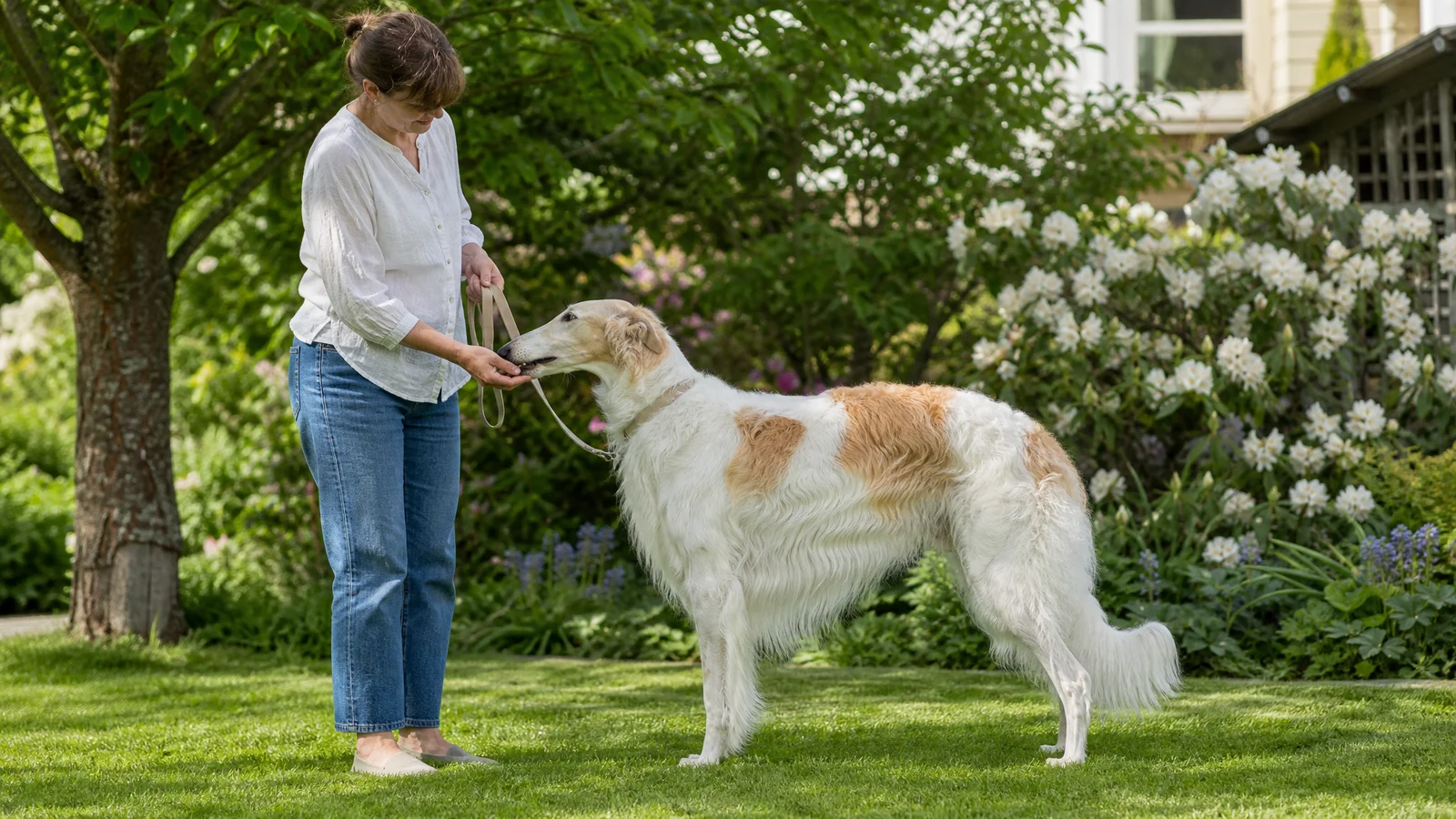
 Borzoi
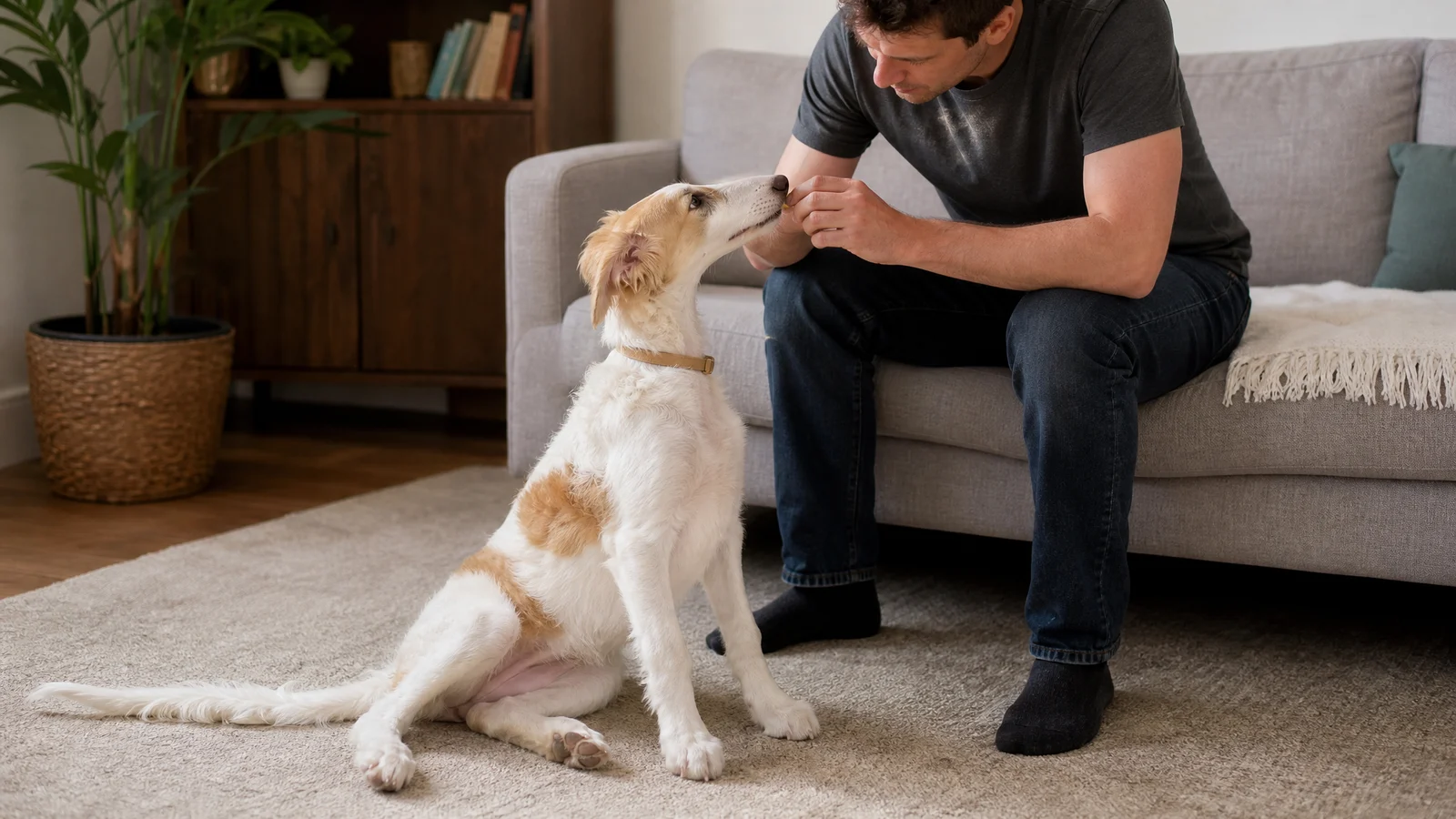
A Borzoi puppy does not finish growing or maturing at one year, so a schedule built for a faster-maturing breed backfires. Then adolescence arrives, the sits go crooked, and it feels as though the training failed. It did not. The fix is a two-year timeline, with the hard parts spaced to match a body that matures late.
We have trained this breed for many years, and a slow-growing, sensitive sighthound punishes a rushed schedule more than most dogs do. Read on for the original job that explains the pacing, the early weeks, why socialization runs past sixteen weeks, adolescence, what a two-year-old should know, how to get through the chewing stretch, and a simple plan to start on.
Sighthound Instincts Behind Your Puppy
Some Borzoi puppies are the sleepiest in the litter and stay mellow from the start. Others are wild early, playing rough with the couch pillows despite daily runs, and only turn calm at about a year. Owners report both patterns, and neither says anything about your skill. Training, temperament and bloodline all play a part, and nothing reliable pins a calm-down age on the breed, so plan around stages instead of a date.
A Dog Built to Run, Slowly Assembled
Borzoi were bred to course game by sight across open terrain, and that long-legged frame takes its time. They keep growing and maturing up to 18 months and beyond, and they are physically mature at about age 2. Sexual maturity typically arrives at 12 to 18 months, and a female's first heat at 2 or later is not uncommon.
Larger breeds tend to mature more slowly than smaller ones, and the Borzoi sits at the slow end. Every training goal below is paced to that body.
A Watcher Who Notices Everything
A sighthound is alert to each change in the environment, so the difficulty of any exercise should rise slowly and fairly. Until a Borzoi has built trust through training, they will be very curious about their surroundings. That is normal and not a flaw.
They are also sensitive and do better with positive methods. A slow body and a watchful mind both ask for the same thing: small steps, generous rewards and patience.
Borzoi Puppy Weeks Eight to Sixteen
Around the time you have taught a tidy sit, your puppy will sit crooked, slump onto one hip, or take forever to fold into a down. Pups grow in leaps and bounds, and during the awkward growing stage a prompt sit may not be possible. Downs can be slow, and holding a stand can be nearly impossible. Be patient, because the long-legged phase passes. Reward the attempt and do not read a wobbly position as disobedience.
Settling in at Home
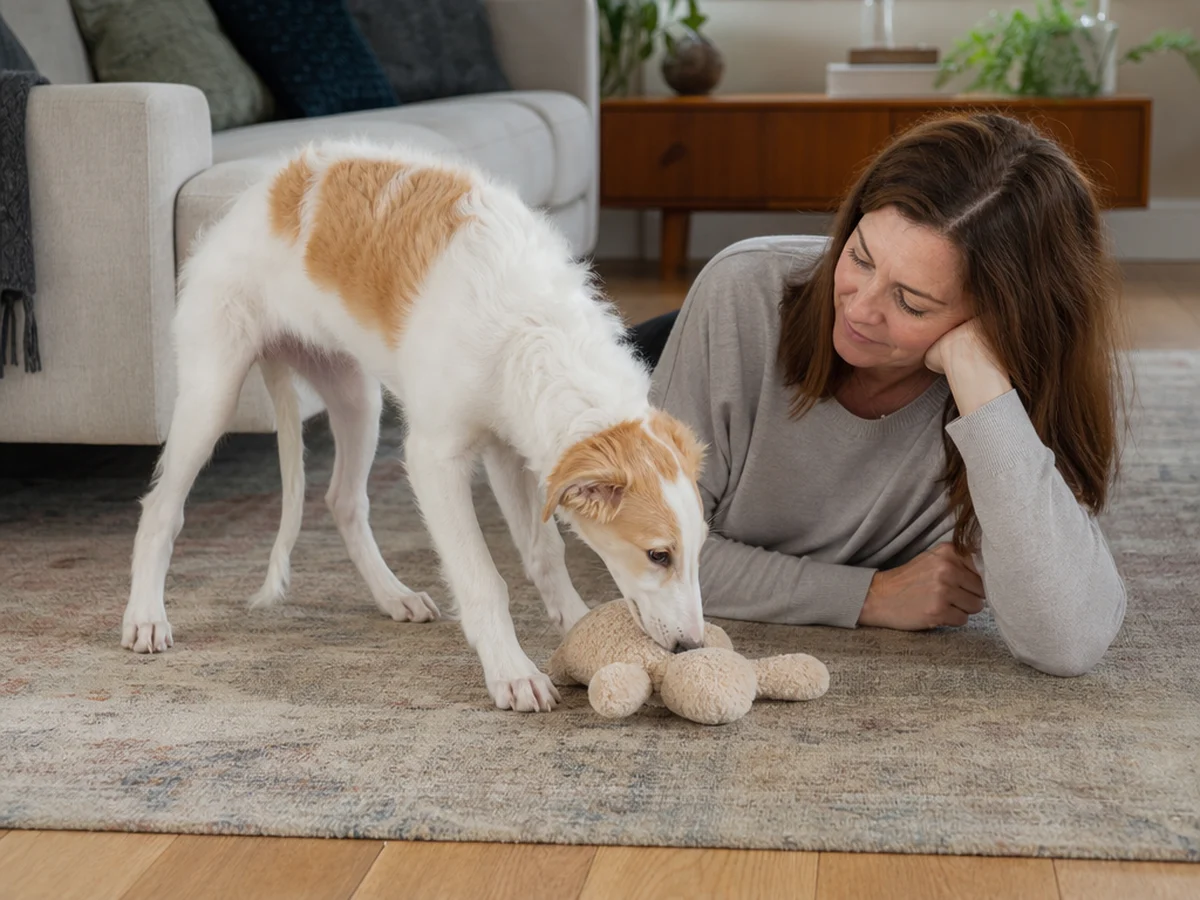
Give a new puppy a few days to get used to the house, then begin training and socialization in earnest. Start with name response, gentle handling of paws and ears, a predictable routine and a comfortable crate. Pay with treats, praise and play, and raise the difficulty one small step at a time.
Puppies eat more than adults because of rapid growth, even though the breed eats little for its size. Expect a hungry pup, and keep sessions short enough that they end while your puppy still wants more.
First Outings
Most puppies can join puppy socialization classes from 7 to 8 weeks of age. They need a first round of vaccines at least 7 days before the first class, plus a first deworming. Between classes, widen the world a little at a time:
- Walk the neighborhood so the puppy hears and sees ordinary traffic, voices and machinery.
- Take car rides that end with a stop somewhere different, and let calm strangers say hello.
- Teach the puppy to step onto tarp, wood, metal, cement and gravel, treating anything new as something to explore.
- Arrange play with other puppies of a similar age and size when you can.
When teething arrives at 4 to 5 months, concentration may waver and last week's easy task may be impossible this week. Put intense training on hold, and keep the outings going. For a longer view of how the pieces fit, see our complete guide to Borzoi training.
Does Puppy Socialization Stop at Sixteen Weeks?
Owners often hear that the socialization window slams shut at a set age and then relax too early. The critical period for accustoming a pup to new sights and sounds does close at about 16 weeks, and the best time to start early socialization is between 3 and 14 weeks. But socialization itself does not end when the window does. Keep adding something new and different through the first year or two.
Aim for Calm and Neutral
This breed is not built to greet everyone. The ideal is a dog who is never shy or aggressive but may be quite aloof, and the international standard calls the attitude toward people neutral to friendly. A Borzoi who politely ignores strangers has not failed socialization.
Reward calm looking, calm walking past and calm acceptance of a stranger's presence. Do not push for enthusiasm the dog was never meant to have.
Gentle Exposure, Careful Play
Socialize, but do not terrorize. If a puppy backs away or startles at a loud noise, do not force them to face the thing. Add distance, help them through it, and try again when they are relaxed. Sensitive dogs remember a bad experience for a long time.
Growing Borzoi are also uncoordinated. Owners describe puppies stepping or falling on smaller dogs, and some report serious limb injuries from an innocent-looking knock in play, followed by weeks of calm crate rest. Choose playmates of similar size and stay close when a lanky youngster meets small dogs. Our piece on Borzoi puppy exercise and low jumps covers keeping a growing body sound.
Borzoi Adolescence From Twelve to Eighteen Months
Many owners find that cues that were solid at five months turn sloppy during adolescence. The dog who sat on the first request now gazes past you in the yard. Adolescence may start anywhere from six to 12 months of age and finish somewhere between 18 and 24 months. All along, your dog is going through big hormonal changes while their brain rewires itself. In a Borzoi, sexual maturity arrives at 12 to 18 months, so this stretch runs long.
Holding Steady
Go back a step instead of pushing on. Practice in an easy setting, raise the reward value and keep sessions short. Treat the dip as temporary and not a verdict on your dog. A relationship built on rewards survives it well, and the cues come back.
Protecting a Growing Body
Do not over-train a young dog, since Borzoi keep growing and maturing well past a year. Build up from brisk walks, adding time and distance gradually. Avoid rough surfaces such as sidewalk for conditioning, check pads often, and skip a session when the dog is tired or the weather is uncomfortable.
Very low jumps are fine, such as walking through stanchions and later a 2 to 4 inch board. Save full height for about age 2.
Daily exercise has two parts: walks on leash and free running, which belongs only in a securely fenced area. Running free for 30 minutes or more a day is ideal, and up to an hour is a common ceiling. Keep strenuous exercise away from mealtimes, because deep-chested dogs can get bloat. Learn the signs with your vet, and keep regular vet visits on the calendar.
This is general information, not medical advice. Check with your veterinarian about bloat, feeding schedules and how much exercise suits your growing dog.
What Should a Two-Year-Old Borzoi Already Know?
A well-raised two-year-old walks past a stranger without fuss, settles on a mat while you cook, and lets you handle their paws and ears. That is a realistic picture, and it matches what a family companion needs: basic skills and good manners. Obedience training also builds the bond that makes the dog a pleasure to live with. At this age the body is physically mature, so full-height jumping and harder conditioning can be considered, still built up gradually.
Some things stay a work in progress. A dog bred to run by sight may chase anything that moves, so off-leash running belongs in secure fencing, and recall is a skill you keep practicing and never fully trust near roads. Aloofness with strangers is part of the breed. Expect a dog who can still have off days, and keep rewarding calm behavior. Our guide to teaching a Borzoi to settle indoors covers the house side of this.
If you want help getting there, see choosing a Borzoi training class for family manners and rally options. Adults and rescues can learn the same basics at any age, as in our guide to training an adult Borzoi. A newcomer needs a few days to settle first, and a shy dog often gains confidence from scent work or agility.
Puppy Destructiveness and the Long Middle
A Borzoi who is nearly full height can still chew like a baby, and that is the surprise of the middle stretch. Borzoi are puppies for a long time, so the destructive tendencies of puppyhood last a long time in a very large puppy. Training, temperament and bloodline all play a part. Boredom causes some of it, and attention and exercise often help.
Plan the Environment
Treat the middle stretch like any long project. Put valuables out of reach, rotate chews, and give a pup under supervision the run of one room instead of the house. A long chew can hold a pup's attention for over an hour, which makes chews one of the most useful tools you have.
Spend Energy Wisely
Meet the exercise need with fenced running and daily walks, then add short sessions of easy brain work. A busy, tired dog looks for fewer things to chew. When teething peaks, hold back intense training but keep the gentle socializing going.
A Fourteen-Day Plan for Your Borzoi Puppy
Pick the bracket that matches your puppy today. Write today's date on a calendar, mark the day two weeks from now, and review what changed on that day.
- Under about 16 weeks: each day, reward the name response and one gentle handling exercise. Add one new surface or sound daily and one calm outing by the end of week one. In week two, attend a puppy class if your vet agrees, and keep every session short.
- About 4 months to a year: each day, practice sit, down and settle in an easy room. In week one, add one new place at a distance your puppy handles. In week two, lengthen brisk walks a little, and pause intense training if teething has your puppy distracted.
- 12 to 18 months: each day, rehearse two cues in the yard with better treats than usual. In week one, take cues back a step wherever they have slipped. In week two, add one new calm setting and some fenced running, and keep jumps very low.
The point of all this is patience. A Borzoi grows slowly, matures late and notices everything, so a plan measured in stages gives you the steady companion worth the wait.
 Training basicsBorzoi Recall Training: Why Off-Leash Is Not the Goal
 Exercise and jobsBorzoi Sports and Jobs: Putting the Breed's Instincts to Work
 Training basicsBorzoi Training: The Complete Guide for Owners