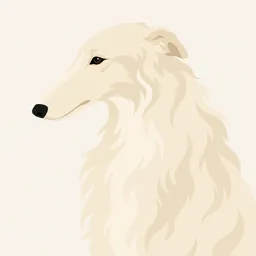
 Borzoi
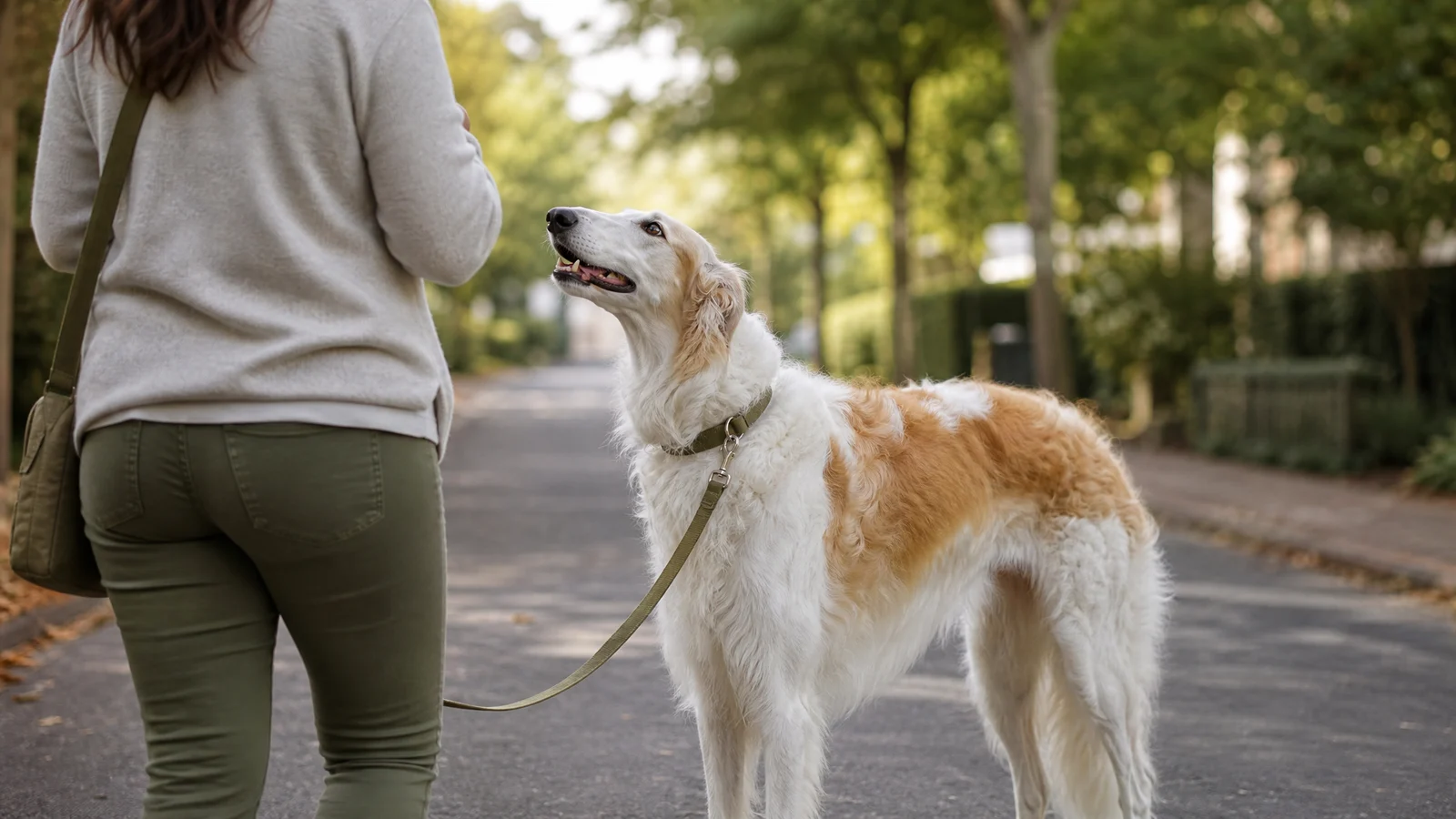
Some Borzoi owners walk a tall, quiet hound who drifts along on a slack leash and glances up for a treat. Others get hauled down the sidewalk by a dog who has locked onto a squirrel across the street. The difference is seldom luck. It usually comes down to what the owner built in the early months and how they handle movement, the one thing these hounds never stop noticing.
The stakes grow with the dog. An adult male weighs 75 to 105 pounds, with females 15 to 20 pounds lighter, according to the breed standard, and owners report lunges at cats and wildlife strong enough to break a harness buckle. Read on for the symptoms you will meet, from steady pulling and lunging to planting, slipped gear and the daily routine behind it all, each traced to its causes and fixes.
Leash Pulling Ahead of You
Steady pulling is the first symptom most owners notice, and in a hound it is easy to misread. A Borzoi is rarely pulling to be difficult. The parent club's flier says leash training a Borzoi pup is not always easy, because they are very independent, free-thinking hounds, and it names consistency and patience as the key. Plan for slow work, built in stages rather than expected by a deadline.
Why They Pull Ahead
Several causes stack up. Borzoi are sighthounds bred to course game by sight, so they scan the distance and drift toward anything that moves. They are also independent, which means a plan that was not their idea gets less attention than the interesting thing ahead. And every step taken on a tight leash that still gets them closer to the goal teaches them that tension works.
Setting matters too. A neighborhood rich in rabbits and squirrels makes the same dog harder to walk than a quiet street. Some young adults who walk well most days still pull and fixate when another dog appears, acting like frustrated greeters rather than defiant ones. A common tip says a tired dog walks nicely. For a sighthound, a squirrel still wins, so exercise helps but never replaces the teaching.
Steps for a Looser Leash
We have trained Borzoi for many years, and the pattern holds: unhurried foundations in the early months beat repairs later. Work in this order and let each step feel easy before you add the next.
- Start in a quiet room or yard and use a treat so the pup forgets the leash and simply comes along with you.
- Wait for the puppy to move on their own and reward the moment they step toward your side, which builds a dog who chooses to be there.
- Keep a pouch of tasty treats on you for every outing. Pay out generously early on, and deliver each reward right beside your leg, where you want the dog to end up.
- As soon as the leash goes taut, stop walking and stay put without tugging the dog back. Once the leash slackens, reward right away and then carry on.
- Add one distraction at a time, such as a busier street or a distant dog, and return to an easier place when the dog slips.
Stopping costs time on every early walk. That is the trade you accept now, and it pays back when the dog is at full adult weight and the habit is already set.
Borzoi Lunging on Leash
Lunging is the same drive as pulling in a sharper form, and it deserves its own plan. The breed was built to chase, catch and hold game, and they are apt to chase anything that moves. Treat that as what they were bred for, not as a bad habit to erase.
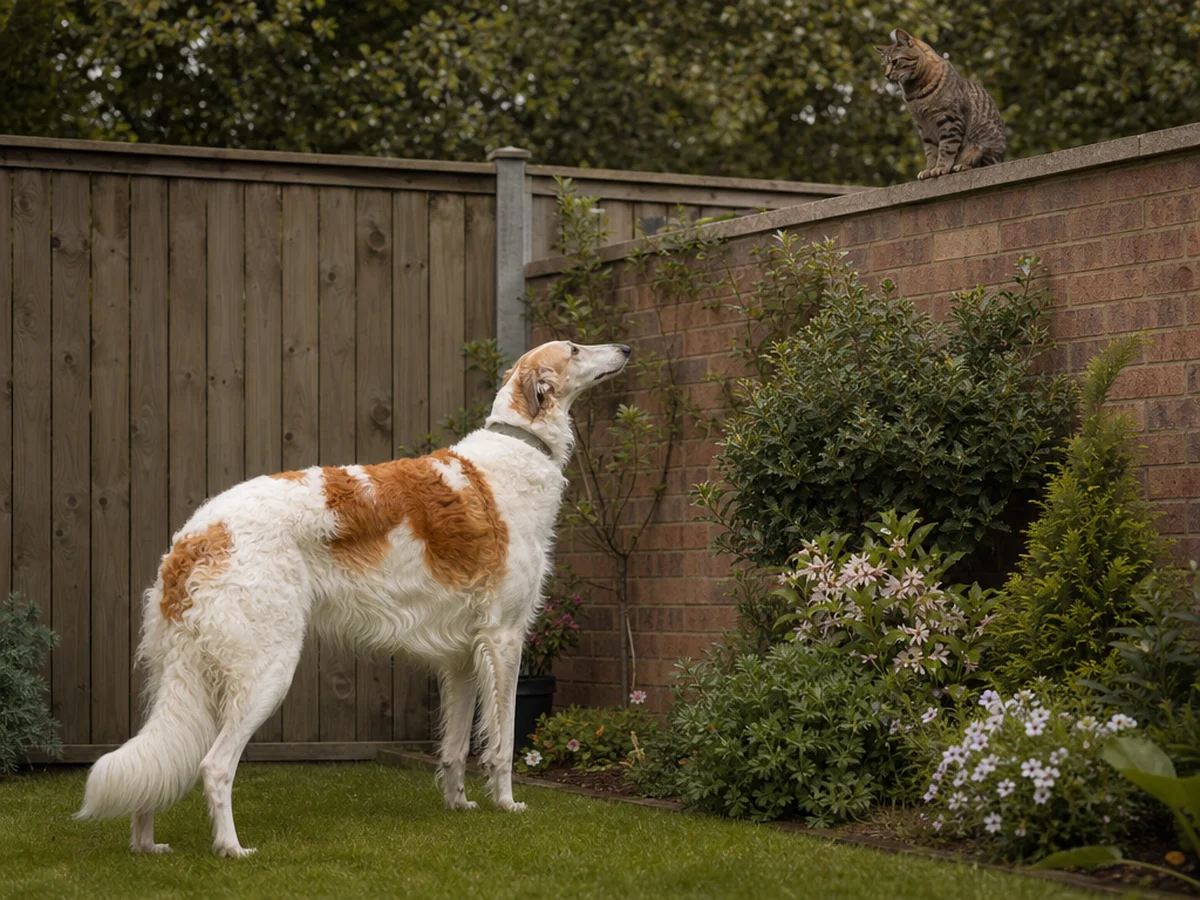
Your job is to manage the moment, reward the right choice and give the drive somewhere legal to go. Even handlers who have worked hard on not chasing while on leash call their results mostly successful, which tells you this is ongoing work.
Triggers to Expect
The trigger is movement seen at a distance. Squirrels, rabbits, chipmunks and a running cat all qualify, and so do fast bikes and joggers. Many owners keep a Borzoi peacefully with a household cat, yet those same dogs still chase squirrels and rabbits outdoors.
A dog who is calm with the indoor cat may change completely when a cat runs from them outside, so indoor peace is no guarantee. Mixed households manage with baby-gated cat areas, crate time and redirection when the dog fixates, and our article on living with a cat goes deeper.
Other dogs are a second trigger. Leash frustration appears when a dog becomes agitated at feeling restricted, so a hound who plays happily off leash can still erupt on one. Chase-style play is a separate topic, covered in our Borzoi dog park guide.
Responses That Work
Timing and distance do most of the work. The aim is to reward the dog for noticing a trigger before they reach the point of no return.
- Scan ahead on every walk, because a Borzoi who has spotted the squirrel before you has usually passed the point where treats work.
- Add distance early by crossing the street or stepping aside, since a dog far enough from the trigger can still take a treat and think.
- Mark and treat the moment they see the trigger, while they are still calm, so noticing movement starts to mean checking in with you.
- If a lunge happens, turn away calmly, set your feet and walk them out of the area without fuss or scolding.
- Give the drive a regular outlet. Lure coursing was created for sighthounds, and a flirt pole is a good puppy-age game, so the on-leash work becomes easier to live with.
Keep a Borzoi on leash on every outing. People who know the breed well say that once a rabbit appears there is no stopping them, so a fenced yard is the place for running.
Leash Stalls and Refusals
Not every Borzoi pulls. Some plant their feet, drag behind or go limp at the end of the leash, and with these dogs the cause matters more than the behavior. Pushing a stalled dog forward tends to teach them that walks are unpleasant, which can cost months of goodwill to repair. The better trade is to spend a few minutes now working out why they stopped.
Reading the Stall
A sensitive puppy can be overwhelmed by traffic, strangers or other dogs. Some owners describe youngsters who froze, and occasionally shut down entirely, yet walked nicely once the street was quiet. An independent dog may simply see no reason to follow when the best sights and scents are behind them. Some stall because the gear feels odd, so check that before blaming temperament.
If the stall looks like fear, our guide to the shy or nervous Borzoi covers confidence building in more depth. If it looks like boredom, shorten the walk and raise the value of the treats.
Restarting Without a Fight
Stand still and let the dog look around without pressure. Then call them in a cheerful voice and reward the first step toward you, however small. Move away from whatever worried them and cover less ground than you planned. A brief walk that finishes well beats a lengthy one that turns into a standoff.
Your own mood counts. The flier warns that losing your composure leaves a frustrated owner and a terrified puppy on the other end of the leash, and advises that if frustration sets in, you quit and try again later. On bad-weather days some owners walk their dogs around large stores, which keeps the habit alive while removing the outdoor triggers.
Borzoi Collar and Harness Slips
Gear problems tend to appear at the worst moment, when a dog backs out of a collar or a buckle gives way during a lunge. A well-fitting, comfortable harness can give you safe control, and it pairs best with food-based teaching that shows the dog how to walk nicely beside you. Gear and training work as a pair, and each has to hold up to the dog you will have in a year, not only the puppy in front of you.
Fit and Escape Risk
Whatever you choose should sit snugly enough that the dog cannot slip out when they pull back, yet never rub or restrict movement. Fit changes quickly in a growing puppy, so recheck it often and ask your veterinarian or an experienced Borzoi owner to look at it if you are unsure.
A slipped collar is also a training problem. Practice putting gear on with treats so it becomes a calm part of the routine, not a struggle that makes the dog eager to wriggle free.
Strength Under Sudden Load
Size and speed make strength the second question. Owners report lunges at cats and wildlife powerful enough to break a harness buckle, and others rely on a grab handle on the harness for the moment a dog takes a run at an animal. A handle also gives you a second place to hold when the dog is far stronger than a one-handed grip.
Inspect buckles, clips, stitching and the leash itself before every walk, and replace worn parts rather than hoping they hold. When you buy, plan for the adult's weight and strength, because puppy-sized gear will need replacing on a schedule you do not control.
Building Leash Habits Daily
Leash skills grow out of ordinary routine more than formal sessions, and thinking in stages helps. In the early months you lay foundations while the puppy is still light enough to steady with one hand. Adolescence tends to test those habits.
Adulthood is the long maintenance phase, and because a Borzoi will always notice movement, the work never fully ends. Expect progress to be slow and uneven, and judge it across months rather than days. A dog who walks well in the yard and falls apart on the street is normal, not a failure.
Routines That Teach
The simplest approach is to attach small lessons to things you already do every day.
- Have your Borzoi sit for their food, which builds the habit of waiting for permission.
- Have them sit while you put on the leash, so the leash predicts something calm.
- Have them wait while you open the door, and release them with a cue before they step through.
- Carry treats on every walk and reward loose-leash moments, especially in the early months.
- Keep the rules the same for everyone in the household who walks the dog.
Stopping Before Frustration
Finish a session on a good moment, before the dog tires or you do. A sensitive hound picks up on tension quickly, and a tense walk teaches them little. When your patience thins, head home and try again later. Short, successful sessions repeated across many days build more skill than one long, strained outing. Keep up regular vet visits as well, and ask how much walking suits your growing puppy at each stage.
One Leash Habit for Today
Before your next walk, ask your Borzoi to sit, offer a treat, and clip on the leash while they stay seated. Then walk to the door and ask for a wait before you open it, and release them with a cheerful cue. That is the whole task for today. It teaches an independent hound that the leash means calm, and it gives you the first reward-based moment of a long, patient project. Repeat it before every walk until it becomes automatic.
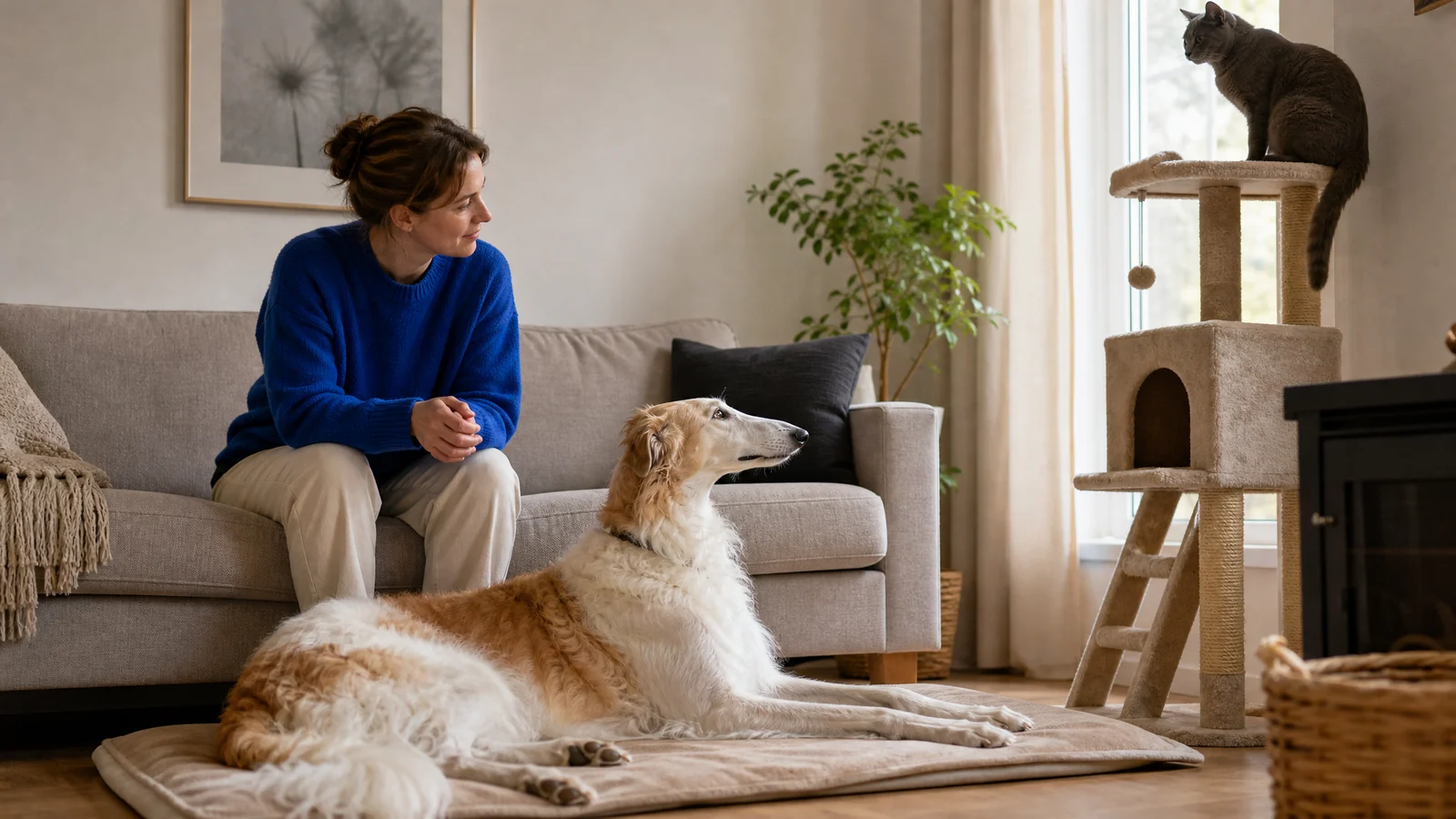 BehaviorLiving With Cats and Small Pets: A Borzoi Safety Guide
 BehaviorKitchen Manners for a Borzoi Who Can Reach the Counter
 HealthGrowing a Sound Borzoi: Puppy Exercise, Low Jumps and Calm Crate Rest