 Borzoi
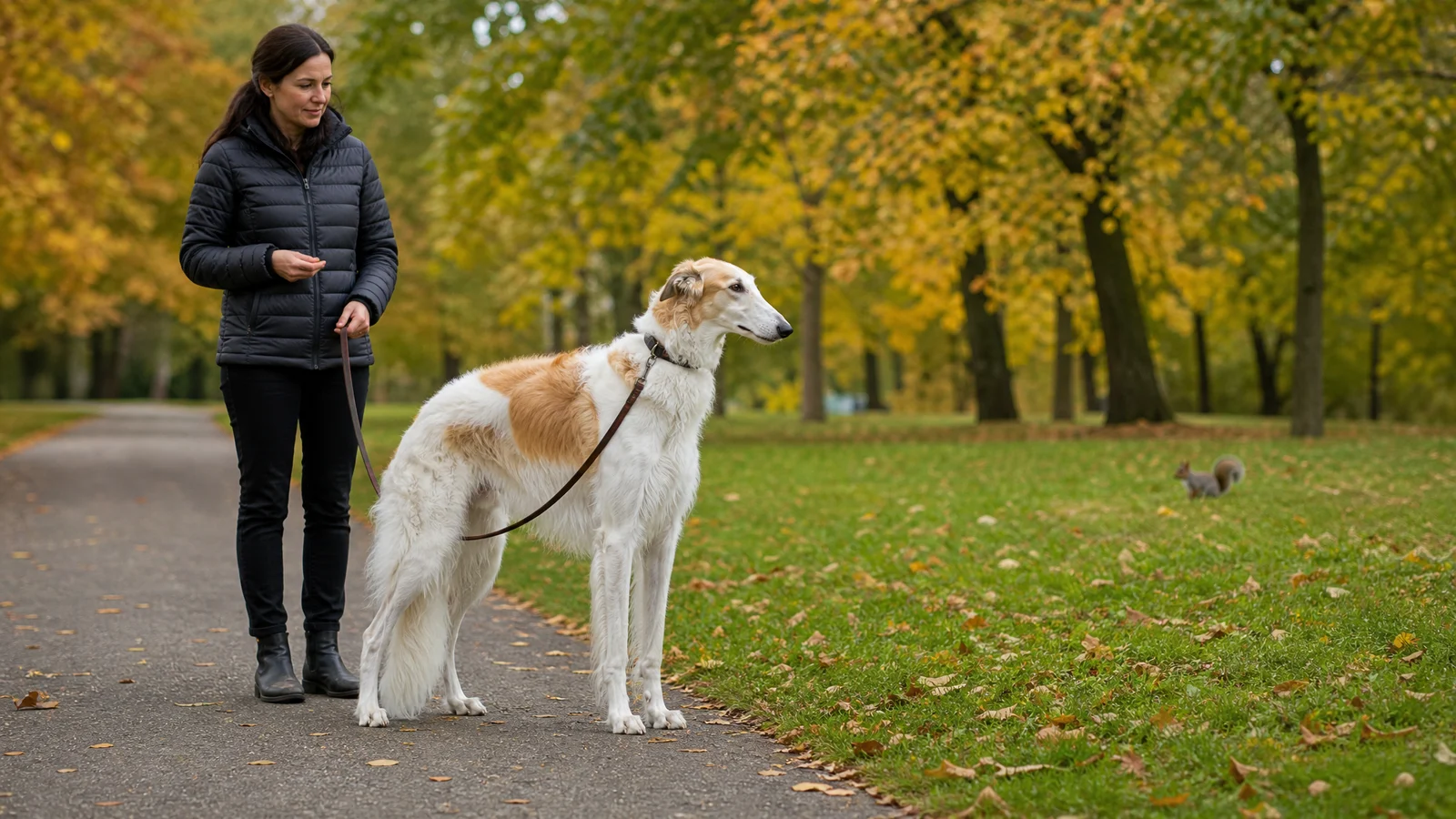
A Borzoi will chase, and the drive can be managed and given outlets but never trained out. The standard describes a dog built to "chase, catch and hold" their quarry, and even a quiet house dog carries all of that wiring.
This matters because a Borzoi who spots a squirrel can go from couch-calm to full speed in a stride. Handled badly, the chase ends with a loose dog, a broken harness or worse. Handled well, you get a hound who runs hard in a safe place and then rests quietly beside you.
This article looks at Borzoi prey drive and what to do about it, step by step. Read on to learn what sets the chase off, how to arrange your home and walks, where a Borzoi can run legally, and why recall is only a backup.
Chase Behavior Is Built Into Borzoi
Chasing is the breed's purpose, not a bad habit. The Borzoi was bred to course wild game on more or less open terrain, relying on sight rather than scent, and to be swift and tough enough to pursue and pin wolves. They were the favored dog for coursing wolves, large hunt kennels were set up for the work, and the Czar's imperial kennels dated back to 1613.
The standard says the Borzoi needed particular structural qualities to "chase, catch and hold" their quarry. Speed, reach and power live in the body. The instinct to use them lives in the mind.
Here is what surprises new owners. The same breed is described as calm and agreeable, almost cat-like in independence, and also as always ready to give chase. Both are true at once. A Borzoi who dozes on the couch all evening does not have a weak drive. They have a quiet one, waiting for the right movement outdoors.
Every plan we have seen work with this breed starts from the same place. Arrange the surroundings, supply an outlet, and stop waiting for the instinct to disappear.
Movement Triggers Borzoi Behavior
The trigger is movement seen at a distance. The FCI standard describes a calm temperament alongside a well-evident visual response, and that pairing explains most chase incidents on walks. Three parts of it are worth understanding.
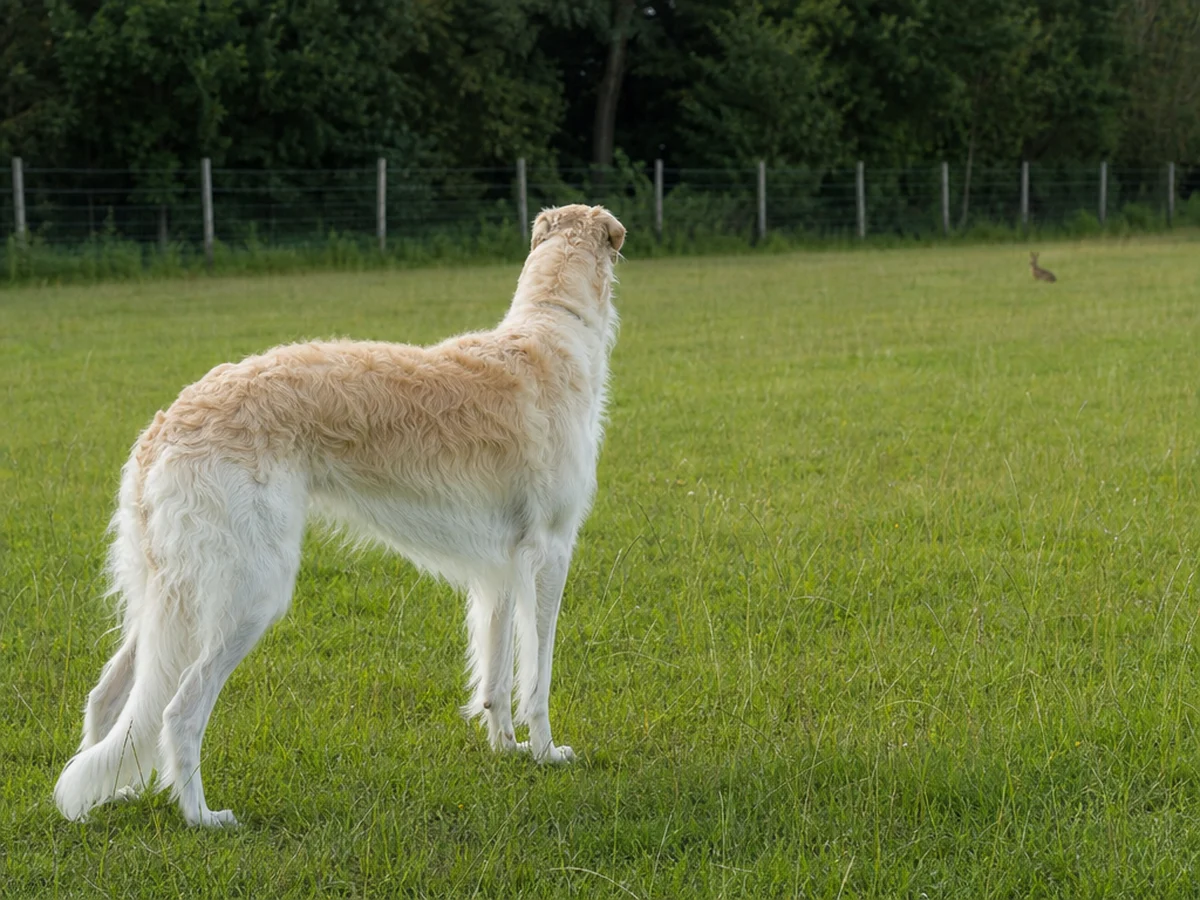
Sight Before Scent
A hound who hunts by sight scans the horizon while many other breeds sniff the ground. Open lots, hedgerows and long sidewalks are all lines of sight, so a Borzoi often spots the squirrel before you do.
The standard even describes the gaits: a slow trot and an even walk before game is found, then a full gallop in the chase. Owners see exactly this. An easy amble, a rabbit breaks from a hedge, and you are suddenly attached to a different animal.
What Counts as Movement
Borzoi are apt to chase anything that moves, and any small animal that runs can set off the response. That means squirrels, rabbits, chipmunks and cats. It can also mean a bike rolling past, a plastic bag skittering across a parking lot or a small dog sprinting at the park.
Many owners keep their Borzoi peacefully with cats, and puppies often bark and play-bow at the cat rather than stalk. Yet owners whose dogs are fine with their own cats or small dogs still describe those same dogs chasing squirrels, rabbits and chipmunks outdoors.
It is easy to assume a dog raised with a cat is safe around cats. A Borzoi can be relaxed with the indoor cat and change dramatically outdoors when that same cat runs. Running is the trigger, not the species. A small minority of owners report a male whose drive seems low, chasing little beyond insects and the occasional rat, but never plan around that exception.
The Instant a Borzoi Locks On
The sequence is usually the same. The head lifts, the body goes still, the stare locks, and then the lunge comes. The first two stages are your window. Turn away, add distance, and pay your dog with a treat for looking back at you.
Once the stare locks, the lunge is real force. Owners report lunges at cats and wildlife strong enough to shatter a harness buckle, and some rely on a harness with a grab handle. A male can weigh 75 to 105 pounds, and a female 15 to 20 pounds less.
That is why leash foundations belong in the first months, while the dog is still young and small. Our guide to loose-leash walking for Borzoi lays out the steps.
Manage the Setting for Chase Behavior
Management works on day one, while training takes months and still has limits. So set the stage before you teach anything. Secure the yard, choose your walking routes, then close the gaps at doors, gates and car doors. Each layer covers for the others when one fails.
Fencing and Long Lines
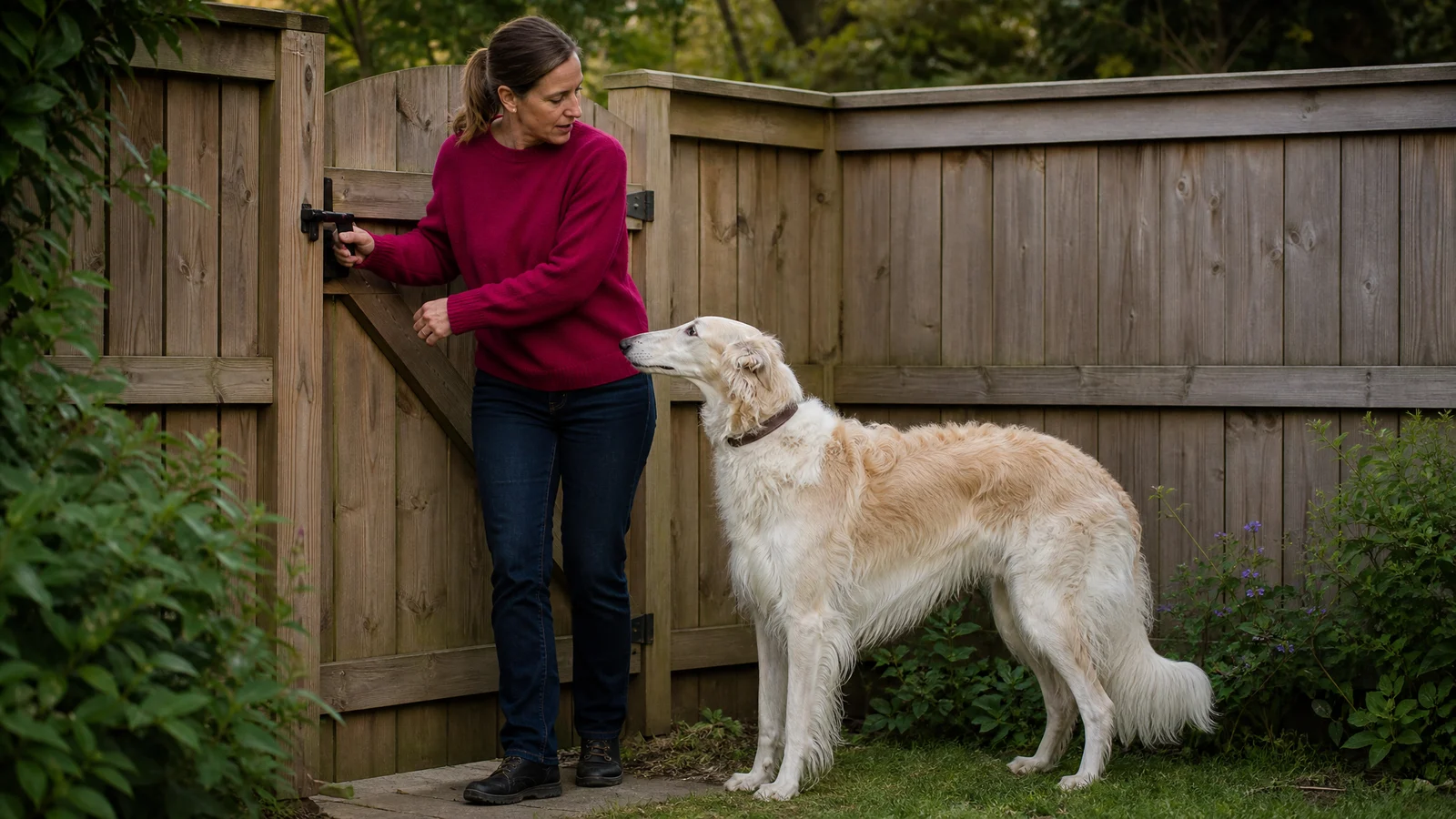
Fenced running room is a must for this breed, and owners report escapes over and through barriers. A tall fence has been jumped, hidden loose boards have been pushed aside, and gates have been opened. Walk the perimeter with fresh eyes, and read our page on fences for a Borzoi for the details.
A fence also cannot protect a small animal inside it. Some owners report dogs who ran down rabbits that wandered into their pen, so keep small pets out of the dog's space.
A long line gives a Borzoi more room on open ground, but at full speed they can take a handler off their feet. Use it with a harness, start from a calm moment, and keep it for places empty of animals.
Walk Routes and Timing
Rabbit- and squirrel-rich neighborhoods make every walk harder, simply because there are more chances per outing. Owners in such areas call the prey drive a constant challenge, even while enjoying the natural instinct. Scout your routes. Prefer ones with long clear sightlines so you see the animal first, and be ready to turn before the dog does.
On leash, the core skill is not chasing, and it is ongoing work rather than a finished one. Owners who have put in the effort describe the result as mostly successful. Use treats at first so the pup forgets the leash and comes along, carry a pouch of good ones on every walk, and stop for the day if frustration sets in. A calm handler keeps a sensitive hound confident.
In farm country, even a well-behaved dog is safer on a leash. The countryside walking advice from the UK notes that farmers may shoot dogs who attack or chase farm animals.
Doorways, Cars and Gates at Home
Most bolts happen at thresholds, so teach the pause first. Build waiting into the day: sit for food, sit while the leash goes on, wait while the door opens. Then run through this checklist:
- Latch every gate so it cannot be pushed open, and recheck the latch regularly.
- Ask guests to use the door you choose, because a front door left open is a common way for a Borzoi to leave.
- Add a gate and a second door between the dog and the outside where you can.
- Have the dog wait at the car door and release them with a cue before they step out.
- Clip the leash on inside the house, never out in an open driveway.
Households with cats use the same logic. Owners describe baby-gated cat areas, crate time for the dog, and a small pet kept behind a door, a gate and a second door. When the dog fixates, redirect to a treat or a game before the stare becomes a rush.
An adult rescue can learn to live with cats if introduced slowly. Some dogs never manage it, and owners whose Borzoi always hated cats accept that separation is permanent.
Give Borzoi Chasing a Legal Outlet
Management alone leaves the drive with nowhere to go. Every dog needs a way to play, chase, smell and chew, and when a home offers none of it, the dog invents their own outlets, which tends to show up as unwanted behavior. For a Borzoi, a regular outlet also makes the on-leash rule easier to live with.
Sprinting in Secure Space
Owners describe a daily routine of long walks plus a chance to run in a fully enclosed space or on a beach, after which their dogs are calm indoors. A day or two without running is fine, but a stretch of several days brings problems such as indoor zooming.
Needs differ from dog to dog. Owners with more than one Borzoi describe very different energy within one home, one dog needing daily play while the other is a couch potato. Some low-energy adults and seniors do well on walks alone.
Others will not gallop alone or with non-sighthound dogs. A flirt pole or a second Borzoi is what gets them running.
Lure Coursing and Flirt Pole Play
Lure coursing was created to let sighthounds take part in a simulated hunt, and it suits Borzoi particularly well. Treat it as part of the training plan, not only as a sport. A flirt pole is the at-home version, and a favorite puppy-age game for some owners. Use it in a fenced space with the lure low and moving away, so the chase is a straight run. Let the dog catch it often, trade for a treat, and stop while they still want more.
To start coursing, go in this order. Keep every early session short.
- Attend a couple of trials or practices without competing and ask questions, because participants are willing to help newcomers.
- Bring the puppy to matches and practices where they will not run, so they get used to the excitement and to many breeds and temperaments.
- Start with a short straight run, often called puppy bumps, and only later add a course where the lure turns.
- Skip any session when the dog is tired or the weather is uncomfortable, and keep it fun.
- Wait until the dog is 1 year old before competing.
Good prospects are outgoing and active, get along with littermates and adult dogs, chase a lure tied to a buggy whip keenly, and have a good attention span for their age.
Recovering After a Run
Coursing teaches two handling skills worth practicing at home. One is release from a slip leash. The other is being caught after the run. A course delay is called when hounds avoid their handlers after the call to retrieve them, and at all-breed CAT events some dogs did not want to be caught. Practice the pick-up with rewards, so coming to you ends in a treat and not the end of the fun.
No collars other than the slip leash are worn while the dog runs. A fitted muzzle is optional, so if you plan to use one, teach comfort with it using treats first. After the run, let the dog cool down and settle. Our page on settling a Borzoi indoors makes that part easy.
Recall Loses to Borzoi Chasing
A recall cue is a backup, not a safeguard. Owners who trained recall from puppyhood still report it switching off the moment their dog sees an animal, even in a dog who adores people. Trust off leash differs by individual and by line, and owners of dogs from coursing lines often keep them leashed on hikes.
The reason is simple. A hound at full gallop is running on instinct built for that exact moment, and your cue is competing with the strongest reward they know.
A popular plan is to drill recall until a dog earns off-leash freedom. For this breed, we would skip it. Some owners let a young dog run free in the woods and say it goes fine most days, then describe that dog running off after other dogs or chasing a deer. One bad day is all it takes.
So build the plan on things that do not depend on the dog's choice. Management carries the safety load.
- A fence the dog cannot jump or push through, checked often.
- A leash on every outing, since any small animal that runs can trigger the chase.
- Management at doors, gates and car doors so there is no chance to bolt.
- A recall cue practiced for emergencies and rewarded generously, but never relied on.
Our piece on why off-leash is not the goal shows how to train for safety instead of freedom. Recall practice still belongs inside secure areas.
Lifelong Management of Chase Behavior
Nothing suggests the chase fades with age, so management is permanent. Adults vary a great deal, and a few Borzoi chase little more than insects, but no owner should bet on being that lucky. The same fence, leash habits and thresholds that protect a puppy protect a senior. Regular vet visits also help you notice any change in energy or willingness to run, so mention it at the next checkup.
The reward for doing this well is the dog the breed is known for: gentle, well-mannered and calm indoors. A Borzoi who has run hard in a secure place and spent the walk on a leash has far less need to invent chases of their own. You cannot remove what they were bred for, so you build a life that makes room for it safely.
Today, walk your yard or your regular route with the eyes of a hound. Look for the one gap or trigger where your Borzoi could bolt: a loose board, a gate that does not latch, the corner where squirrels gather, the door guests use. Fix it if you can, and avoid it if you cannot. One closed gap does more for your dog's safety than another week of recall drills.
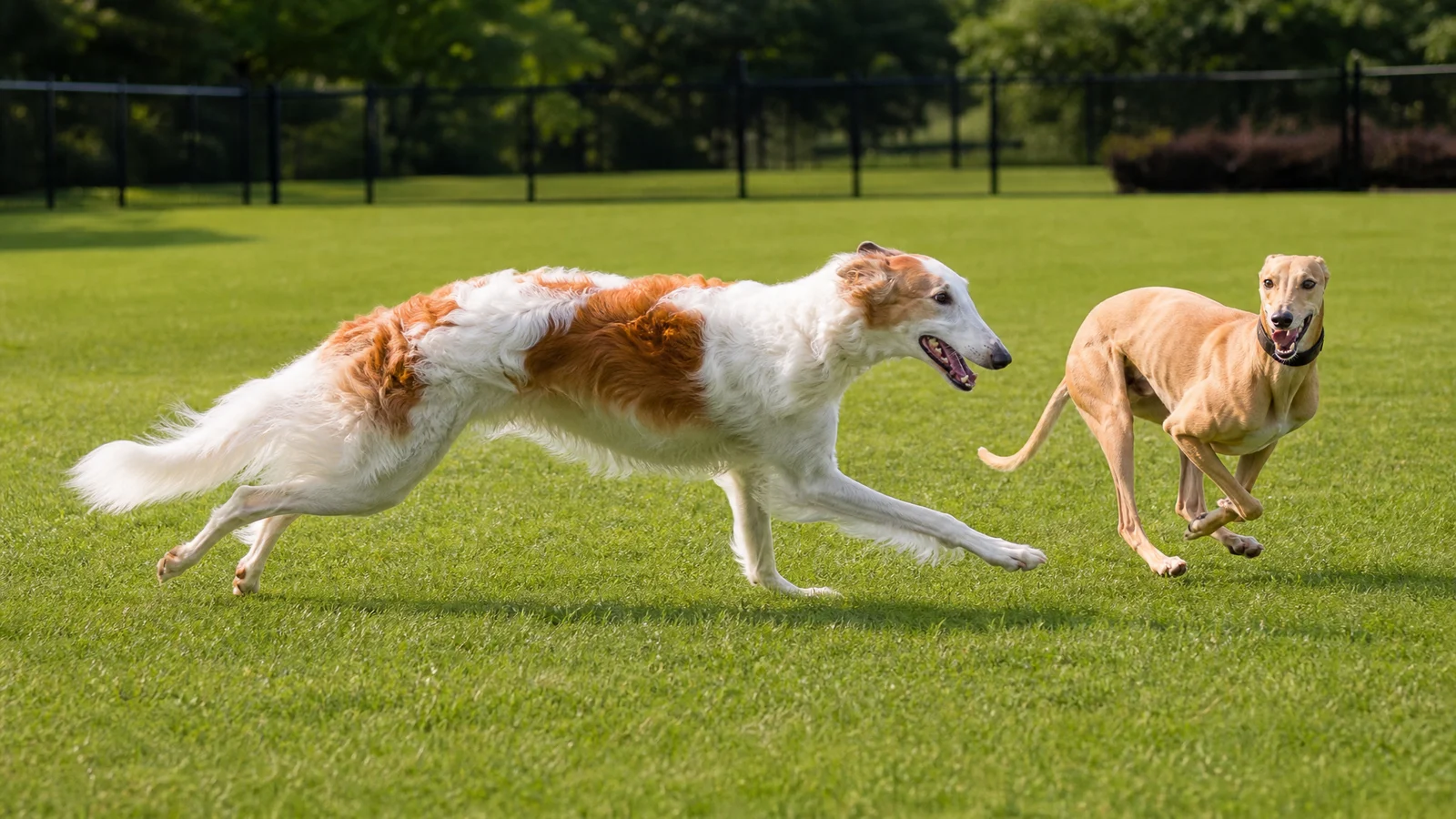 BehaviorIs the Dog Park Safe for a Borzoi? Chase Play and Gang-Ups
 Training basicsKeeping a Borzoi Safe: Fences, ID and a Lost-Dog Plan
 CareBorzoi Grooming: Brushing, Mats, Nails and Baths as Training