 Borzoi
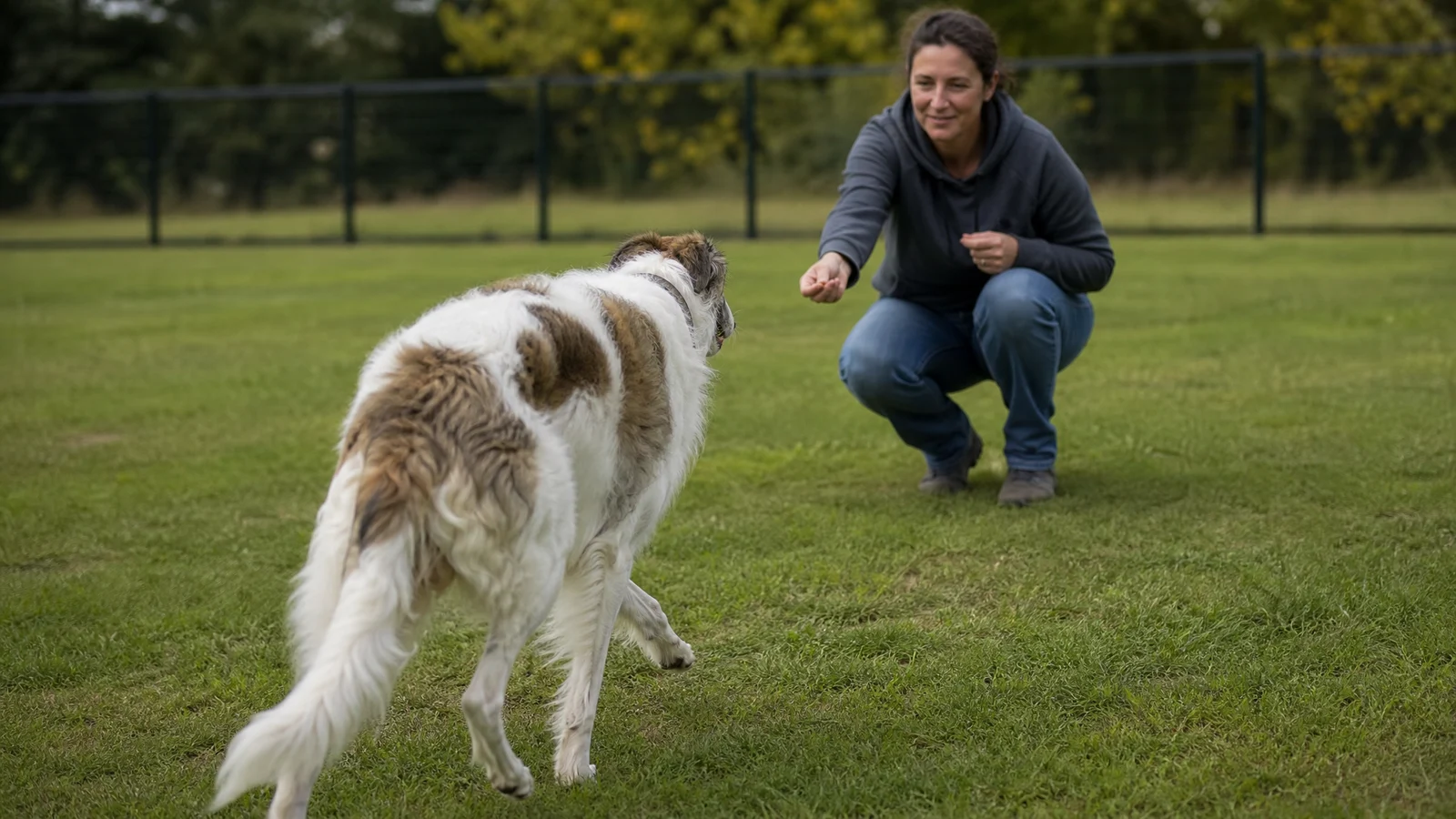
A Borzoi's recall keeps developing through the 12-to-18-month adolescent window and often well past it. These are slow-growing dogs, and a bitch's first heat at 2 years or more is not uncommon. Plan on a long haul, and know that no birthday on that calendar turns a Borzoi into a dog to trust off leash.
At 35 to 40 miles per hour, one ignored call puts the dog out of reach within seconds. Owners who trained from puppyhood still report recall switching off the moment the dog sees an animal, even in a dog who adores people. We teach recall anyway, as a safety skill for fenced areas and emergencies, and the common advice to proof a recall and then go off leash does not fit this breed.
We'll walk you through what recall looks like at each age and the chasing past behind it, then the safe places to train, the steps and rewards that make coming back worth it, and practice near movement and scent on a long line.
Recall Timeline by Age
Nobody can honestly hand you dates for a dependable Borzoi recall, and an independent, slow-growing hound makes any such number a guess. What holds across ages is the order of work: win the cue indoors, stretch it in fenced space, then use a long line anywhere else. The stages below describe what to expect and what to do if your dog is not there yet.
Puppyhood and Early Habits
In the early months the only job is making your cue the best sound the puppy hears. If you train in the house or a fenced area and pay well, the habit forms quickly. If you rush to open ground, the puppy learns that the cue is optional. Borzoi are very independent, free-thinking hounds, so a cue that pays every time earns attention that a cue backed by nothing never will.
The Long Teenage Stretch
Adolescence in a slow-growing breed runs through the 12 to 18 month window and often beyond. If the dog comes instantly in the kitchen but drifts away at the fence line, you are seeing the normal gap between an easy setting and a hard one, not defiance.
The fix is more well-paid practice in secure places and a long line outside. Raising difficulty faster than the results justify only rehearses ignoring you, and a teenager who rehearses ignoring you becomes an adult who is good at it. If the dog gets worse after a hard outing, go back a stage for a week or two and rebuild.
Adults Differ Widely
Owners with more than one Borzoi describe very different dogs in the same home, some needing daily play and others being couch potatoes. Recall varies the same way. Owners also say off-leash trust differs by individual and by line, and some keep dogs from coursing lines on leash for good.
If your adult comes reliably at home and fails at the sight of a rabbit, that is the breed, not a hole in your training. Keep building over the long term and read no single good week as permission. Timing runs long here because the finish line is a dependable fenced-area and emergency recall, not freedom.
The Borzoi's Hunting Past
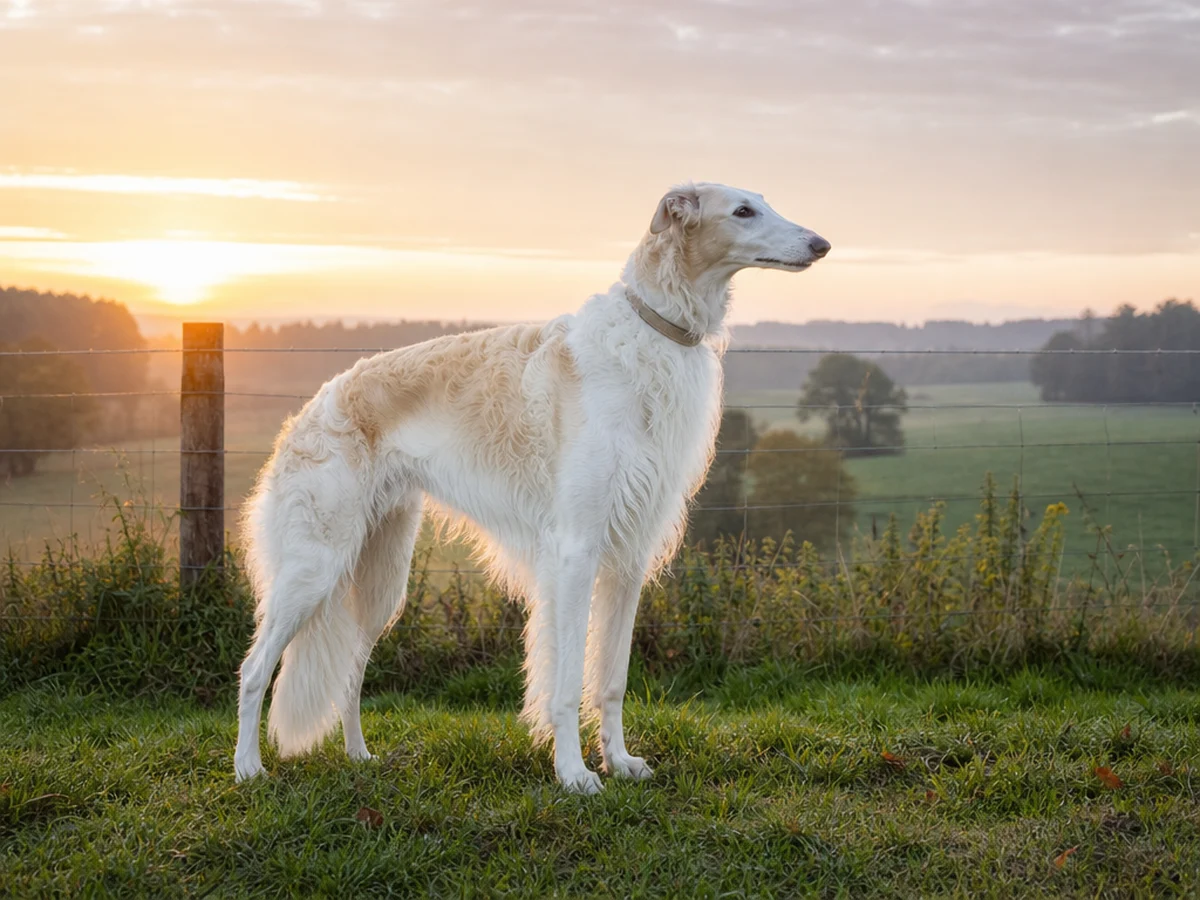
The reason a trained recall cannot be trusted in open country sits in what the breed was built to do: spot game at a distance, run it down at speed and hold it until the hunters arrived. Knowing that history tells you which problems are training problems and which are simply the dog.
A Sighthound's Decision
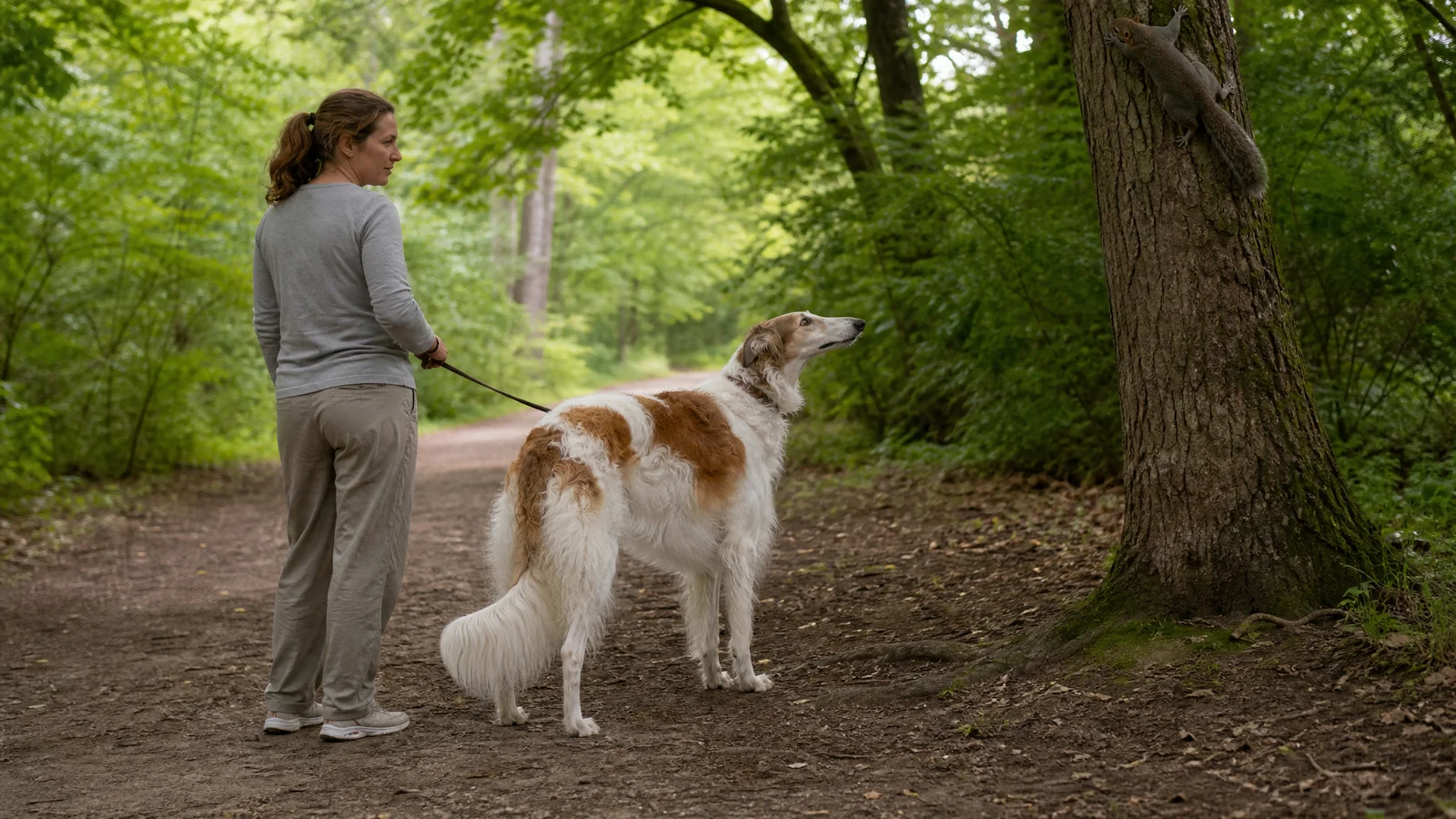
Borzoi are sighthounds, and sighthounds are apt to chase anything that moves. A dog bred to pick out motion across a field and commit to it at speed does not weigh your cue against what they see. Affection for you does not change that math.
If the movement is a rabbit, a deer, a squirrel or a cat running away, the decision is usually made before your voice arrives. Owners who keep their dogs leashed say it plainly: once a Borzoi has seen a rabbit, there is no stopping them. We treat the chase as the starting fact and build the plan around it.
Calm at Home Does Not Carry Outside
The same athleticism has a gentler side. Borzoi enjoy doing activities with their owners, excel in agility and lure coursing, and make graceful housedogs. But calm at home does not predict outdoor behavior. A Borzoi may be fine with the indoor cat and change dramatically outside when a cat, even their own, runs from them.
Many owners whose dogs accept household cats or small dogs still describe those same dogs chasing squirrels, rabbits and chipmunks. A few report dogs with such low prey drive that they chase only insects and the occasional rat. Treat that as a pleasant surprise rather than a plan, because the history is the default.
Safe Spaces for Borzoi
Because the instinct cannot be trained away, the safety plan rests on where the dog is before it rests on what they have learned. Management comes first and recall is the backup. The fence, the line, the road and a plan for the day a dog gets loose each carry part of the load.
Fences and Escape Prevention
Daily exercise can be long walks or running in a securely fenced yard, and all the weight sits on the word securely. Owners report escapes over and through barriers: a 6-foot fence cleared, boards hidden in brush pushed loose, a gate opened, and a front door left open by guests.
Assume any fence will be tested. Walk the perimeter for gaps, check latches, and ask visitors to close doors before they greet the dog.
A minority view exists. Some owners let a young dog run free in a forest daily and call it fine most of the time, yet those dogs have run off after other dogs and chased deer. That is the minority report, and the bad day is the reason for fences, because speed and distance make a comfortable-sounding record a poor bet.
Long Lines for Outdoor Training
All early training should happen somewhere secure: inside the house, in an indoor training facility or within a fenced area. When that is not possible, keep the Borzoi on a leash or a long line. A long line gives the dog some freedom without free range while you keep the final say.
General guidance sets a high bar: do not ask any dog to come off leash until they have perfect recall on leash. For a sighthound, even that is not permission to drop the line. Keep the line as a permanent outdoor tool and save true freedom for a secure fence.
Roads and Open Country
Roads are the clearest danger. Letting a Borzoi run loose is never advisable, and that goes double near busy roads and streets. A dog flying after a squirrel does not check for traffic, so any walk that passes a road or an unfenced edge stays on a leash.
If a Borzoi Gets Loose
Loose Borzoi can go feral very quickly, particularly in rural areas. Some are having fun and can feed themselves, while others are truly lost and want their owners once the thrill is over.
Prepare in advance with a collar and tags, a microchip or tattoo, and photos plus a written description of the dog's special characteristics. Add a tag with a temporary address when you travel or board, and never leave a Borzoi in a car, where they can escape or overheat.
If a dog does get out, search right away, walking slowly and calling. Late evening or early morning may work best, when streets are quiet. Keep a loud squeaker from a favorite toy and strong-smelling food ready, and bring the dog's dog buddy if there is one, since a dog will come to another dog. Teach the meanings beforehand: squeak, then treat, and buddy, then fun.
Wandering also tracks with intact status. Neutered males are less likely to wander, and a lost intact male may follow a bitch in season. Regular vet visits belong in your plan either way, and your veterinarian can talk through what suits your dog.
This is general information, not medical advice. Check with your veterinarian about neutering, microchipping and any other health decision for your dog.
Recall Practice Basics
Coming when called is one of the most important lessons a Borzoi learns, and the parent club's own wording is that the dog must think running to you is the most fun they have ever had. We specialize in Borzoi behavior and training, and that sentence holds up in practice. Everything below serves it: secure spaces first, rewards the dog truly cares about, and short sessions.
Steps for Teaching Coming
Move through these stages in order and advance only when the dog is quick and happy at the current one.
- Choose a cue you use only for recall. Say the dog's name to get a glance, then give the cue once in a bright voice instead of repeating it as they drift.
- Start a few steps apart indoors with nothing competing, and mark the instant they arrive with your marker word before you reward.
- Add distance room by room, then move to a fenced area where the dog can roam but not leave.
- Go outdoors only on a long line, and keep it on even when the dog looks perfect.
- Now and then, release them back to the smell or game they left after the reward, so the cue becomes a pause in the fun rather than the end of it.
If the dog stalls at any stage, drop back to the last easy one. A recall that fails once costs more than slow progress ever does. Repeating the cue is the usual culprit: a second and third call teach the dog that the first one never meant anything.
Rewards That Beat the Chase
Pick a reward they really want and rarely get otherwise, ideally saved for recall alone. For a Borzoi the strongest candidate is movement. Their speed and love of chasing a moving object can reinforce training, so a toy that darts away when they arrive can outpay any treat.
Some Borzoi will not gallop alone or with non-sighthound dogs, and owners say a flirt pole or a second Borzoi is what gets them running. If yours is like that, make the flirt pole the recall prize and keep treats in rotation, especially early on. With a young pup, a treat also works well to make them forget the leash and come along with you.
Short Sessions That End Well
Keep sessions to a handful of repetitions and quit while the dog is still eager. If the return slows, diagnose it: the session ran too long, the reward is too ordinary, or the setting is too hard. Fix whichever matches what you see.
Vary rooms and times of day so the cue means the same thing everywhere. Consistency and patience are the keys, and a few well-paid repetitions beat one long drill.
Recall Around Distractions
Distractions are where Borzoi recall breaks. Owners consistently say it fails once the dog sees an animal, so your practice has to cover movement and scent with the long line attached.
Build difficulty in small steps. Start with mild interest, like a person crossing a field, a leaf blowing past or a new smell on the sidewalk, and call only while the dog can still answer. Distance from the trigger is the main dial you control, and the checks below tell you which way to turn it.
- If the dog answers instantly at a given distance, close the gap slightly next session and keep the reward high.
- If the dog stares, freezes or leans into the line, the gap is too small, so add distance before cueing again and reward the first glance back at you.
- If the dog bolts to the end of the line, the exposure exceeded their limit, so shorten it and repeat an earlier stage.
- If the trigger is a cat running away, treat that as its own skill, because calm with the household cat indoors does not predict outdoor behavior.
The line also protects the habit. Each time a dog ignores the cue and reaches what they wanted, the lesson that sticks is that the cue is optional. Keeping the line on ends that rehearsal.
Owners with small yards add a reassuring note: low-energy adults and seniors often do well on walks alone, so you do not need open space for this work. Slow, close and well paid is the whole formula.
Recall Without Off-Leash Goals
For a Borzoi, recall is a safety skill and a connection skill rather than a ticket to freedom. It keeps the dog close in a fenced yard, brings them back from the far corner of a secure field and gives you a chance in an emergency. Fences, leashes and a long line do the real protecting, and the recall sits behind them as the backup.
Carry that plan forward: manage the environment first, then train until your dog loves to come back. A Borzoi who finds you the most rewarding thing in any field, and who is never handed the chance to test that against a deer, is the safest Borzoi. These are the questions owners ask next:
- Will the recall hold if the household cat bolts? See indoor peace, outdoor chase.
- How much running does a growing Borzoi really need? See Borzoi puppy exercise and low jumps.
- Why does the chase override everything you taught? See living with the chase.
- Is the dog park a safer place to run? See safer places to run.
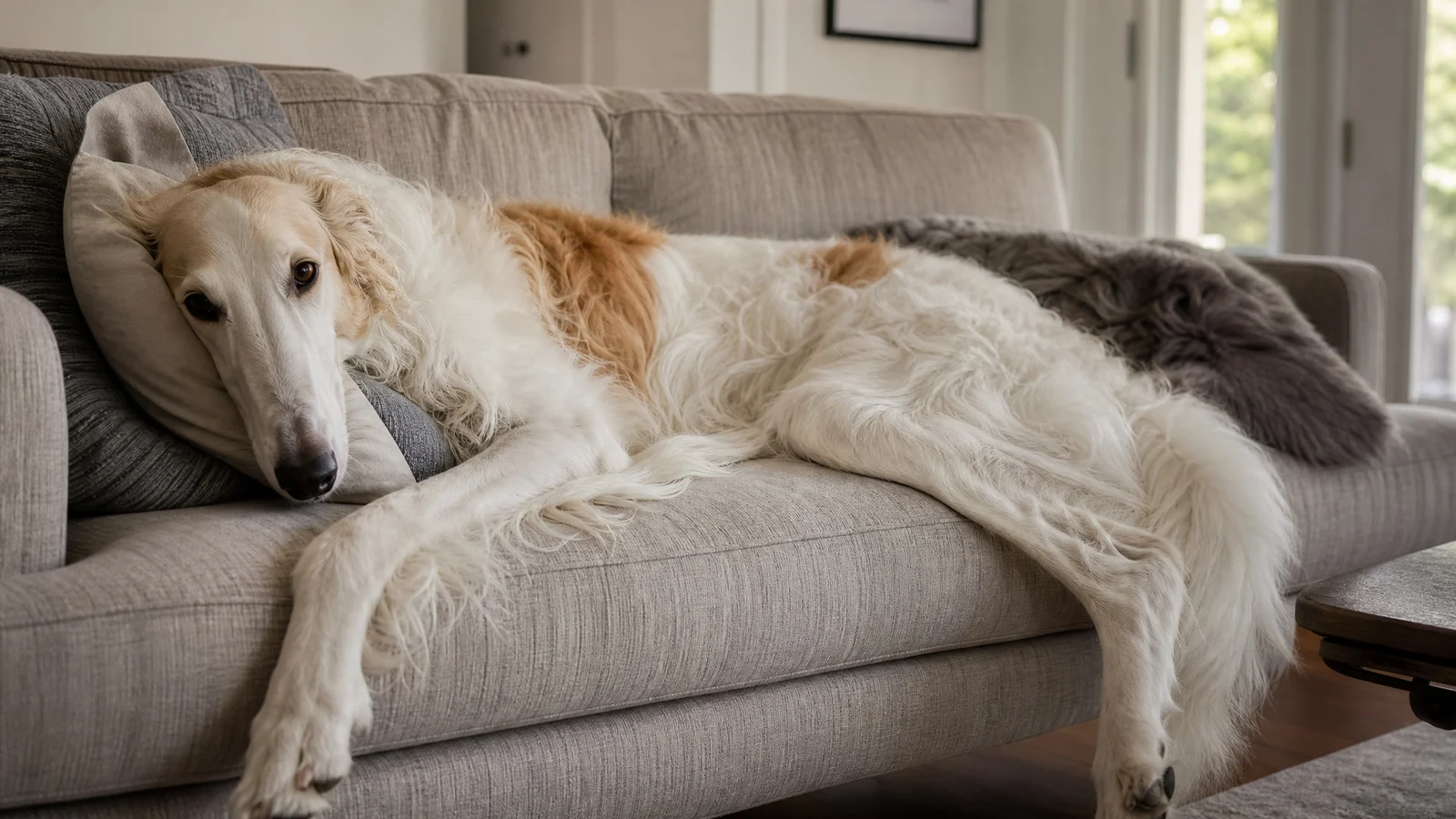 Exercise and jobsBorzoi Sports and Jobs: Putting the Breed's Instincts to Work
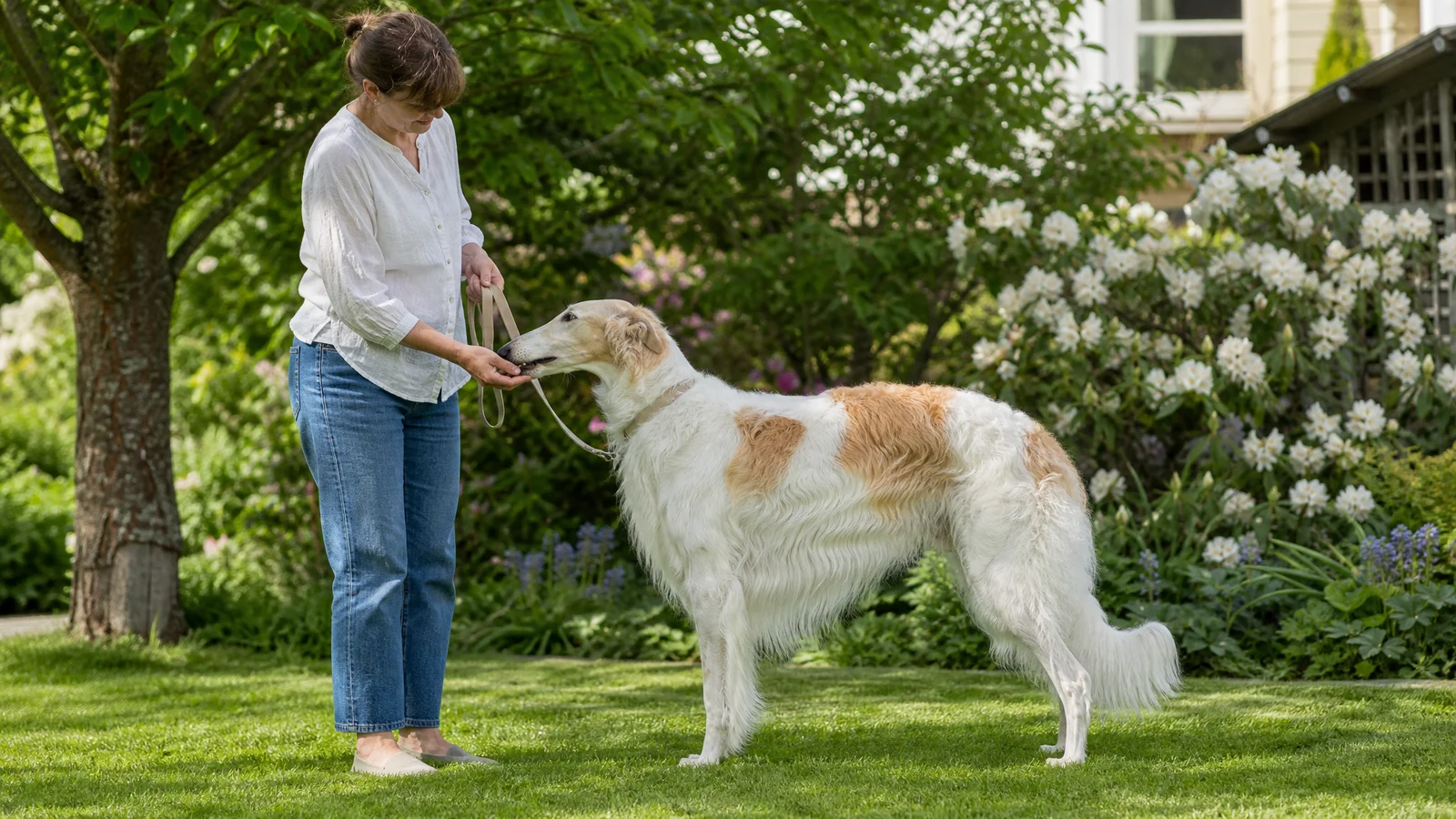 Training basicsBorzoi Training: The Complete Guide for Owners
 BehaviorCommon Borzoi Behavior Problems and the Instinct Behind Each