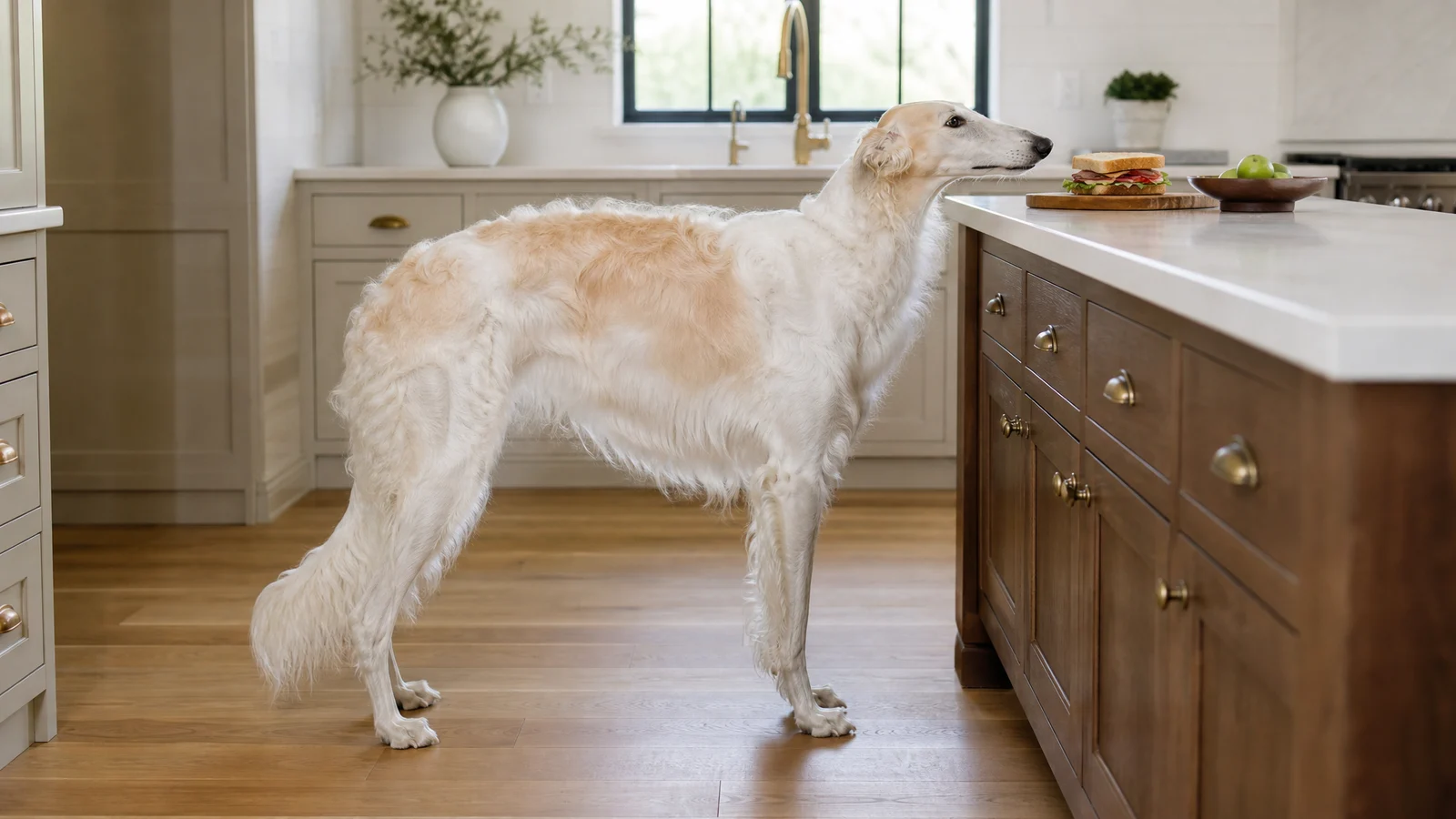
 Borzoi
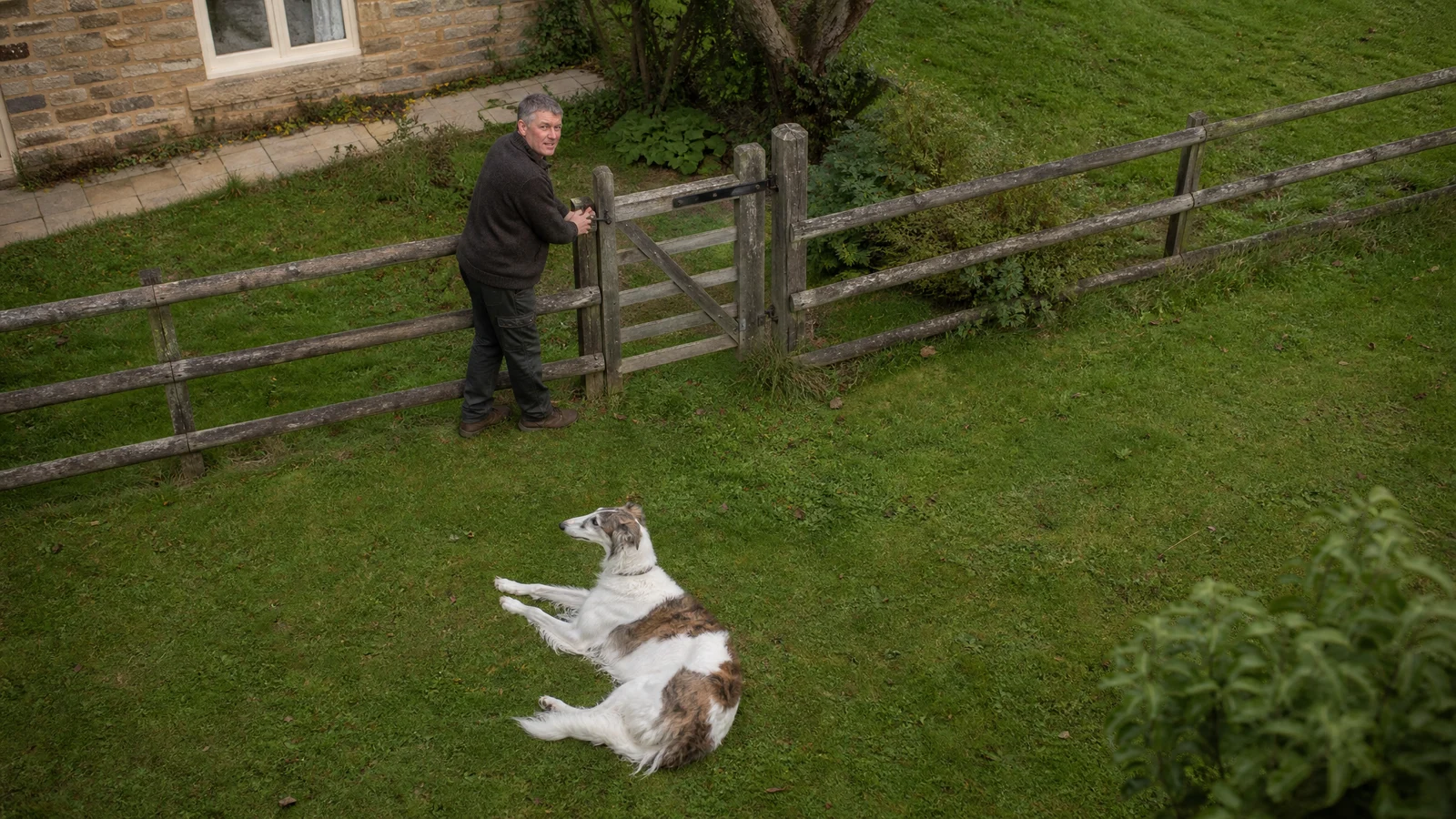
The usual advice is tidy. Running free for 30 minutes or more a day, inside a fence, is called the best exercise, and another national figure says up to an hour. Owners report something messier. Many Borzoi lie down beside you the moment the gate clicks shut, and young dogs need patient, gradual exercise as they grow.
This article covers Borzoi exercise, from the split between lead walks and fenced sprints to four household situations, brain games and a two-week plan.
We reviewed 89 Borzoi owners' first-hand accounts, and the gap between the published numbers and a real living room is wide. Get it wrong and a very large puppy zooms down your hallway. Get it right and you have the quiet, elegant housemate this breed is known for.
Borzoi Exercise Basics
Daily exercise for this breed has two halves, and one does not cancel the other. Lead walks are the first. Free running is the second, and it belongs only inside a securely fenced space. Below we take each half in turn, then the contradiction in how the breed is described, then the conditioning that keeps a sprinter sound.
Lead Walks
A long walk works the body and the nose together. Owners describe routines built around long daily walks, and for some dogs walks really are enough. Owners with small yards say their low-energy adults and seniors do well on walks with almost no room to run. We accept that, with one condition: the walk has to be a real outing, not a lap of the block.
Fenced Free Running
This is the half people skip, because a Borzoi in full stride reaches 35 to 40 miles per hour and will chase anything that moves. Fence first, run second. A leash walk can be improvised, but a safe run needs a boundary you have checked.
Here is what the guides leave out. Many owners say their Borzoi will not gallop alone, or with dogs who are not sighthounds. Given a fenced yard, they lie down next to you and watch the grass. A flirt pole or a second Borzoi is what gets the legs going. A lounging dog in the yard is not broken, but you have to supply the prompt.
The Energy Conflict
The breed profile gives an energy rating of 4 of 5, where 5 means high energy. Yet that same profile describes the temperament as "loyal, affectionate and regally dignified," and owners describe adults who are calm indoors. Generic charts muddy it further, with some breeds said to need at least one to two hours, a bracket that tells you little about a sighthound.
Our verdict: both descriptions are true, in different places. The energy arrives in bursts on open ground. The calm arrives afterward, on your sofa. Owners who combine a long walk with a run in a fenced space or on a beach describe dogs who are calm indoors afterward. That pairing is a likely reason to keep the fenced run regular instead of saving it for the weekend.
Conditioning and Meals
Treat the dog as an athlete. Start with brisk walks and build time and distance gradually, warm up before the fast part and cool down after. Favor grass over rough sidewalk, check the pads often, and skip a session when they are tired or the weather is uncomfortable. On weather, some owners describe avoiding hot sidewalk, and some see more zoomies in cool weather.
Young dogs need patience. Borzoi keep growing and maturing to 18 months and beyond, and the breed club puts physical maturity at about 2 years. Very low jumps are fine for a puppy. Full-height jumping waits until about 2 years.
Skip strenuous exercise just before and after meals. Bloat is a risk in large, deep-chested dogs, and the standard describes a chest depth of almost half the height. Keep walks gentle around feeding and put sprints well clear of it. Regular vet visits also catch a stiff gait or sore pads early.
This is general information about bloat and meal timing, not medical advice. Check with your veterinarian about the signs of bloat, how to time meals around exercise and how much activity suits your own dog's age and health.
Borzoi Exercise in a Small Apartment
A city apartment with no yard sounds like a mismatch for a dog who needs a fenced run, and one national profile even suggests a large house with a large garden. We think that verdict is too neat. The apartment works if you treat the walk as the main event and the run as a scheduled trip.
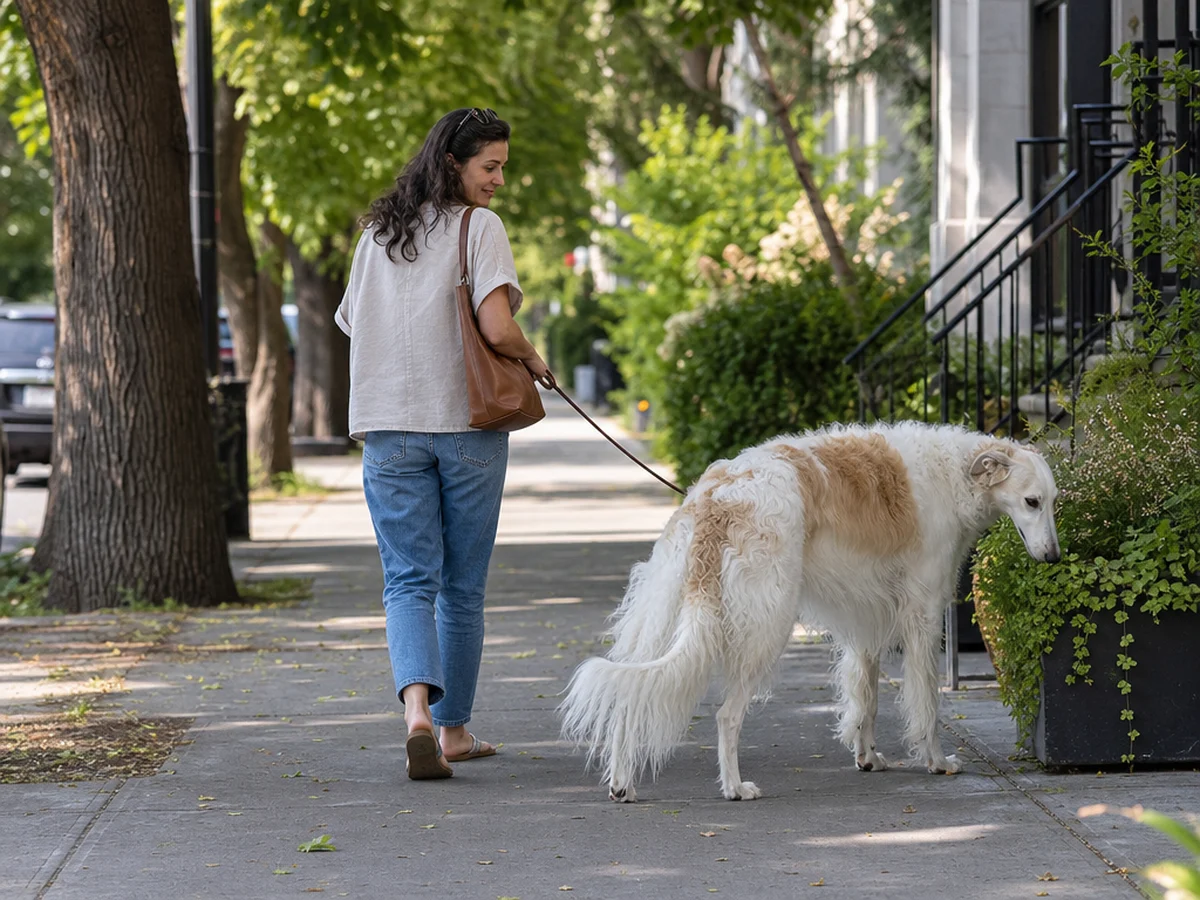
Walks first. Let them sniff, build the pace gradually and give them real time, not a bathroom dash. Then find one dependable fenced space you can book regularly, such as a rented field, and keep the visits steady. When a trip falls through, the walks carry more weight that week.
The dog park is the obvious shortcut, and we are skeptical of it. Many owners have given up or cut back on parks after their Borzoi was chased, cornered, attacked or hurt. Owners who still go set conditions: large parks, off-peak hours, known regulars and a close eye on every new arrival. If that sounds like a lot of rules, a private fenced space is the better trade.
Indoors, calm has to be taught on purpose, because a lively walk can turn into a lively hallway. Our piece on teaching a Borzoi to settle indoors shows how.
A Borzoi Among Young Children
A backyard looks like the family answer, and it is the right place for the hardest running. It also has holes. Owners report escapes over tall fences, through hidden loose boards and past gates that got opened, and guests leaving the front door open are another route out. Children multiply every one of these risks, so make gates and doors an adult job and walk the fence line before the dog goes out. Our guide to fences, ID and a lost-dog plan goes further.
Owners describe a wide range with children. Many Borzoi are gentle or simply indifferent, sniffing faces or letting kids sleep on them. Others run out of patience and try to leave when children keep touching them. The breed's published rating for young children sits mid-scale, meaning with supervision, and that is an honest reading.
Size matters too. Some of these dogs are big enough to knock an adult down, so a toddler in the path of a sprint is a real hazard. Run the flirt pole yourself while the children watch from outside the running area.
Give the dog a mat or crate that is theirs alone, and teach children that a dog on the mat is left in peace. A dog who can walk away from the crowd is the dog who stays gentle.
Exercising Two Borzoi Together
Owners with more than one Borzoi describe a surprise: very different energy within one home, or from one dog to the next. One needs daily play while the other is a couch potato. One dog is lazy indoors and the next is lazy outdoors. A breed average tells you little about the second dog you bring home, so plan around the dogs you have.
A second Borzoi sometimes solves the running problem, because a sighthound partner is what gets the lounger moving. The catch is that the keener dog can pull the other into more than their body wants. Exercise them separately on leash first, then together in the fenced space, and watch the quieter one for tiring.
If the second dog is not a sighthound, expect different results. Owners say Borzoi often love small dogs and play gently at their level, while some big working or herding breeds are too much. Owners describe a play style of chase, keep-away, mouthy wrestling and rearing that other dogs can misread, and big runs have set some of them off. Supervise every session, and call a break the moment a chase stops looking mutual.
Some Borzoi are shy with boisterous company or simply prefer their person. A regular one-to-one walk for each dog gives the quiet one what they want.
Exercise When You Work All Day
If you are out for a full shift, build the day around bookends. A calm lead walk before work, a midday break if anyone can manage it, and the main fenced run in the evening, well clear of dinner, suit most schedules. Keep running regular rather than saving it all for the weekend.
Young dogs change the math. Borzoi mature late and stay puppies for a long time, so build their exercise patiently and gradually, and know that boredom is behind some of the destruction. If your shift outlasts what a young dog can handle, a midday walker is part of the exercise plan, not a luxury.
Leave a mat and a frozen stuffed toy so they have something to settle with, and treat settling as training in its own right. Borzoi are small eaters for their size, so count treats against the daily food, since too many lead to weight gain.
Brain Games for Borzoi Days
When running is not possible, mental work has to carry the day. The breed rates 4 of 5 on mental stimulation needs, and short sessions suit them best: two to three minutes, several times a day, with a game of tug or a thrown toy between reps. Drilling backfires with a sighthound, so end every round on a win.
Indoor Ideas
- Scatter a few treats across a room and let your Borzoi sniff them out. A good part of their life is lived through the nose, so a scent search suits them well.
- Teach a hand target, where they touch your palm with their nose for a treat. It is quick to learn and gives you a helper for recall.
- Reward lying on a mat while the household moves around, and build the time slowly.
- Offer a stuffed toy or puzzle feeder after a session, away from any hard run, so meals and sprints stay apart.
Outdoor Ideas
Take a sniff walk where the dog sets the pace and stops when they like. In the fenced space, use a flirt pole with short bursts and plenty of catches, since chasing a moving object is the strongest reward many of these dogs know. Keep food, a toy and a chase game all available, because rewards shift with mood. Our complete Borzoi training guide goes deeper on short sessions.
Common Exercise Problems
Most exercise trouble with this breed falls into three causes. Sort out which one you have before changing the routine.
Restlessness and Boredom
Indoor zooming, chewing and pacing usually mean the running half has lapsed or the brain has had no work. Add a fenced run or a flirt pole session first, then a mat and a stuffed toy. A short game often does more than an extra long walk.
Over-Chasing
Some owners describe recall that fails once the dog sees an animal, and dogs they would never let off leash. Off-leash running is a gamble we would not take. Keep running inside a fence and read our Borzoi recall article for why a good call is not the same as safe off-leash.
Soreness
Stiffness or sore pads after an outing point to too much, too soon, or to rough ground. Cut back, return to soft surfaces and call your veterinarian if it lingers.
Your Borzoi's Next Two Weeks
A Borzoi needs a steady lead walk, a fenced sprint and short brain work for the days running falls through. Here is a day-by-day plan to try. Keep every hard run away from meals, warm up first and check the pads after each outing.
- Day 1: Easy lead walk with plenty of sniffing, and one two-minute hand target game.
- Day 2: Walk, then walk the fence line and check gates and gaps.
- Day 3: Short fenced session with a warm-up walk first. Bring a flirt pole if your dog will not run alone.
- Day 4: Walk, plus a scatter-treat search indoors.
- Day 5: Fenced session, then a cool-down walk.
- Day 6: Longer, relaxed walk and a mat session.
- Day 7: Rest from running. Gentle walk only, and note how your dog behaves at home.
- Days 8–9: Repeat days 1 and 3, lengthening the walk a little.
- Days 10–11: Add a puzzle feeder one day and a second fenced run the next.
- Day 12: Mat session during your busiest hour at home.
- Day 13: Your dog's favorite fenced game, followed by a quiet evening.
- Day 14: Check-in. Is your Borzoi calm indoors? If so, the amount is right. If zooming persists, add a run. If they seem stiff or sore, book a vet visit.
Drop the games that bore them, keep the ones they love, and let your own dog set the pace. A sprinter who gets a safe place to run and a brain that has had work is the dog who folds up quietly on the sofa instead of inventing their own entertainment.
 Training basicsLeash Training a Borzoi: Pulling, Lunging and Loose-Leash Walking
 BehaviorLiving With Cats and Small Pets: A Borzoi Safety Guide
 BehaviorKitchen Manners for a Borzoi Who Can Reach the Counter