 Borzoi
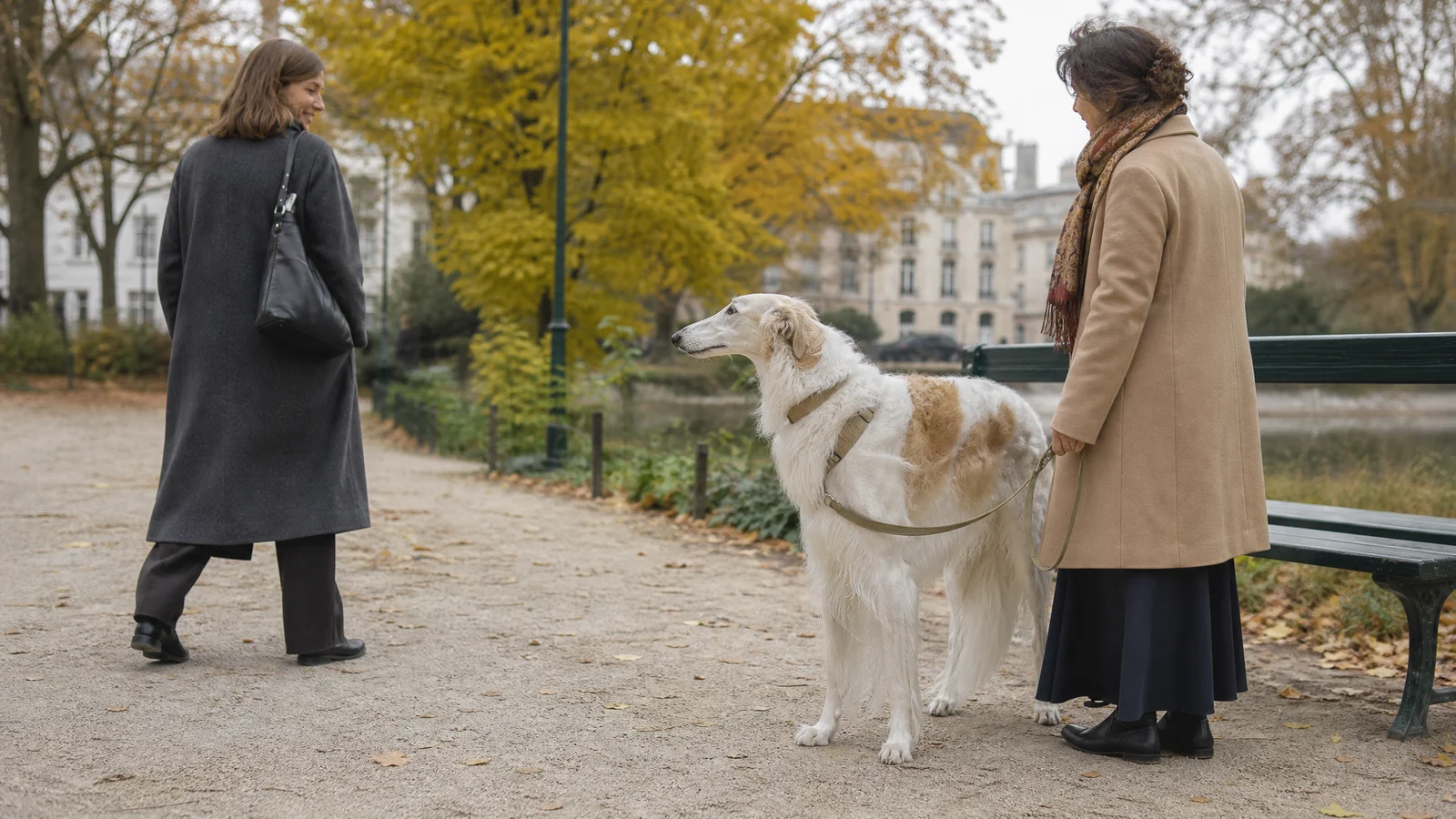
A Borzoi does not need to greet every guest, child or dog to be well socialized. For a Borzoi, the aim shifts. You are raising a calm, neutral dog, and aloof counts as success, because greeting everyone was never the goal.
This article looks at socializing a Borzoi with strangers, children and other dogs and answers the questions owners ask most often. Read on to learn how to tell reserve from fear, how to help a startled dog, how to use distance, how children should meet a tall hound, and whether dog parks belong in the plan.
It matters because a sensitive sighthound who is rushed learns that the world is loud and grabby. One who is eased along gives you a steady, graceful companion for years.
Socializing a Borzoi Aims for Neutral, Not Friendly
A visitor comes through the door rustling a grocery bag. Your Borzoi lifts their long head, takes in the bag, the shoes and the voice, then drifts back to the rug. No leaping, no wiggling welcome. That is a socialized Borzoi. The parent club's judges' guide lists a temperament that is "never shy nor aggressive, but may be quite aloof," and the FCI standard describes an attitude neutral to friendly.
So you reward quiet moments, not excitement. Pair new people, sounds and places with a treat the instant your dog looks and stays loose, then let them move on. On an ordinary day, success looks like this:
- They notice a new person and go back to resting without needing a meeting.
- Their body stays soft, and they will take a treat in unfamiliar places.
- They can turn away from a greeting they don't want, and you let them.
- They recover quickly after a sudden noise or a passing dog.
Socializing Allows an Aloof Borzoi With Strangers
Ask owners about visitors and you hear two different dogs. Some Borzoi won't let a stranger pet them, or are reserved only with people they don't know. Another dog actively hunts for a stranger's attention. The openness rating is 3 of 5, the midpoint marked ambivalent, which fits that spread.
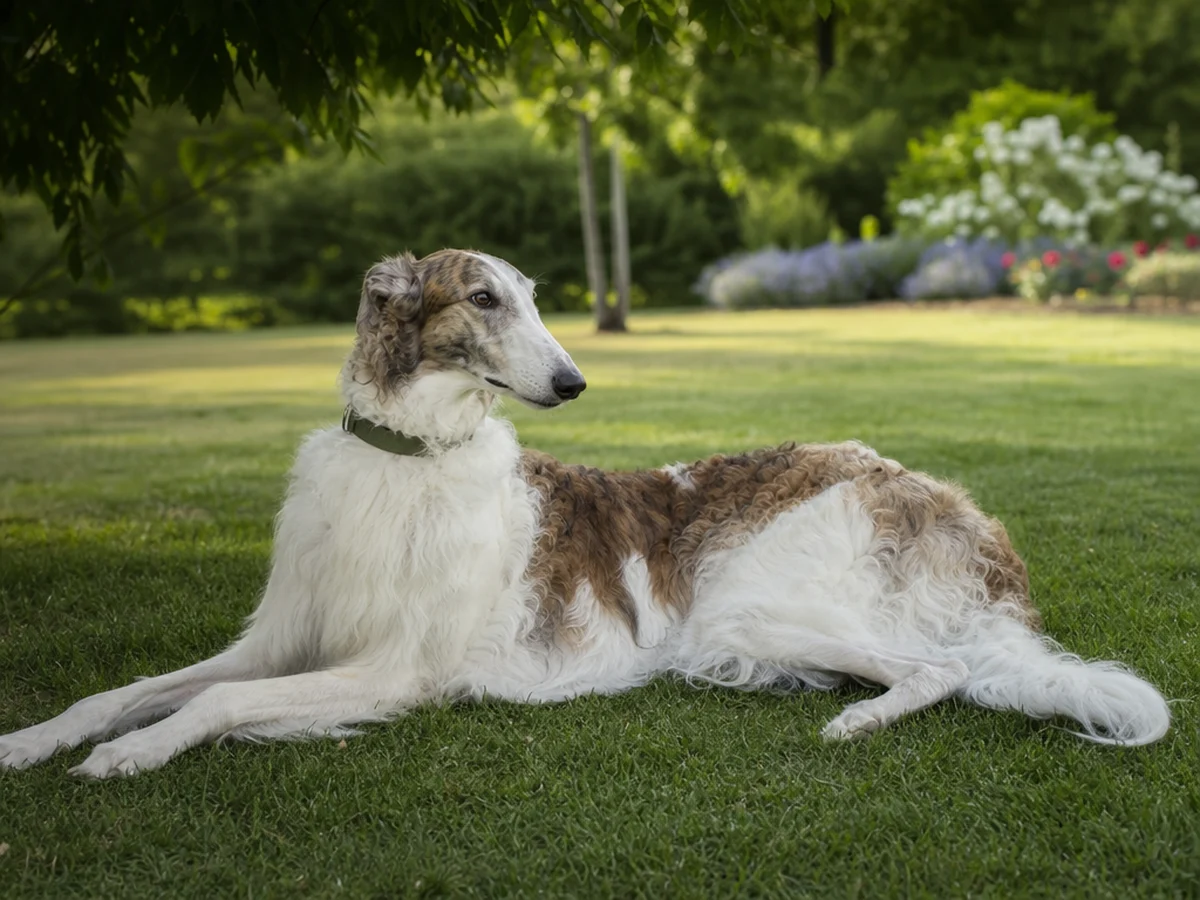
That means no forced petting and no mandatory greetings. Ask guests to ignore your dog, let them toss a treat from a distance, and let your Borzoi decide whether to come closer. Many owners describe closeness that arrives when the dog chooses it: a lap dog who also wants alone time, usually in the same room, and who walks off when they have had enough. A calm settle spot helps everyone, and our guide to house manners for a giant hound shows how to build one.
Aloofness is not a failure, but fear is different. Researchers who study puppies warn that poor early socialization raises the later risk of fearful responses, withdrawal and aggressive behavior. A reserved dog stays loose and takes treats. A fearful dog hides, refuses food and can't settle.
How Do You Help a Startled Borzoi While Socializing?
A plastic bag skitters across the sidewalk and your Borzoi stops dead, stiff and leaning away. The parent club's line is to socialize but never terrorize. The job is to help your dog through the moment, never to make them face it.
Calmly walk away from the trigger, at a pace that lets them keep moving instead of freezing. Don't drag or coax them closer. Once there is room, wait. Many dogs look back on their own, and that glance earns a treat and a quiet word. Reward the recovery: a loosened body, a sniff of the ground, a return to your side. Then end on that calm note. Puppy guidance agrees that you should keep sessions short and positive, and never force or flood a young dog.
Fear periods are normal too, with one commonly around 8 to 11 weeks and another as adolescence begins near 6 months. Keep going through them, but at the puppy's pace. If fear keeps returning, bring in a certified trainer who uses humane methods. For a shy dog, scent work and agility are both good confidence builders.
Socializing Works Best From a Distance
Your Borzoi stands at the end of the block watching a stranger unload a car, ears soft, eyes locked on, and still willing to take a piece of chicken. That is the right distance. A sighthound notices every change in their surroundings, so raise the difficulty slowly and fairly.
If your dog stops eating, stiffens or stares, you are too close. Add space, then shrink it in small steps only after they have stayed relaxed at the current one. Some days you won't shrink it at all. Until a Borzoi has built trust through training, they are curious about their surroundings, and that is normal, so let them watch and reward them for glancing back at you. Our complete Borzoi training guide covers the foundation skills.
Everyday outings do the work: walks through the neighborhood, car rides with stops at different places, and strangers who greet your dog briefly and calmly. Let them step onto new surfaces such as tarp, wood, metal, cement and gravel, and treat anything new as something to explore.
Children Meet the Borzoi on the Dog's Terms
Owners describe Borzoi who sniff a child's face politely or let kids fall asleep against them. Others run out of patience when small hands keep touching, and try to leave. The AKC rates the breed with young children at 3 of 5, which means with supervision. These dogs are also big enough to knock an adult down, and some do not forgive rough handling.
House rules do most of the work. Keep them simple enough for every child to follow:
- Children stroke the shoulder once or twice, pause, and wait for the Borzoi to request more contact.
- If the dog walks away, the game ends and nobody follows.
- Nobody bothers a dog who is resting, eating or hiding.
- An attentive adult stays within reach every time.
- Running and shrieking games stay separate, since a coursing hound may join a chase.
Read the signals. A loose body and soft eyes mean things are fine. Head turning, stiffening, leaning out or leaving mean the dog has had enough, so end the contact before they have to ask twice.
Does a Borzoi Need Dog Park Play?
Plenty of owners have walked out of a dog park for the last time after their Borzoi was chased, cornered, attacked or hurt. So we push back on the advice to send every young dog into a free-for-all. A well-socialized Borzoi does not need a dog park, and many do better without one. Owners who still go set conditions: large parks, off-peak hours, known regulars and a close eye on new arrivals.
Calmer Ways to Meet Other Dogs
Parallel walks are a gentler start. Walk on leash beside a calm, friendly dog at a distance where both stay relaxed, reward that, and close the gap over several walks. Puppies do best with playmates of the same age and size, and a class like those in our guide to choosing a Borzoi training class can supply them.
Known hound friends are better still. The breed ran in large packs, and many Borzoi like a canine buddy. Owners describe dogs who love small dogs and play gently at their level, while some big working or herding breeds are too much.
Others are shy with boisterous dogs, or simply uninterested and devoted to their person. Their chase, keep-away, mouthy and rearing play can be misread, and big runs have set other dogs off. Coursing asks for a separate skill from these dogs, running with other hounds without interfering, so practice with known friends first.
Years of Socializing Produce a Calm Adult Borzoi
Live with a Borzoi long enough and the pattern appears. The gangly adolescent who startled at the vacuum becomes a quiet, self-possessed adult who drifts through the house and the neighborhood. The critical window for puppies closes around 16 weeks, but socialization does not, so keep adding something new through the first year or two. A new adult or rescue needs a few days to settle before the real work begins.
Some things will not change. Many Borzoi stay aloof with strangers and devoted to their family, and dogs vary a great deal, even within one home. Occasional wariness in a new place is normal.
When it shows up, go back to distance and treats for a few short sessions, then keep light practice going with calm outings and brief, pleasant meetings. Regular vet visits matter too, since a dog who suddenly changes how they act around people or dogs may need a check.
So aim for calm, not for a greeter. If you let your Borzoi set the distance, keep meetings short and reward every relaxed moment, you will have a dog who is reserved but relaxed, gentle at home and steady almost everywhere else, which is exactly what this breed has always been.
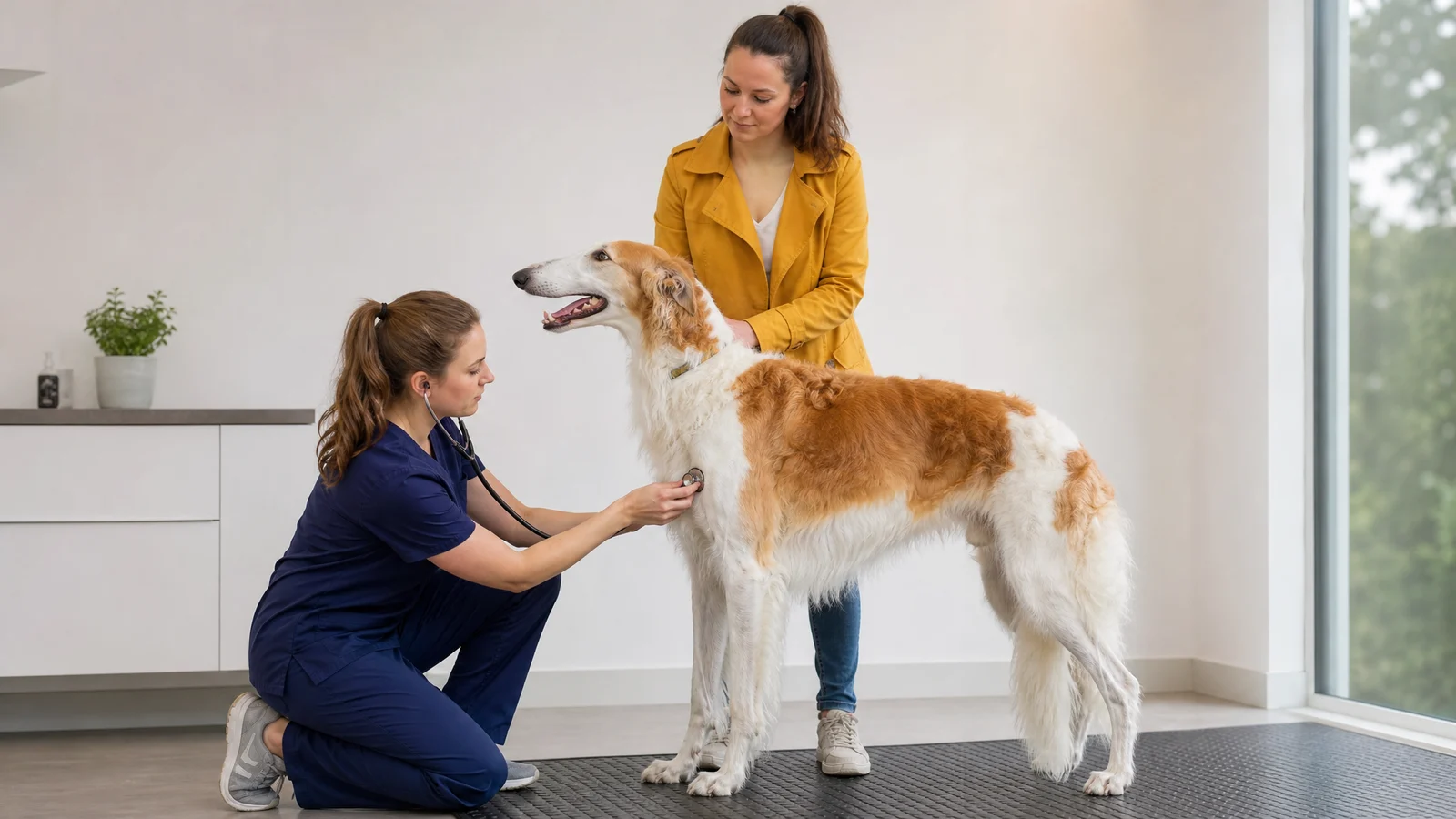 HealthBorzoi Health Problems: Screenings and Calm Vet Visits
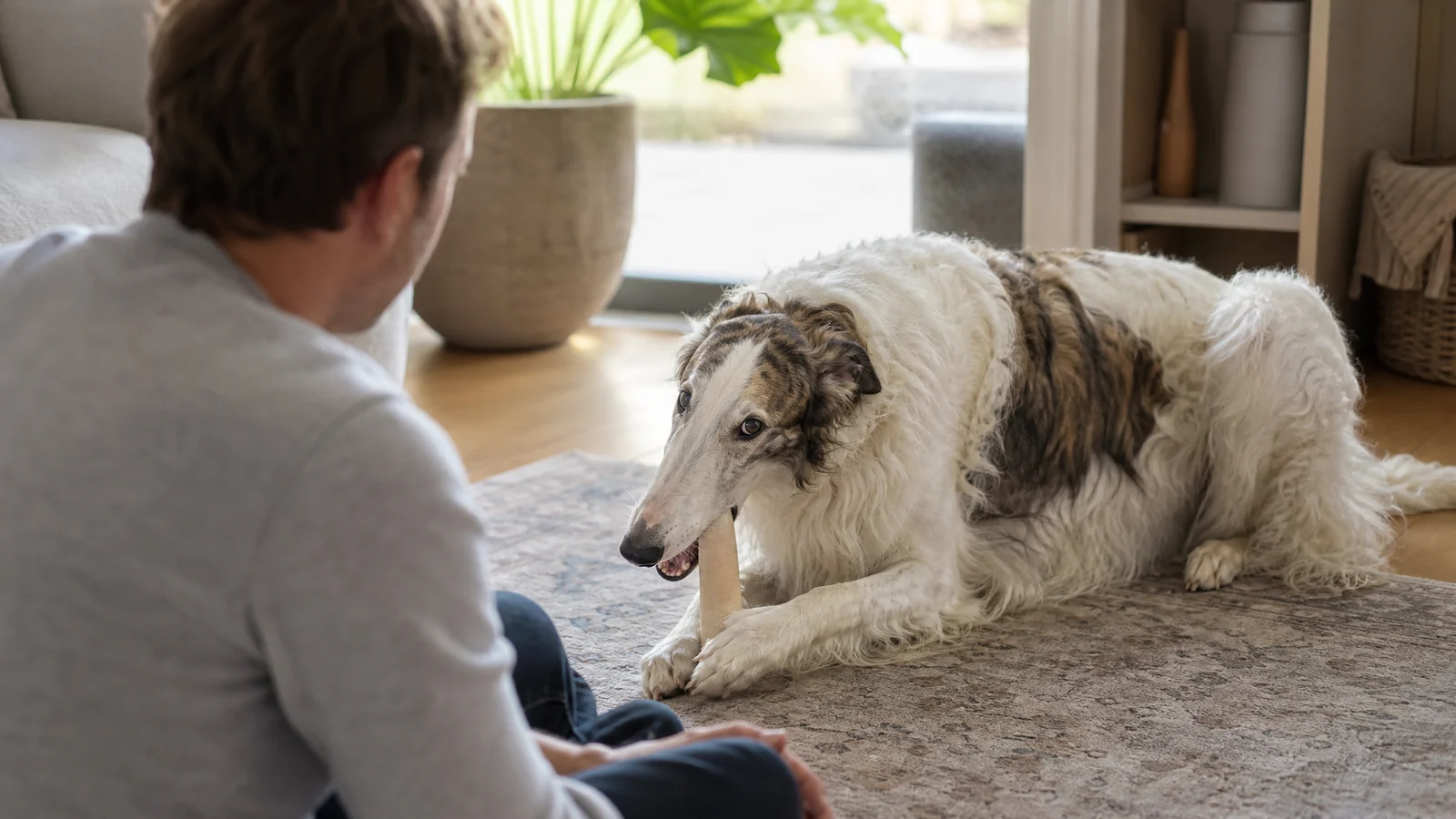 BehaviorStop Destructive Chewing in a Borzoi
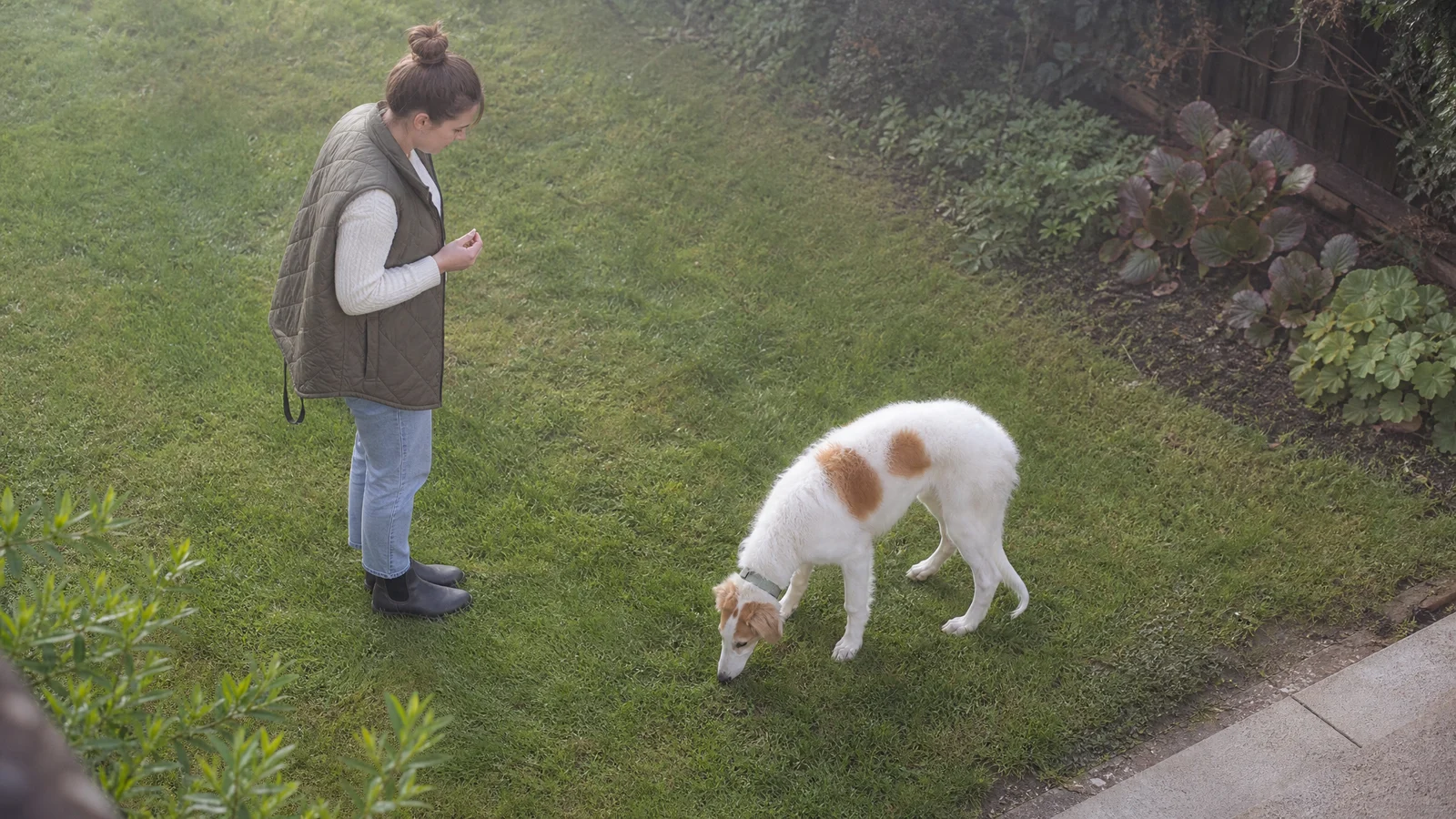 Training basicsHow to Potty Train a Borzoi Puppy