 Borzoi
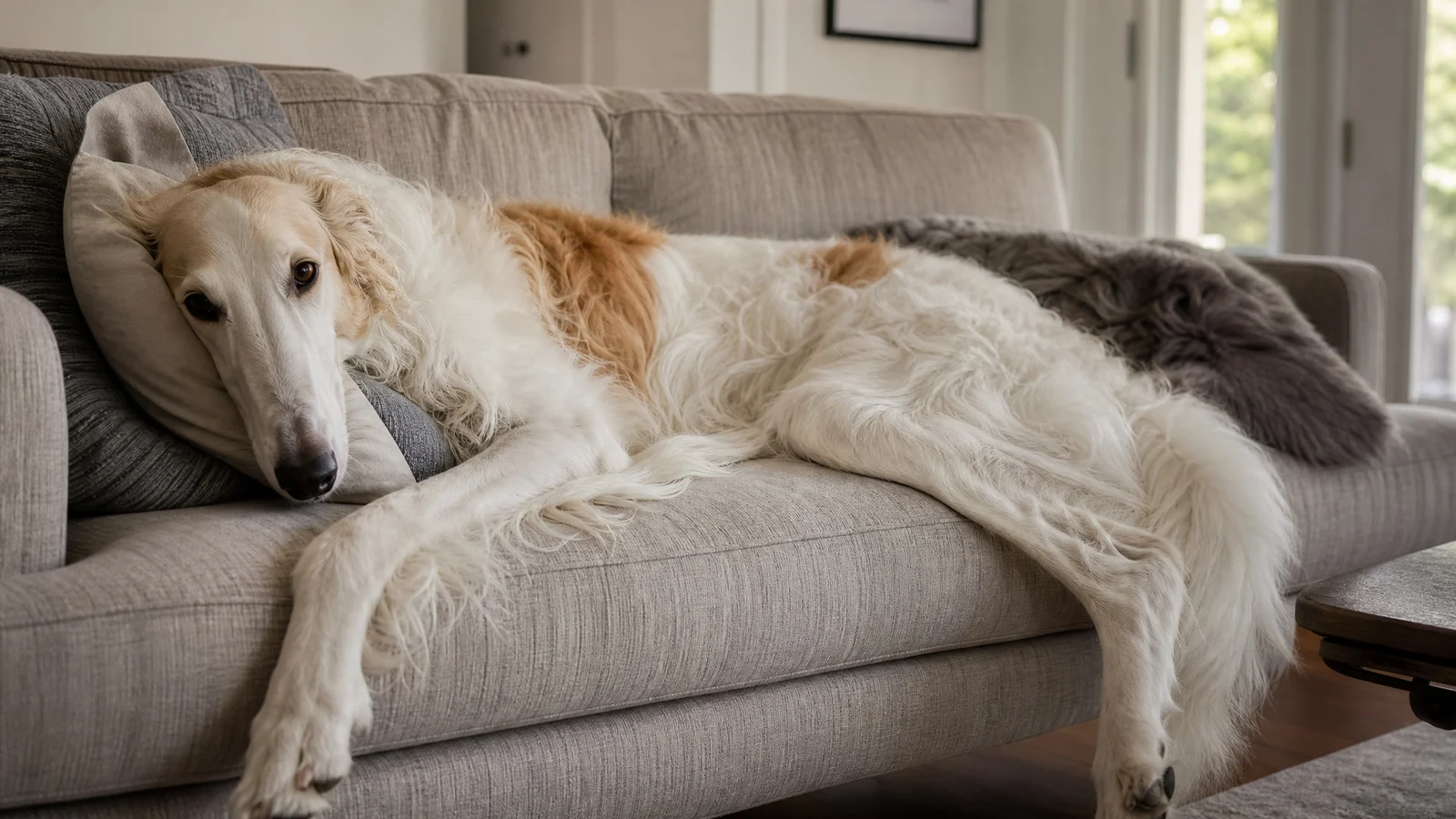
Some Borzoi have a regular outlet for their instincts. They are keen at the door and settled on the sofa afterward. Other Borzoi have none, and they drift into restless, bored habits at home: pacing, zooming through the living room, testing every fence line.
The gap is seldom about raw exercise. It is about whether the eyes, nose and brain of your dog get paid work, and whether you picked a job that suits the dog you actually have. A bad match wastes months and can teach a sensitive hound to dislike training.
Below, you'll find one decision per section, from whether to start at all through rally, agility, scent work, tracking and coursing, including how to read your dog on the day and which signs mean the choice is working.
Deciding Whether Your Borzoi Needs a Sport
Not every Borzoi does. In the first-hand accounts of 89 Borzoi owners that we reviewed, energy varied widely, even inside one home. Owners with two dogs describe one that needs daily play and another that is a couch potato. Some low-energy adults and seniors do well on walks alone, with almost no room to run.
Watch which kind you live with before you spend money on classes.
A big yard does not settle the question. Many owners say their Borzoi will not gallop alone, or with dogs who are not sighthounds. Given a fenced yard or a dog park, these dogs simply lie down beside the other dog. A flirt pole or a second Borzoi is what gets them running. Space is not an outlet. Activity with a purpose is.
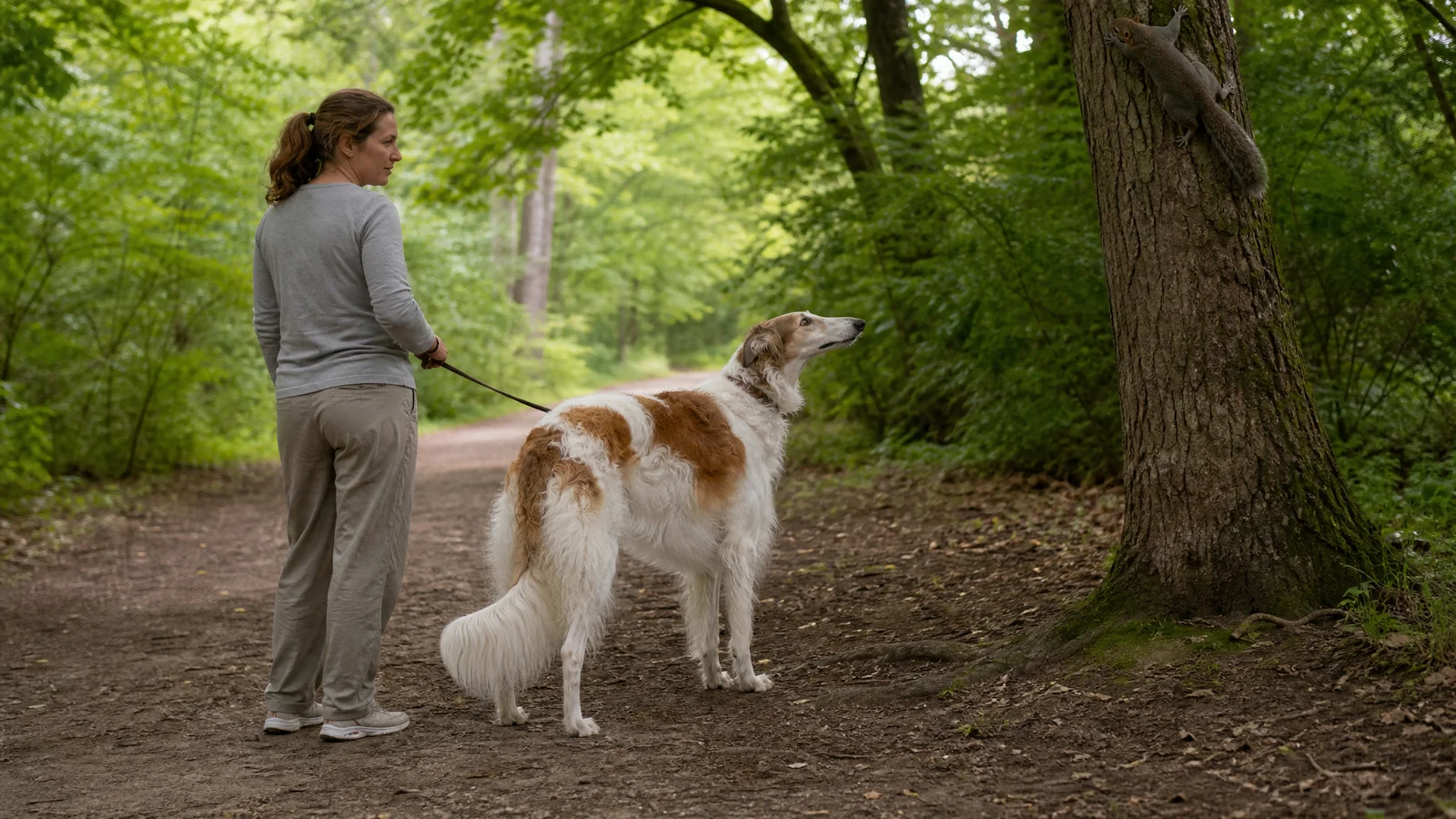
We also disagree with the idea that a well-trained Borzoi can be rewarded with off-leash freedom instead. Owners who trained recall from puppyhood still report it switching off the moment the dog sees an animal, even in a people-loving dog. Trust off leash differs by individual and by line, and owners of dogs from coursing lines tend to keep them leashed. Off-leash running is a risk to manage, not a plan. Our Borzoi recall training guide explains why.
The choice: if your dog is restless, bored or only moves when prompted, give them one structured outlet. Pick one, not three.
Rally as a First Sport for Your Borzoi
Rally is the gentlest place to start. You guide your dog around a course of signs, each naming an exercise. The Novice level is all on leash, and you may talk to your dog as you go. That suits a Borzoi, because encouragement is allowed and nothing depends on an off-leash recall. Advanced and Excellent come later and are off leash, so you have time to build that reliability.
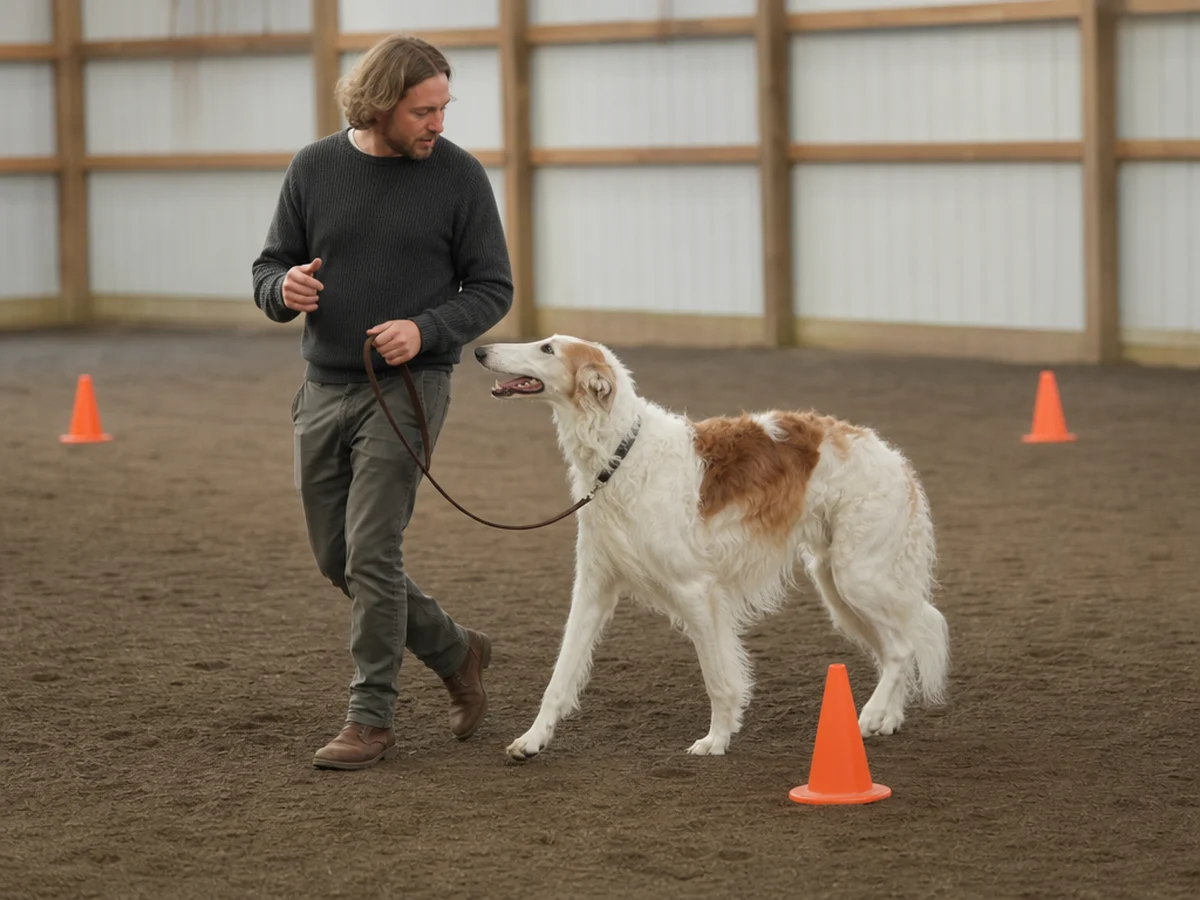
Entry is simple. Your Borzoi must be registered and at least 6 months old to enter a trial. A dog without papers can still be registered if neutered.
This is general information, not medical advice. Whether and when to neuter, and when your dog is physically ready for any sport, are questions for your veterinarian.
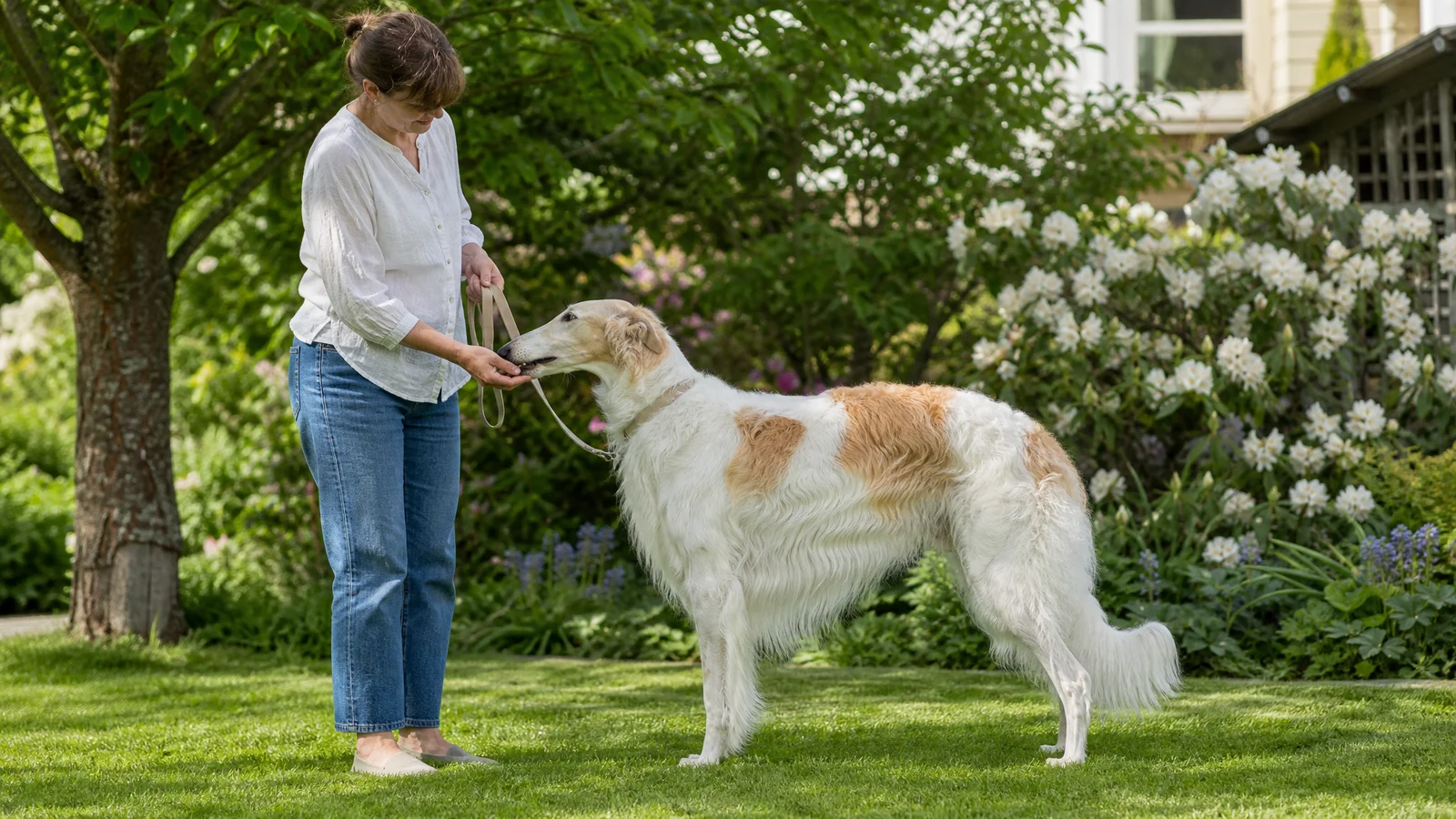
Build toward it in steps. A family manners class, where basic cues are taught through games, suits an older puppy or adult. Next comes the Canine Good Citizen test, which has 10 parts. Precision is not required, but control and confidence are. Then try Novice rally.
Choose the class with care:
- Look for one that teaches with rewards, and watch a class or two before you sign up.
- Aim for one instructor to no more than 5 or 6 dogs. A class of 20 or 30 is no place to learn.
- Expect to shorten the hour. Most Borzoi cannot work for a full hour, so ask for play breaks and teach a settle on a mat between exercises.
At home, keep sessions to 2–3 minutes, several times a day. Train the dog yourself rather than sending them away, and practice daily between classes. That daily work matters more than the weekly class.
Size needs planning. Courses are sometimes designed for an average-sized dog, so walk through each exercise with a giant dog's turning room in mind. Expect distraction as well. A sighthound notices every movement, so expect a trial to pull at their attention. Practice with little distraction first, then add it slowly. A chase toy can serve as a reward where food alone does not hold their interest.
The choice: make rally your base. Everything else builds on the same skills.
Can a Borzoi Handle Agility as a Sport?
Yes, with conditions. Breed guidance says any Borzoi can do agility with proper training, once the dog understands sit, down and come. The better question is whether yours has the right temperament.
Agility favors a happy, outgoing, people-oriented dog. A dog who is shy, sensitive to noises or fearful of unfamiliar situations will struggle. A puppy for agility should be curious and willing to try new things. Adults may need more time and effort but can do just as well.
Body matters as much as mind. Structural soundness counts because the sport is physically demanding, and it puts pressure on joints, heart and breathing. That is a good reason to have your veterinarian look the dog over before you start.
Borzoi keep maturing up to 18 months and beyond. Very low jumps can be introduced young, but full height should wait until the dog is physically mature, which means keeping jumps low through the second year. A puppy can walk through jump stanchions with no bar, then over a 2 or 4 inch board.
Foundation work starts at home. Get your dog walking on a tarp, wood, metal, cement and gravel, and let them treat anything new as something to explore and touch. Reward with food and toys, and make it fun for both of you. Then join a foundation agility class.
Fencing is the practical catch. Owners report Borzoi clearing a 6-foot fence, pushing loose boards hidden in brush, opening gates and bolting through a front door that guests left open. Practice only in a truly secure space. Our Borzoi fence and lost-dog guide covers the details.
The choice: yes if your dog is outgoing, sound and reliable on sit, down and come. Not yet if any of those is missing. Return to rally and revisit agility in a few months.
Scent Work and Tracking as Borzoi Sports
People label the Borzoi a sight-led dog and stop there. Borzoi are sighthounds, but they are dogs first, and a significant part of their lives is lived through their noses. Their sense of smell is 10,000 to 100,000 times more acute than ours.
Scent work asks little of the body and a lot of the brain. In most sports the handler is in control. Here neither of you knows where the odor is hidden, so you rely on the dog. For an independent breed, that is a rare job where thinking for themselves is the point. It also builds confidence in a shy dog, which makes it a natural next step for one that did not pass the agility check.
Start with the simplest version. In nose work, a favorite toy or treat is hidden in one of several boxes and the dog finds it. Later searches move to rooms and outdoor spaces. In formal scent work, dogs search for cotton swabs scented with birch, anise, clove and cypress. Look for scent work classes at a local training club before entering any trial.
Tracking is the longer path. Borzoi can be taught to recognize and follow human scent. The titles are TD, TDU, TDX and VST. One pass at each level earns that title, and a dog holding all of them becomes a Champion Tracker (CT).
The choice: decide whether this is a hobby or a trial path. Hobby level means games at home and a class, with no pressure. Trial level means working toward a title, one level at a time. Most dogs are happy at the first.
Where Does Coursing Fit Among Borzoi Sports?
Coursing is the sport closest to what the breed was made for, and it has its own article on this site, so we will not repeat the rules here. What matters is how it sits beside the rest. In full stride a Borzoi runs 35 to 40 miles per hour, and a run is short and intense. Rally, scent work and tracking are slow and cooperative. They teach what coursing cannot: attention to you, settling and working with a handler.
Keep the age rules in mind. Trials require a registered purebred who is one year old, and the certification run can happen at 11 months. Before then, young dogs can visit practices and matches to get used to the excitement without competing. Ask questions there, since participants are glad to help newcomers.
Coursing also tests recall in a way the others do not. Being caught after a run is part of the sport, so your dog must come back while still excited. If recall already fails around animals, build the return in rally first. Condition with brisk walks, increased gradually in time and distance, and avoid rough surfaces such as sidewalk. Check the pads often.
Dock diving, trick dog and barn hunt also appear on the list of things Borzoi do. We keep the focus on the sports above.
The choice: add coursing only once your base sport is steady and your dog comes back reliably in other settings. Until then, watch a practice and keep your dog on leash.
Reading Your Borzoi's Mood Before Entering Any Sport
Every sport above asks the same thing on the day: is this dog ready now? Borzoi differ from dog to dog, and the same dog differs from week to week. Motivation shifts, so a toy that worked last month may mean nothing today. The table shows what each option asks of your dog.
| Option | What it asks of your Borzoi | Age or entry marker |
|---|---|---|
| Canine Good Citizen | Control and confidence, not precision | Basic skills in place |
| Rally Novice | Calm work on leash, with your voice allowed | 6 months for trials |
| Agility | An outgoing, sound dog who knows sit, down and come | Full jump height at physical maturity |
| Scent work | Willingness to search while you follow | Class first, trial optional |
| Tracking | Steady nose work, one pass per level | Titles TD, TDU, TDX, VST |
On the day, run a quick check:
- Your dog takes treats or a toy at the venue, which shows they are not too stressed to learn.
- They recover quickly after a startling noise and do not pull to leave.
- They are not tired, and the weather is comfortable for them.
- They still look at you when you speak, even when distracted.
If your dog backs away from something new or startles at a loud noise, give them distance and help them through rather than making them face it. If the fear continues, find a certified trainer who teaches with treats, play and praise. Keep sessions light, too. Let a Borzoi choose when to learn, watch for signs they are done, and end on a positive note.
The choice: commit when the check passes. When it does not, stepping back for the day is part of the training, not a failure.
Green Lights, Red Flags, and Who to Call About Sport
Within a few weeks you should be able to tell whether the sport suits your Borzoi. These signs say it is working:
- Your dog is keen as you head out and relaxed afterward.
- They recover quickly after sessions and settle at home. Our house manners guide shows how to help a Borzoi switch off indoors.
- Restless habits fade, and sessions are fun for both of you.
These signs mean you should ask a professional:
- Your dog shuts down, freezes or avoids the venue, the equipment or you.
- They show fear that continues despite distance and patience.
- They limp, stiffen after sessions or seem sore. Lameness is a reason to stop and call your veterinarian.
Regular vet visits belong on the calendar for any dog in training, and a check before you start jumping or long searches is sensible. For fear or avoidance, see a certified trainer who works with rewards. If you want to understand the behavior first, our guide to the instinct behind each behavior problem helps.
Your next step is simple: this week, watch one rally or scent work class without your dog, check the instructor-to-dog ratio and see whether it feels right.
 Training basicsBorzoi Training: The Complete Guide for Owners
 BehaviorCommon Borzoi Behavior Problems and the Instinct Behind Each
 Training basicsCrate Training a Borzoi: Crate Size, Setup and Time Alone