 Borzoi
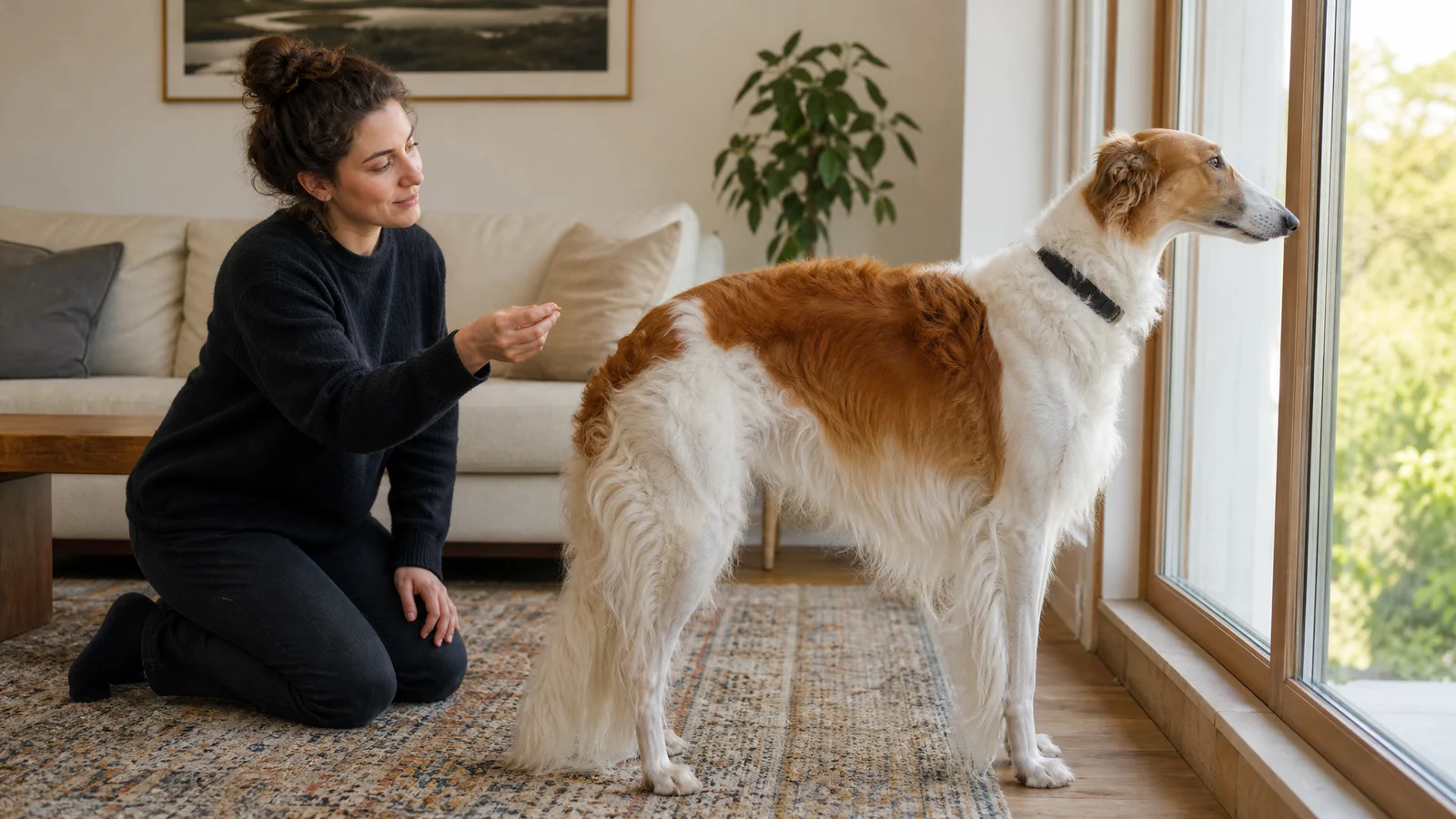
Your Borzoi nails a sit three times in a row, collects the treat, then turns to gaze out the window and will not be coaxed back. You wave the cookie and repeat the cue in your cheeriest voice, and nothing happens. It feels like proof of what many people, Borzoi owners included, say: that the breed can't be trained.
It isn't proof. A sighthound has noticed the world and decided, on their own terms, that the lesson is over. Read that correctly and training gets easier, because you build the session around the dog. Read it wrong and you get a dog who goes blank whenever the treat pouch appears. Get it right and you get a calm, affectionate companion who chooses to work with you.
In this article, we'll go through why Borzoi seem to shut down, what the 2 of 5 trainability rating does and doesn't measure, how to build short sessions and a realistic recall plan, and the signs that tell you progress is real or that it's time to bring in a professional.
When a Borzoi Shuts Down During Training
The perception behind the rally profile's own words is that the Borzoi gets bored and shuts down after a few minutes: a dog who works eagerly for a few repetitions and then goes somewhere else in their head. Many people, Borzoi owners included, take this to mean the breed can't be trained. We reviewed 89 Borzoi owners' accounts, and in our reading three different things produce the same blank stare, each needing a different fix.
Done, Distracted, or Just Aloof?
A dog who is done has had enough repetitions and tells you by looking away, sniffing, or drifting off. A dog who is distracted is tracking something you haven't noticed, because a sighthound is alert to every change in the environment, from a leaf blowing past to a car door two houses down. Until the two of you have built trust through training, expect a dog who is curious about everything around them. That is normal.
A dog who is simply aloof isn't failing at anything. The parent club's judges' guide lists a temperament that is "never shy nor aggressive, but may be quite aloof," so reserve is part of the picture, not a flaw you need to train out. Check the environment first, then the length of your session, and only then worry about attitude. Most shutdowns are solved by the first two.
Affection on the Dog's Terms
Owners describe affection in two quite different ways. Some live with lap dogs who want closeness but also want space, usually in the same room, and who walk away when they've had enough. Others describe very people-oriented dogs who greet them at the door and seek cuddles. Owners of two or more often see both types under one roof, with wide differences in neediness from one dog to the next.
Strangers split owners the same way. Some dogs refuse a stranger's touch or are reserved only with people they don't know, while others actively work the room for attention. For training, this matters because a dog who leaves when they've had enough will also leave your session, so you have to make staying the better deal. Aim for a calm, neutral dog, not a greeter.
Why Borzoi Training Rates 2 of 5
The number comes from the breed's profile page, which scores trainability 2 of 5 on a scale where 1 means self-willed, 3 means agreeable, and 5 means eager to please. The wording that goes with it is blunt: intelligent and very affectionate, but independent and sometimes stubborn, so training may be a challenge. We think that's fair, and we think the rating is useful once you know what it measures.
What the Number Does and Doesn't Say
The scale measures willingness to take direction, not the ability to learn. The same description calls the breed intelligent, and owners confirm it: food-motivated dogs pick up basic cues quickly, and puppies often learn other commands with ease. A 2 means your dog wants a reason to cooperate every time. It doesn't mean they can't learn, and it is a reason for a different approach, not for firmer handling. It calls for a better offer.
Stubborn About What They Want
Owners describe stubbornness that centers on the dog's own desires, not on training in general. A Borzoi who learns most cues easily may ignore "off" when the couch or your warm spot is at stake, or go dead weight when you try to move them. Others aim straight for the one forbidden item, or push a toy onto your laptop until someone plays. These are bids for something the dog wants, and they respond to a better bid from you.
- Pay for the behavior you want with the best reward you own. Owners who teach "on" and "off" with a truly special treat and enthusiastic praise report that it works.
- Give the dog a legal version of what they're after, such as their own bed in a good spot or a scheduled play session.
- Answer attention-seeking by rewarding the calm moments before it starts, and by ending play calmly when it turns pushy.
Plenty of advice says to repeat a cue until it sticks. With this breed, that gets it backwards: a dog who is negotiating needs a better deal, not another round.
Training Sessions That Fit a Sighthound's Attention
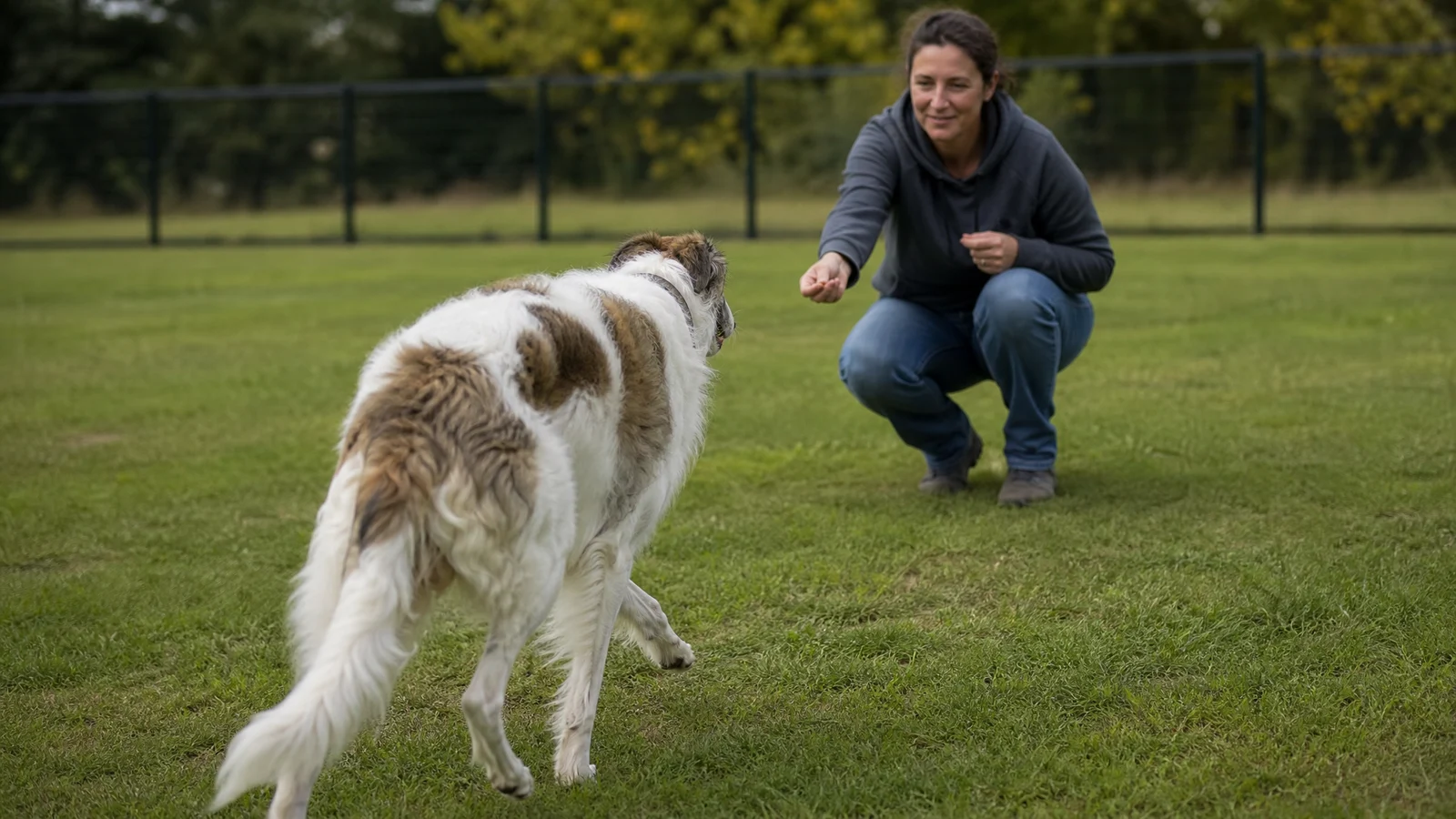
The parent club's advice is short, upbeat sessions. It puts the figure at two to three minutes, several times a day, with a break for tug, a thrown toy, or reloading treats before the next rep.
That's shorter than most trainers plan, and it works because you stop while the dog is still engaged, so each session ends with them wanting more. Training should feel like a joy, and the more playful your sessions are, the more willingly a Borzoi works.
- Pick one behavior and set up a quiet spot with few distractions.
- Run a handful of quick reps and reward each one right away with your marker word.
- Stop at the first sign the dog is drifting, such as looking away, sniffing, or a slower return.
- Play for a moment, then either go again or end on a success.
- Raise difficulty slowly, changing only one thing at a time, such as location, distance, or distraction.
Choosing Rewards That Hold Up
An experienced Borzoi handler's advice is to figure out what motivates each dog and to expect it to change with their mood. Keep a mix on hand: food, toys, and above all the chance to chase something that moves, since the breed's speed and drive to chase can be put to work reinforcing good behavior.
Rough play is a poor reward, because most Borzoi are a bit too dignified for roughhousing. Calm games and chase toys fit better. Owners also report mixed interest in thrown toys, so test before you count on one. Borzoi are surprisingly small eaters for a giant breed, so watch whether treats keep their value as a session goes on, and keep the portions modest.
Classes and Mat Breaks
Group classes help a Borzoi follow cues in different places, but most can't work for the full hour a typical class runs. Plan for it: work a bit, then let the dog lie on a mat with a frozen stuffed toy while activity goes on around them. That break isn't wasted time, because learning to relax amid activity is part of the training.
Don't drill. Let the dog choose when to learn, watch for the signs they're done, and end on a positive note every time.
Recall Training: Owners Who Gave Up Off-Leash
Owners describe recall that works until the dog sees an animal and then vanishes. Some owners have decided they would never let their dog off leash outside a secure space. The advice for the breed is plain: no off-leash time anywhere that isn't secure, because the instinct to chase is intense. The breed was built to course game by sight, so this is instinct, not disobedience.
Fences, Leashes, and Realistic Goals
Treat leash and fence as permanent parts of life with this breed, not as steps on the way to freedom. Owners report fences cleared even at 6 feet, hidden boards pushed loose, gates opened, and guests leaving the front door ajar, so check your boundaries and brief your household.
A Borzoi who is calm with the family cat indoors can change entirely outdoors when a cat runs, so manage outdoor encounters separately from indoor peace. Our guide to living with the chase covers the management in detail. Your realistic goal is a dog who recalls reliably in a fenced space and on a long line, with the chase channeled into games you control.
High Energy Rating, Calm Adult
Energy is rated 4 of 5, yet the international standard describes a temperament that is calm, with a well-evident visual response. That is a real conflict, and owners live both sides of it.
Many describe long walks plus a chance to run in a fenced space or on a beach, after which their dogs are calm indoors. Owners of several Borzoi report one dog needing daily play while the next is a couch potato, and some low-energy adults and seniors do fine on walks in small yards.
Keep exercise regular instead of saving it for the weekend. Some Borzoi won't gallop alone or with non-sighthound dogs at all, and a flirt pole or a second Borzoi is often what gets them going. Judge your own dog's needs by their behavior at home, not by the rating.
Rally Champions Prove a Borzoi Can Be Trained
The boredom view has a counterexample. Two Borzoi were the first of the breed to earn the Rally Champion title, and both did it in six months, collecting the required 20 triple qualifying scores and 150 Master points. Rally is repetitive work by design, with many exercises performed precisely in sequence. Their owners acknowledge the common belief that the breed gets bored and shuts down after a few minutes, and they disagree with it.
Their explanation is plain. Borzoi are intelligent and can be repetitive in learning exercises, and when the trainer is persistent and expects the dog to learn, the dog learns. Their dogs are fast learners. They also plan for size, since courses are sometimes built for an average dog and a large dog needs a plan for each exercise during walkthroughs. In years of competing they had seen other Borzoi at only two Rally trials, so this is a path few have tried.
This fits what we see. Persistence means showing up daily for short sessions, not grinding through long ones. Expecting success means setting up each rep so the dog can win, and the dog's willingness follows.
Training Sensitive Borzoi Dogs With a Soft Hand
The breed is sensitive, and positive methods work best. Owners report the same from experience: dogs who don't forgive rough handling, even when they shrug off an accidental step on the paw. A hard hand costs you trust, and trust is what gets a Borzoi to come back to you in a tempting place.
Tone, Patience, and Trust
Keep your voice light and your pace easy, and keep a sense of humor when things go wrong. An experienced handler's advice is that Borzoi are "not a 'yes' breed" and that the key is to work with their independent personalities, not against them. End each session on a win, and notice when you and the dog aren't in sync, which is your cue to stop, not push on.
Socialize gently and keep going past puppyhood, through the first year or two. If the dog backs away or startles, don't force them to face it. Help them through at a distance. Our guide to socializing a Borzoi has the details. A new adult or rescue needs a few days to adjust before training starts in earnest, and for a shy dog, scent work and agility are both known as confidence builders.
Signs Training Is Working and When to Call a Pro
Progress with a Borzoi is quiet, so you need to know what to look for. Watch for these signs over weeks, not days.
- Responses get quicker, and the pause before the dog answers a familiar cue shrinks.
- The dog returns to you willingly after a distraction, without needing a bribe.
- Their body looks relaxed during sessions, with a loose posture and soft eyes.
- They lie down calmly while life goes on around them, and they come find you when it's time to start.
Other signs call for a professional, preferably one who uses humane, reward-based methods, as veterinary behaviorists advise.
- Fear that grows, such as persistent backing away, trembling, or freezing at things that should be operating ordinary.
- Aggression, including growling or snapping that goes beyond a brief warning. Our article on Borzoi aggression sorts the normal from the worrying.
- Total refusal, where nothing you offer earns any engagement, across several weeks and settings.
Keep up regular vet visits as well, since pain or illness can look like stubbornness. If you want the full plan, our complete guide to Borzoi training builds on everything above. The takeaway: a Borzoi is independent, sensitive, and affectionate on their own terms, so offer short, happy sessions, strong rewards, and a secure place to run, and willing teamwork follows.
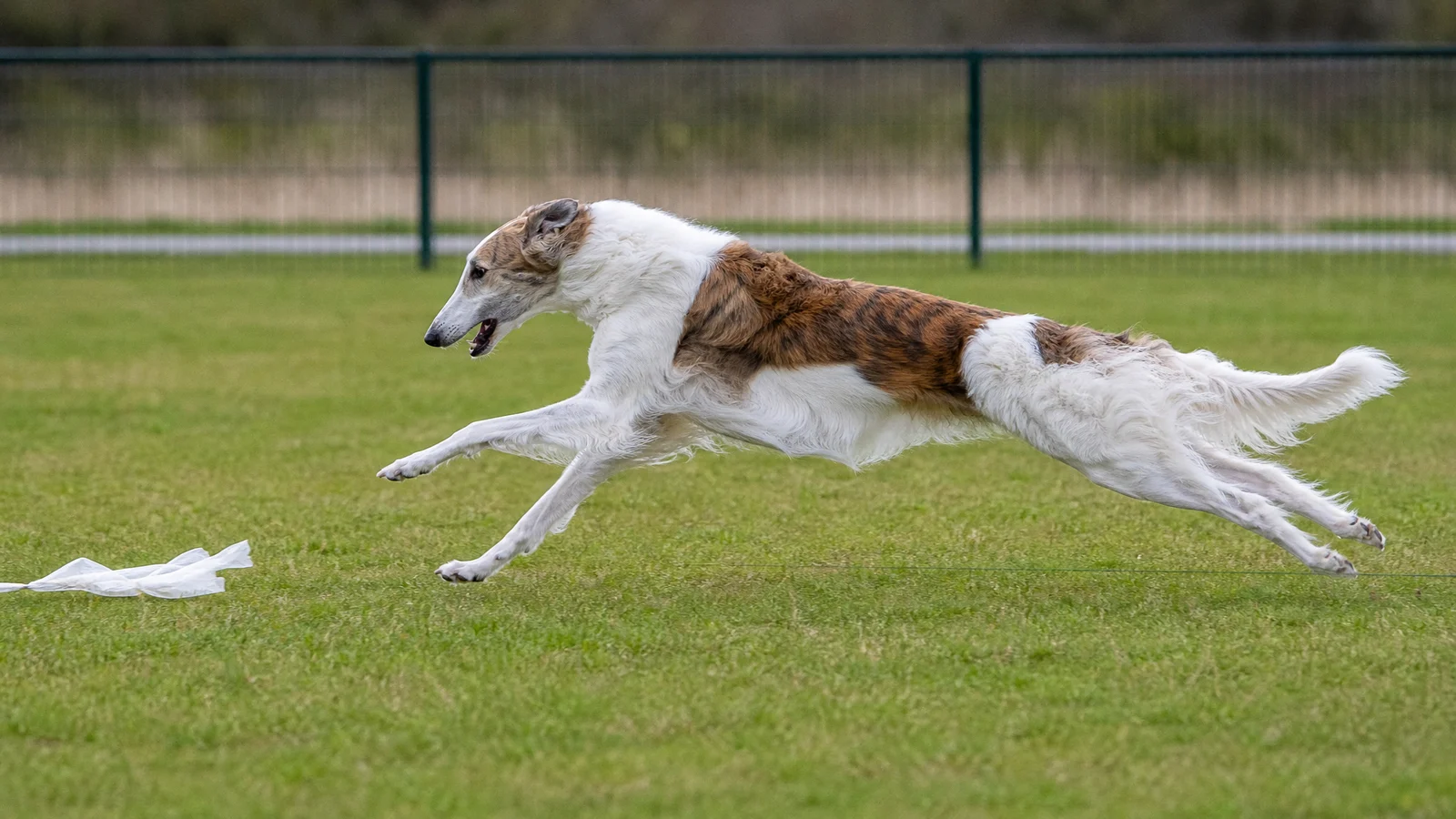 Exercise and jobsLure Coursing as Training for a Borzoi
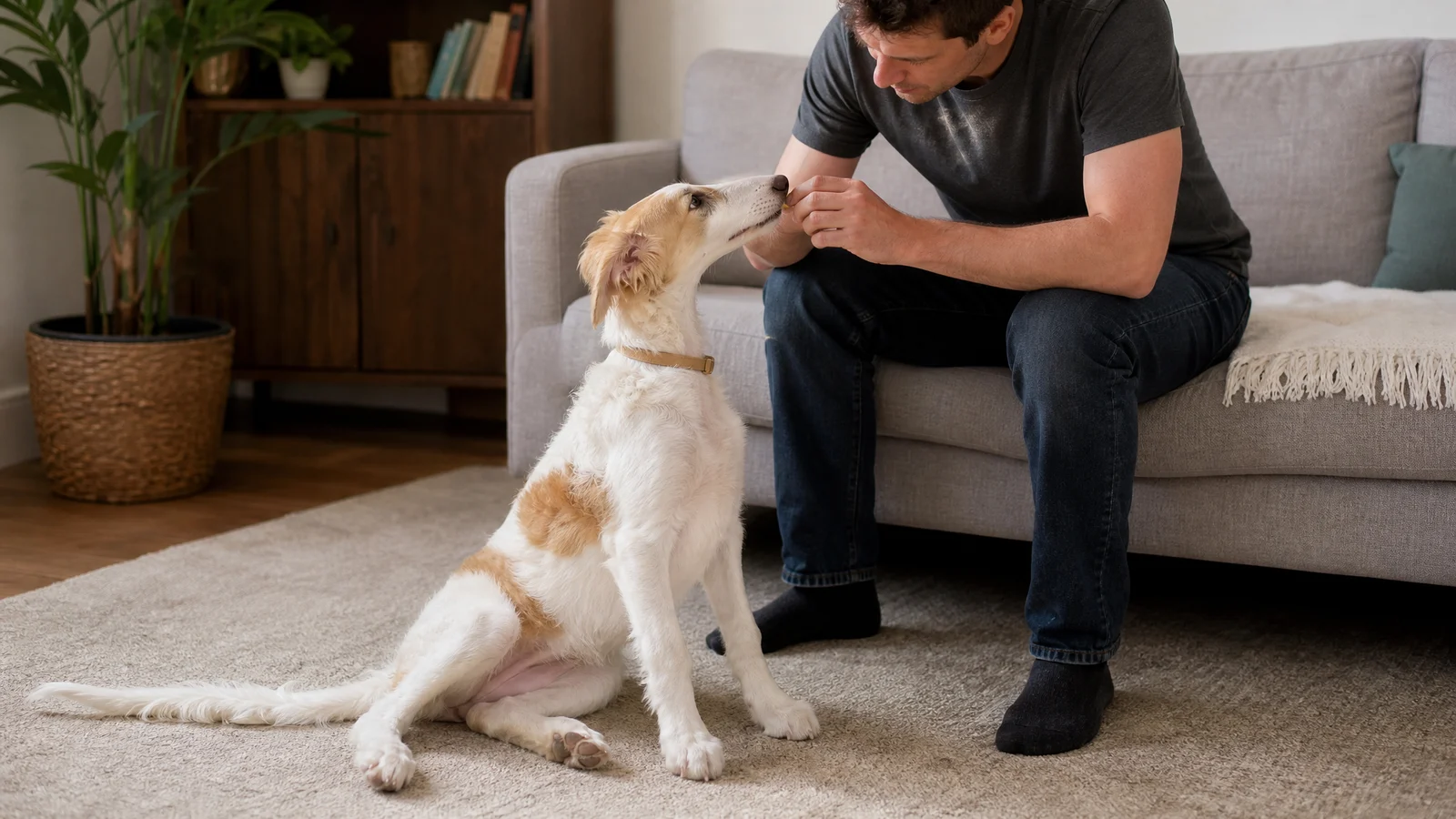 Puppy trainingBorzoi Puppy Training Timeline: 8 Weeks to 2 Years
 Training basicsBorzoi Recall Training: Why Off-Leash Is Not the Goal