 Borzoi
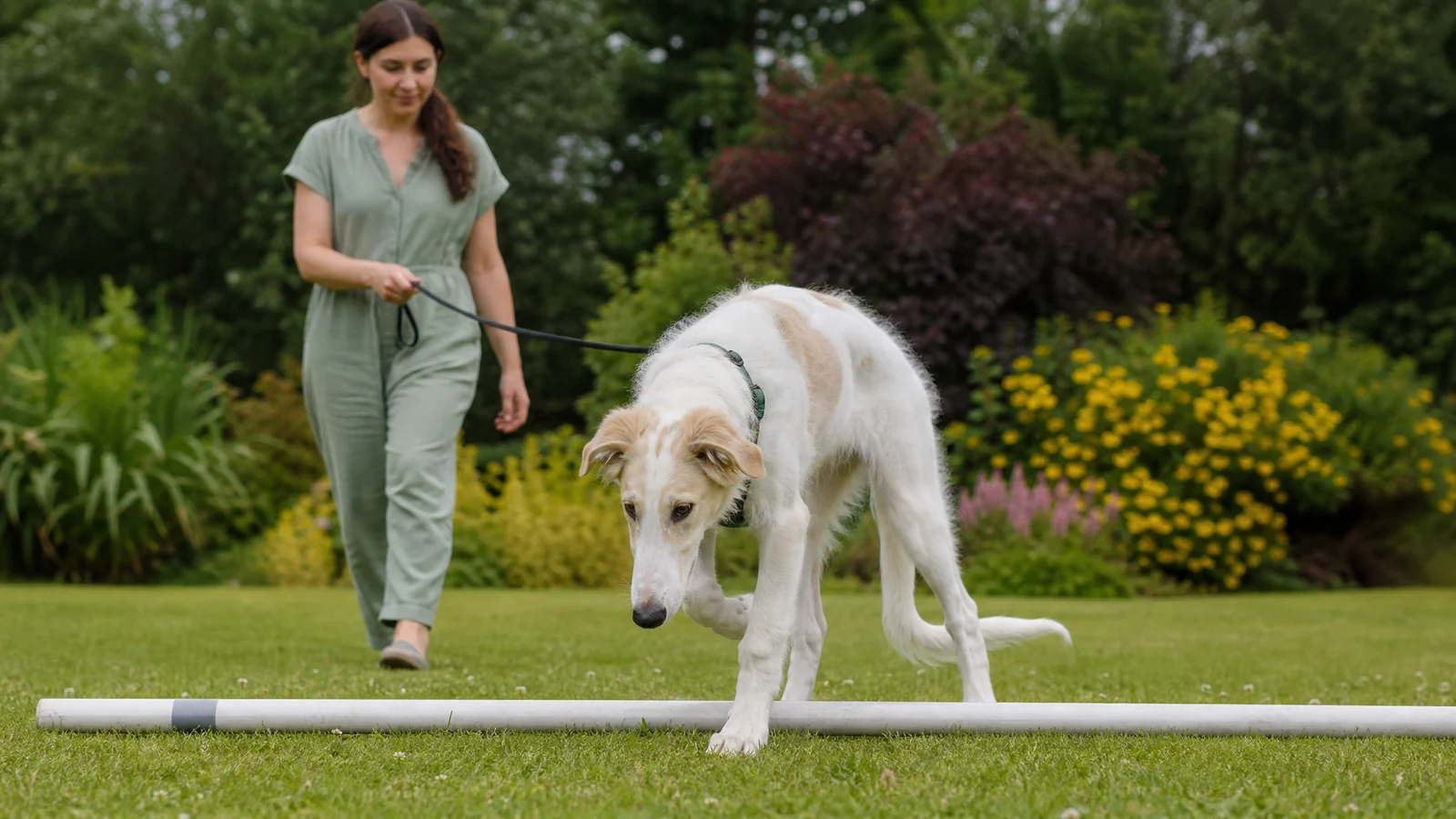
Ordinary puppy advice says to tire the dog out, but a Borzoi keeps growing and maturing to 18 months and beyond. Your plan is to build slowly and stop short of tired. Long legs and awkward coordination make an innocent-looking knock in play a real risk, and owners describe serious limb injuries followed by weeks of keeping a puppy calm and crated.
We specialize in Borzoi behavior and training, and we have seen careful puppyhoods pay off in sound, relaxed adults. In this article, we'll go through how growth changes exercise, one example puppy's day, soft-ground walks, very low jumps, crate rest, and conditioning after six months.
Handled badly, this stage can cost a dog their coursing or showing future. Handled well, it gives you an adult with legs ready for years of running.
How Borzoi Growth Changes Exercise
Standard puppy advice assumes a dog who finishes growing at about a year and tells you to wear them out. A Borzoi runs on a longer clock, which means less and gentler activity than you may expect. Two ideas shape the rest of this plan: slow maturity and a gradual build-up.
Growth to 18 Months
Borzoi keep maturing up to 18 months and beyond, and they are physically mature at about 2 years. Sexual maturity typically arrives at 12 to 18 months, and a bitch's first heat at 2 years or later is not uncommon. Set every timeline longer than you would for most breeds.
Growth comes in leaps, and owners report fast gains that make a young puppy look nearly adult while still moving like a toddler. In the awkward stage a pup may sit crooked or go down slowly. Read that as growing, not disobedience, and be patient because it passes.
Why More Is Not Better
Many owners describe growing Borzoi as uncoordinated enough to trip over their own legs. Some describe a serious limb injury from a knock in play that looked harmless, and some of those injuries ended a dog's coursing or showing plans. That is a steep price for one more lap around the yard.
So skip the advice to run your puppy until they flop. Tired legs are less careful legs. Stop the session while they still want more, and let a nap do the rest.
An Example Borzoi Puppy's Day
To make this concrete, here is a sample day built around short outings, with rest between each one. Adjust it to your own household and your own puppy, since Borzoi puppies vary a great deal in energy. Ask your vet how much walking suits your puppy's age before you head outside.
The Morning Routine
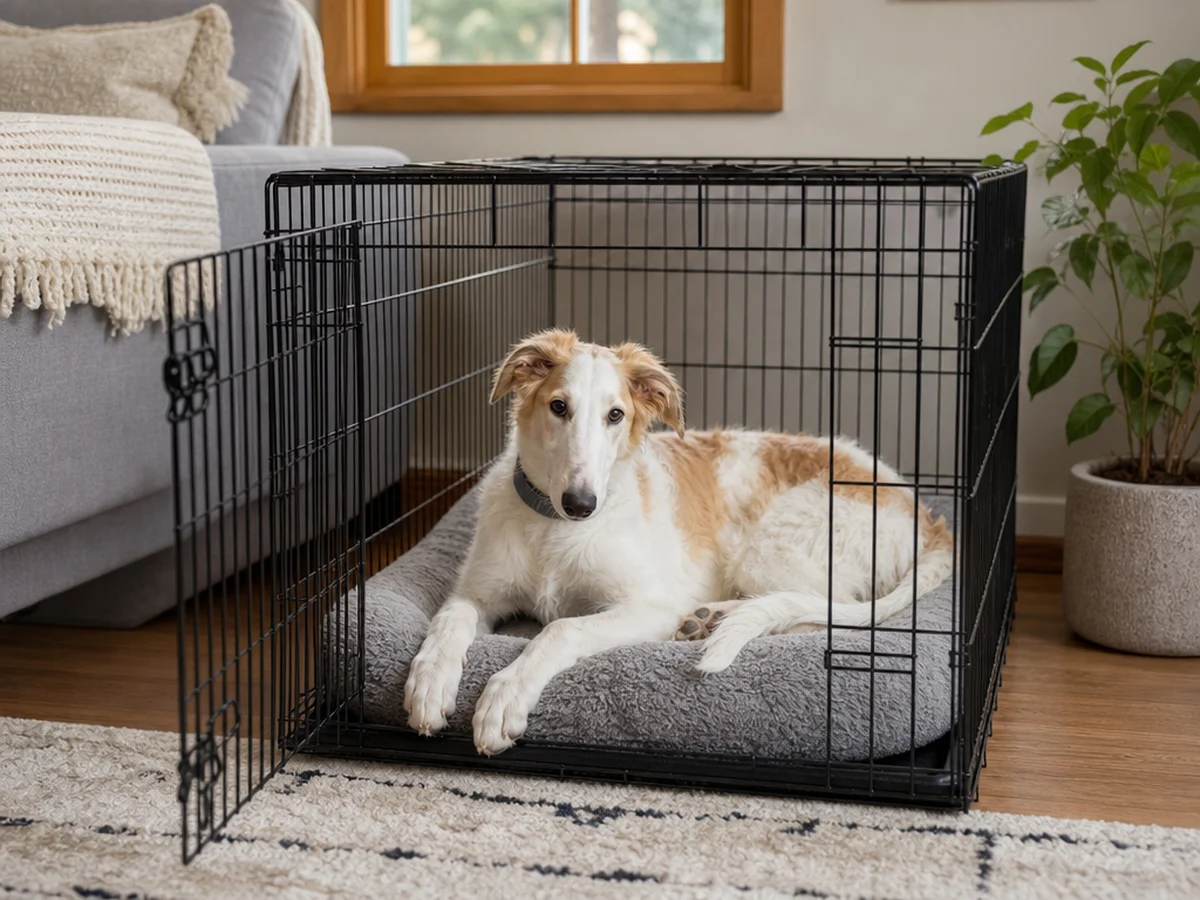
Start with a potty trip, then one short, brisk walk on grass. Back inside, check each pad, then let the puppy settle in the crate or on a mat while you get ready. Keep anything strenuous well away from mealtimes, because strenuous exercise before or after eating is not recommended for deep-chested dogs like the Borzoi, given the bloat risk.
This is general information, not veterinary advice. Check with your veterinarian before any medicine or diet change.
The Midday Reset
Midday is for the nose, not the legs. Scatter a few treats across the living room floor and let the puppy hunt them, since using their nose is both stimulating and calming. Then teach them to settle on a mat with a frozen stuffed Kong, working a little first and resting after.
A crate nap follows. The puppy who learns to switch off between activities is the one who copes later when rest is forced on them.
The Evening Wind-Down
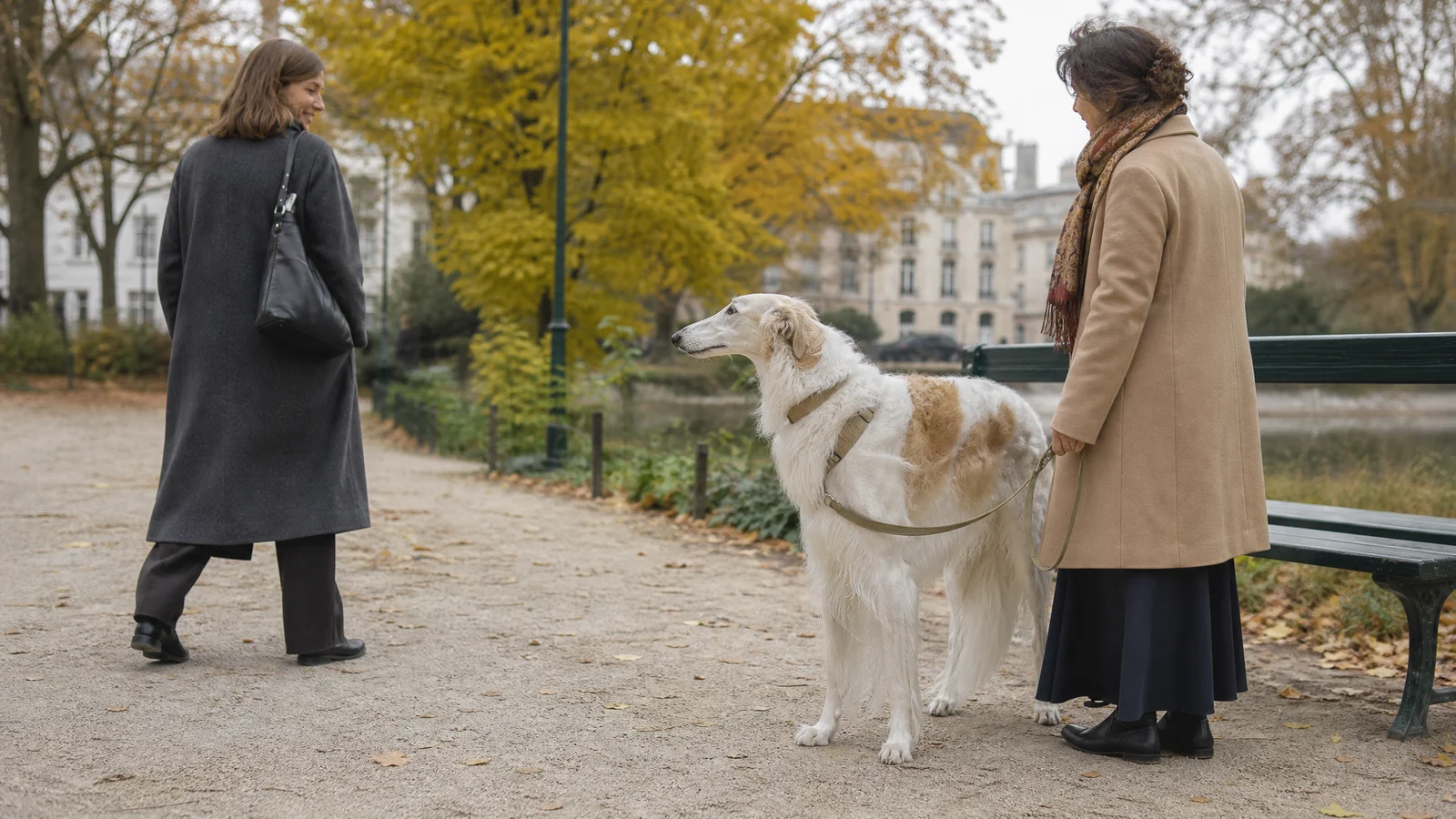
In the evening, take one more short walk, then allow supervised play with a dog close to the puppy's size and temperament. Owners describe growing Borzoi as clumsy enough to step or fall on a smaller dog, so stay close when your puppy plays with small dogs. A training class can offer controlled play like this.
Finish with a chew and a calm wind-down. Your puppy may be sleepier or wilder than this example, since owners report both calm-from-day-one pups and wild ones who turn mellow at about a year. Either way, keep the activity short and the rests long.
Exercise on Soft Ground
A good conditioning program starts easy with brisk walks and gradually increases in time and distance, just as it does for people. Where you walk matters as much as how far. Soft ground and a pad check after every outing protect the legs and feet that carry all that growth.
Surfaces to Choose
Pick grass, packed dirt and soft trails, and avoid rough surfaces such as sidewalks and sidewalk. Free running, when you add it, belongs only in a securely fenced area, so build it around your Borzoi fence and ID plan. Warm up with a calm stroll first and cool down with one at the end, and skip the outing when your puppy is tired or the weather is uncomfortable.
Pad Checks
Wear or injury shows up in the pads first, so check them after every outing the same way. A fixed order makes small changes easier to notice:
- Lift each paw and look over the whole pad for wear, cuts or anything stuck in it.
- Look between the toes and along the nails, where small problems hide.
- Pair every check with a treat so your puppy learns to hold still and enjoy it.
- Call your vet about any limp instead of waiting to see whether it passes.
Walk Length by Week
We can't hand you a minutes-per-week formula, and nobody should pretend to. Add time and distance only after several outings where your puppy finishes bouncy and moves normally the next day. If they are stiff, tired or off, hold the walk where it is or shorten it.
Low Jumps in Puppy Exercise
Very low jumps can be introduced young, but an immature dog should not be asked to jump full height. General guidance says no jumping until fully grown, and for a breed this slow to mature, that wait runs longer. Hold off full-height jumping until about 2 years.
For a puppy, a good jump is barely a jump. Start by walking them through stanchions set on the ground, with a treat waiting on the far side. Then lay a board 2 to 4 inches high and reward each calm step over it, slowly and with no repetition drills.
Treat the couch the same way. A leap off furniture is still a jump, so teach an off cue and reward your puppy for stepping down. If you're unsure about a height or a surface, ask your vet.
Crate Rest Between Exercise
Crate rest belongs in your puppy's day from the first week, not only after an injury. Owners who have been through a limb injury call keeping a puppy calm and crated the hardest part of recovery, and some describe light exercise returning only after weeks. Teach it while it is easy.
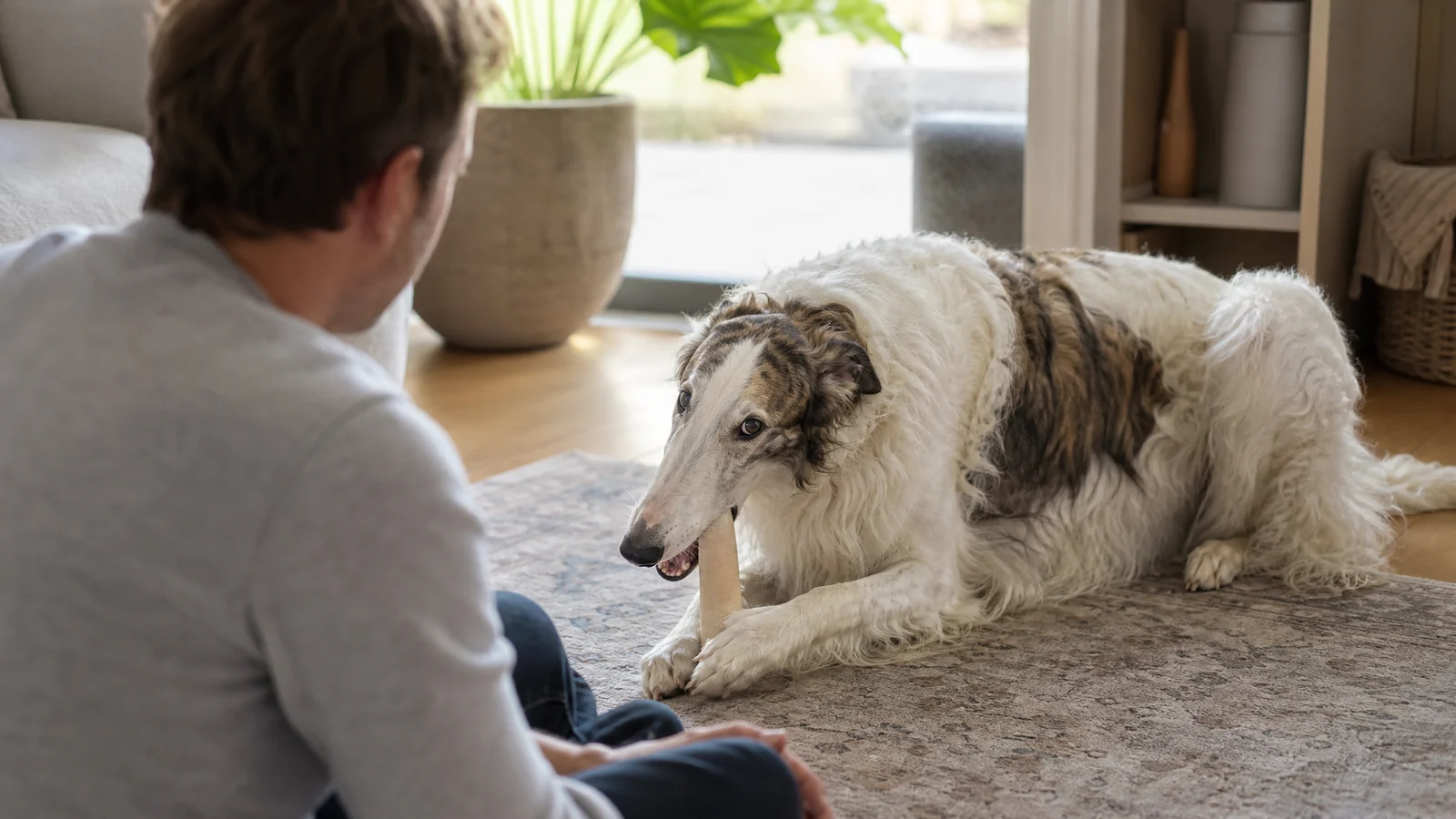
The aim is a crate that means chews and quiet, never punishment. Owners report that a long chew can hold a puppy's attention for over an hour. Build the habit in short, calm sessions:
- Feed a long-lasting chew or frozen stuffed toy in the crate with the door open, so the crate predicts good things.
- Close the door for short stretches while your puppy is busy, and open it before they get restless.
- Add a sniffing game, such as treats hidden in a folded towel, so a resting body still gets a working nose.
- When your puppy cries, hold off on the door until you hear a pause in the noise, then open it, since letting a vocal dog out teaches that noise brings you.
- Reward calm with quiet praise and a treat, so resting pays better than fussing.
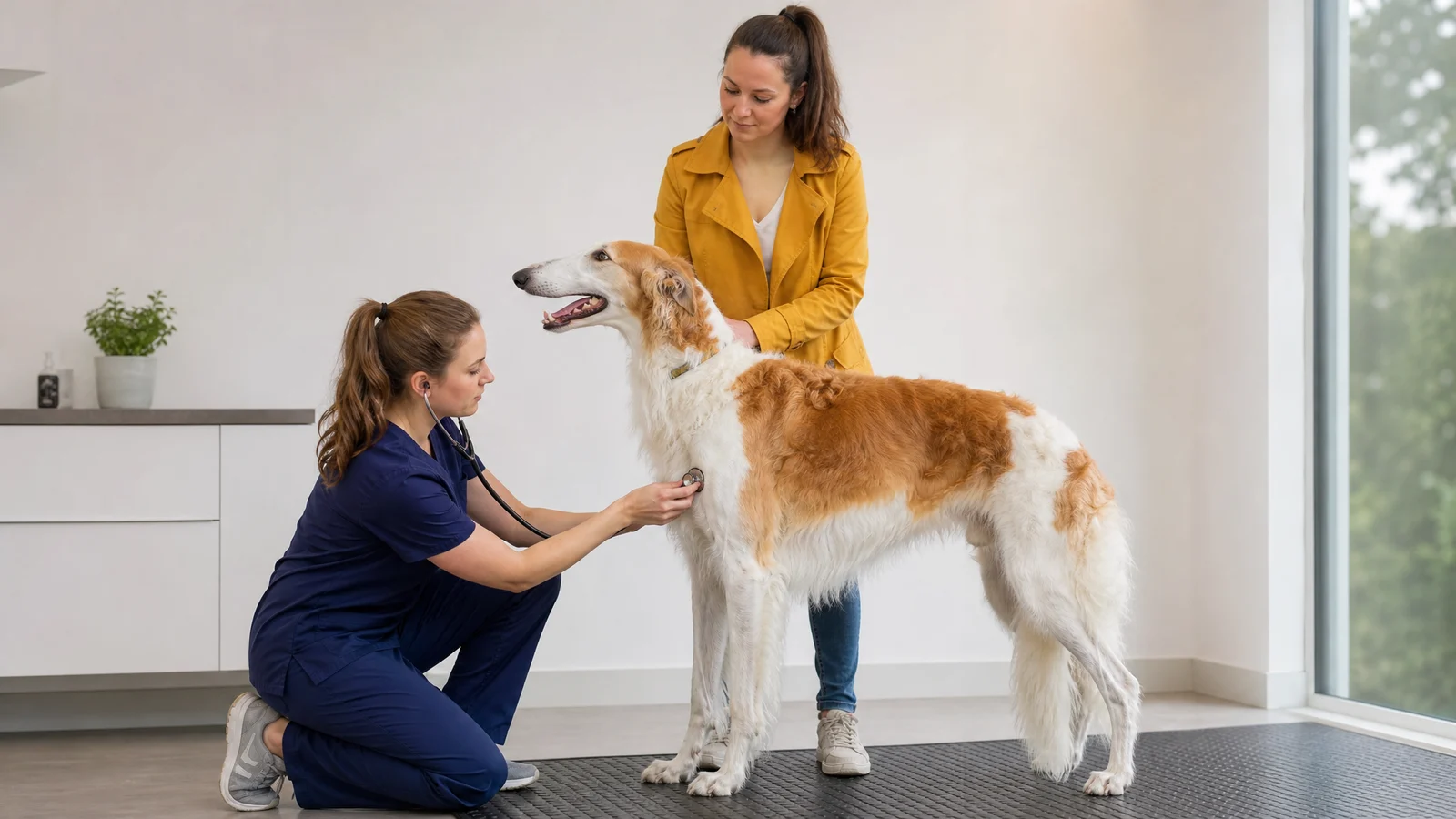
After any limp or injury, your vet sets the rest plan and decides when exercise returns. Regular vet visits through the growing months also give someone trained a chance to watch your puppy's frame change.
Borzoi Conditioning After Six Months
Follow the example puppy forward and the plan stays the same: add a little at a time, protect the legs, and let the calendar set the pace rather than your enthusiasm. Condition like an athlete, with a warm-up and cool-down every time. During teething, at 4 to 5 months, last week's easy task may be impossible, so put intense training on hold while you keep socializing.
Months Six to Twelve
Lengthen the brisk walks gradually and keep them on soft ground. Lure coursing was created to let sighthounds chase in a simulated hunt, so it suits the breed, and puppy practice comes first. Take your puppy to matches and practices where they won't compete so they get used to the excitement, then start with short straight runs, called puppy bumps, before any course with turns.
Competition waits until 1 year, and the practice certification test comes no earlier than 11 months. Never run a tired puppy, skip uncomfortable weather, and keep strenuous exercise away from mealtimes. Energy varies, too, since owners describe one Borzoi needing daily play while the next is a couch potato.
Twelve to Eighteen Months
At a year your Borzoi may be old enough to compete, but they are still growing, so keep building gradually. Introduce courses with turns slowly, keep recovery days, and keep checking pads after every outing. Free running stays in a securely fenced area.
Full-height jumping still waits until about 2 years. These months test your patience, so see what we say about how trainable Borzoi are for the reason. If a gait looks off or a limp appears, call your vet before the next outing and let your vet guide any return to exercise.
Your Borzoi's Walk Today
A slow-maturing, long-legged breed rewards the owner who does less, more carefully. Over the next 18 months and beyond, your job is to keep play small, jumps low and rest routines calm, so those legs get the time they need to finish growing.
Today, take your puppy on one short, brisk walk over grass, then lift each paw and check every pad. Give a treat for standing still, then tuck them into the crate with a chew. That single easy outing starts every habit this article describes, and it leaves your puppy wanting more tomorrow.
 BehaviorSocializing a Borzoi With Kids, Dogs and Strangers
 HealthBorzoi Health Problems: Screenings and Calm Vet Visits
 BehaviorStop Destructive Chewing in a Borzoi