 Borzoi
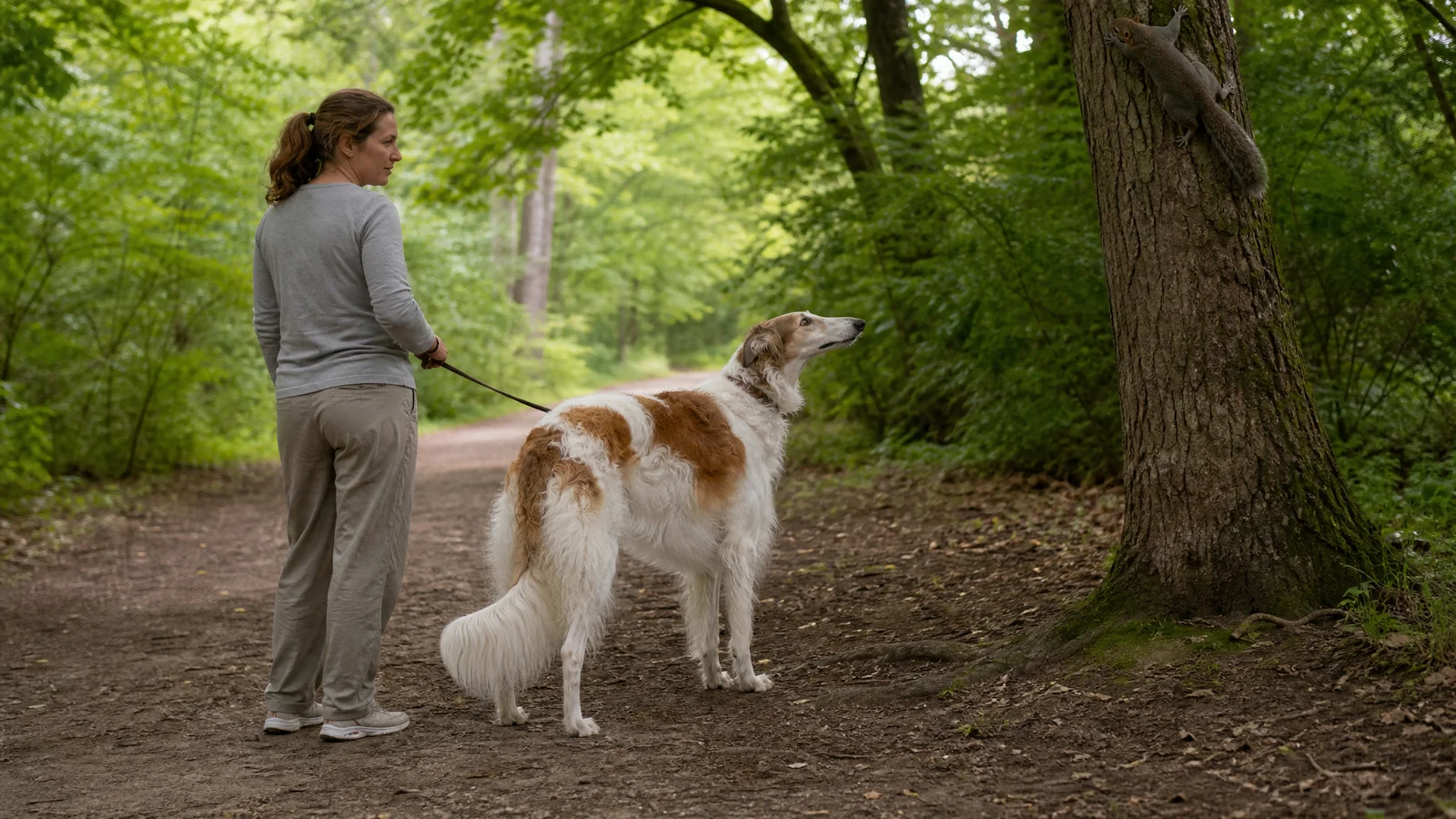
Owners ask why their Borzoi does this and how to stop it. The usual answer, more discipline or more exercise, falls short for a hound bred to chase and hold. A dog built for sight pursuit does not lose that drive by getting tired, and a worn-out Borzoi still snaps their head around when a squirrel breaks cover.
Badly managed, the chase instinct puts a very fast dog in the road, and the independent streak turns every house rule into a negotiation. Understood properly, those same traits come back to you as a gentle, dignified companion who is calm indoors. We have spent many years specializing in the behavior and training of these dogs, and the advice below follows what owners keep reporting.
We'll walk you through chasing, ignoring you on walks, stubbornness, rough play around children and the long destructive puppy stage, then the smaller habits owners mention most, and finally the signs your approach is working.
Borzoi Chasing Behavior Toward Cats and Squirrels
Many owners describe the same puzzling evening. A Borzoi has spent hours stretched out beside the household cat, perfectly peaceful, and then crosses the yard like a thrown spear the moment a cat, even that very cat, runs away from them. The calm indoors is real and so is the explosion outdoors, and the two do not contradict each other.
Borzoi were bred to course wild game by sight on open terrain, with a body built to chase, catch and hold what they pursued. Movement at a distance is the trigger, so a running squirrel, rabbit or small dog can start the pursuit before the dog has decided anything. Being raised around other animals helps a great deal, yet it does not settle the question once something bolts.
We treat this as what the breed was built for, not a bad habit to train away, and that changes the advice. The aim is management and outlets, not removing the drive. A neighborhood rich in rabbits and squirrels makes every walk harder, and no amount of obedience practice changes that fact.
Management That Holds Up
Owners who live comfortably with the drive lean on a few habits that never depend on the dog's good intentions:
- Keep your Borzoi on leash on every outing, since any small animal that runs may trigger the response.
- Allow running only in a securely fenced space, and inspect the fence honestly, because owners report 6-foot fences jumped, hidden boards pushed aside and gates opened.
- Treat the front door as part of the fence, since guests leaving it open is a common way out.
- Never assume that peace with the indoor cat carries outdoors, and keep the two apart whenever either might run.
A Legal Outlet for the Drive
Lure coursing was created to let sighthounds enjoy a simulated chase, and it suits Borzoi particularly well. At home, a flirt pole gives a smaller version of the same release. Some owners find their Borzoi will not gallop alone or with non-sighthound dogs, and a flirt pole or a second Borzoi is what gets them running. A regular outlet makes the on-leash work of "don't chase" much easier to live with.
Why Does a Borzoi Ignore You on Walks?
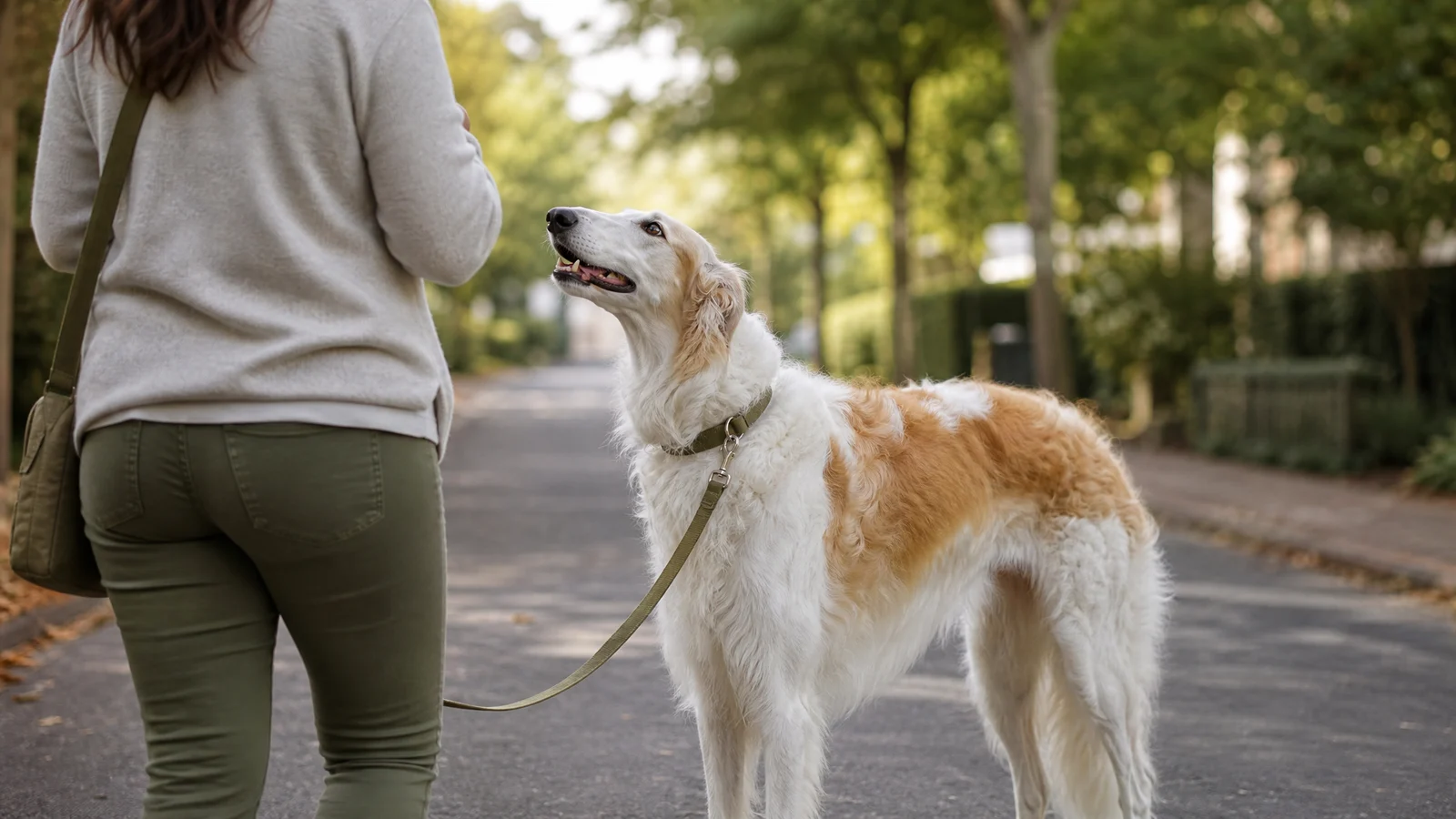
Most owners know the moment. A Borzoi who has been drifting beside you, relaxed and responsive, goes rigid at something far across a field, and the name you are calling might as well be weather. Owners who trained recall carefully from puppyhood report the same thing: it switches off the instant the dog sees an animal, even in a dog who adores people.
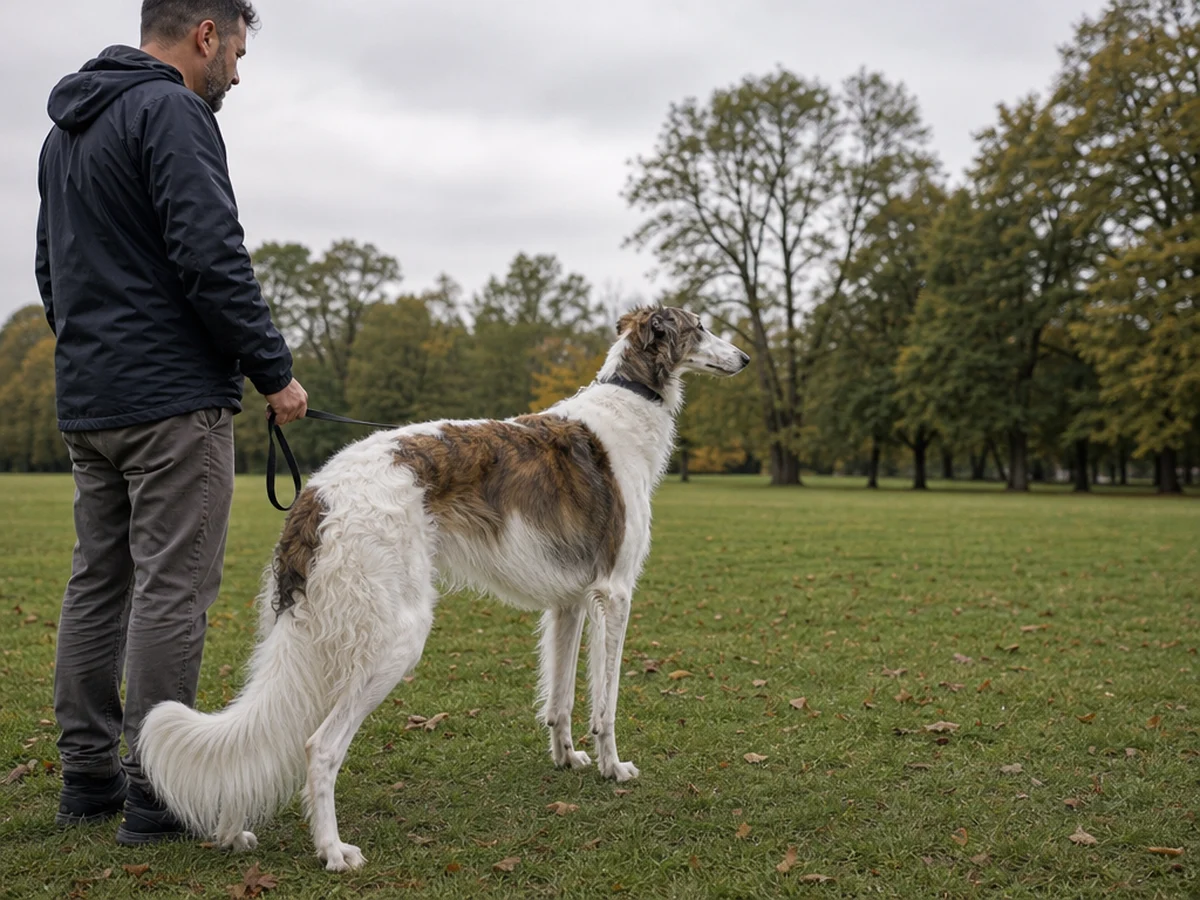
That is vision outranking voice, not an insult. A sighthound's visual response is strong, and once the eyes lock on, your cheerful request gets very little say. Off-leash trust also differs by individual and by line, and owners of dogs from coursing lines often decide the leash never comes off. We think that is a sound decision, not a failure.
Common advice says a solid enough recall earns off-leash freedom. For this breed we would turn that around, because recall is a skill for everyday life while the leash or fence is the safety system. Owners report that even a well-trained recall can switch off the moment the dog sees an animal, which is why the leash or fence has to do the safety work.
Getting Attention Back
You can improve the odds a lot without pretending the instinct is gone. These steps work with the dog's eyes instead of against them:
- Start far from anything that moves, where your dog can still think.
- Pay every glance toward you with something excellent.
- Keep a mix of rewards, since they change with the dog and the day. Food and toys count, and above all for this breed so does the chance to chase a moving object, such as a toy skimmed across the grass after they turn away from the trigger.
- Keep each round to two to three minutes, several times a day, with a game of tug or a thrown toy between reps.
Borzoi are surprisingly small eaters, so check whether food still has value halfway through a session. The wider foundation is in our complete guide to Borzoi training.
Stubbornness or Independence in Borzoi Behavior
Ask a Borzoi who has happily learned sit, down and come to get off the couch, and you may meet a different dog, one who ignores the word or goes limp as a sack of flour when you reach for their collar. Owners describe exactly this, stubbornness that centers on what the dog wants, the couch, the owner's warm spot, a game, rather than on training in general.
It helps to separate two things that get lumped together. Independence is the breed's nature, almost cat-like, a dog who thinks for themselves and weighs whether your request is worth their time. Stubbornness is that independence meeting something they badly want. The AKC puts trainability at 2 of 5, the self-willed end of its scale.
That is a reason for a different approach, not for firmer handling. Borzoi are sensitive and do better with positive methods, and the more playful the session, the more willingly they work.
When the Dog Wants the Couch
Make the cue worth more than the couch. Owners report good results from a very high-value treat kept only for on and off cues, paid the instant the paws hit the floor, with a comfortable bed of the dog's own nearby. Work on it while the furniture holds little appeal for them, not after they have settled in, and keep each try short.
When the Dog Wants You
The dog who heads straight for the one forbidden item, or nudges a toy onto your laptop until someone plays, is attention-seeking with excellent aim. Give the attention before it is demanded, with short play sessions at predictable times, and reward them for settling nearby. Chasing them around the room only confirms that the game was worth starting.
Affection follows the same pattern. Some Borzoi are lap dogs who also want space, usually in the same room, and walk off when they have had enough. Others greet you at the door and seek cuddles, and owners of two often see both kinds under one roof. Let the dog who leaves, leave. We say more in our Borzoi trainability FAQ.
Borzoi Rough Play Behavior Around Children
A young Borzoi gets excited, and suddenly a hand, a sleeve or a ponytail is in their mouth, and the child squeals, which makes everything more exciting. Owners describe young dogs who mouth or bite in play when excited, even when they know better, and who nibble clothing. It is rarely meanness. It is a very large puppy with a very small sense of proportion.
Borzoi stay puppies for a long time, so this stage outlasts what many families expect. Owners report partial results from redirecting to toys, chews and treats, and from stopping play the moment the puppy gets too wound up. Pausing the game costs the puppy nothing but fun, and it works best when play resumes calmly afterward, so they learn that calm brings the game back.
Rules for Children and Dog
Sensitive dogs also keep score. Many Borzoi are sensitive, and some owners describe dogs who stay patient with accidents but react quickly to real roughness. So the rules protect both sides.
Children should play gently, never grab, hit or ride the dog, and leave them alone whenever they walk away. An adult needs to supervise every interaction between a child and a puppy, and roughhousing with the puppy is off the menu for everyone, adults included.
Jumping up to sniff adults' faces is another thing owners say they could not fully stop. It lasts only seconds and tracks excitement, so a calm greeting routine, a toy to carry and a quick sit to earn attention reduce it more than any amount of repeating the rule.
Is Puppy Destructive Behavior Just Boredom?
Owners often find that a Borzoi still prefers shoes and shirts to toys well into the second year, and that things improve with management rather than with age alone. That is not a training failure. Borzoi are puppies for a long time, so the destructive tendencies of puppyhood last a long time in a very large puppy.
Boredom adds to it, and attention and exercise are the usual remedy. The individual dog's training, temperament and bloodline also play a part, so boredom is part of the picture, not all of it. As the ASPCA notes, dogs without stimulation find their own, and the result shows up as unwanted behavior.
Exercise That Fits the Individual
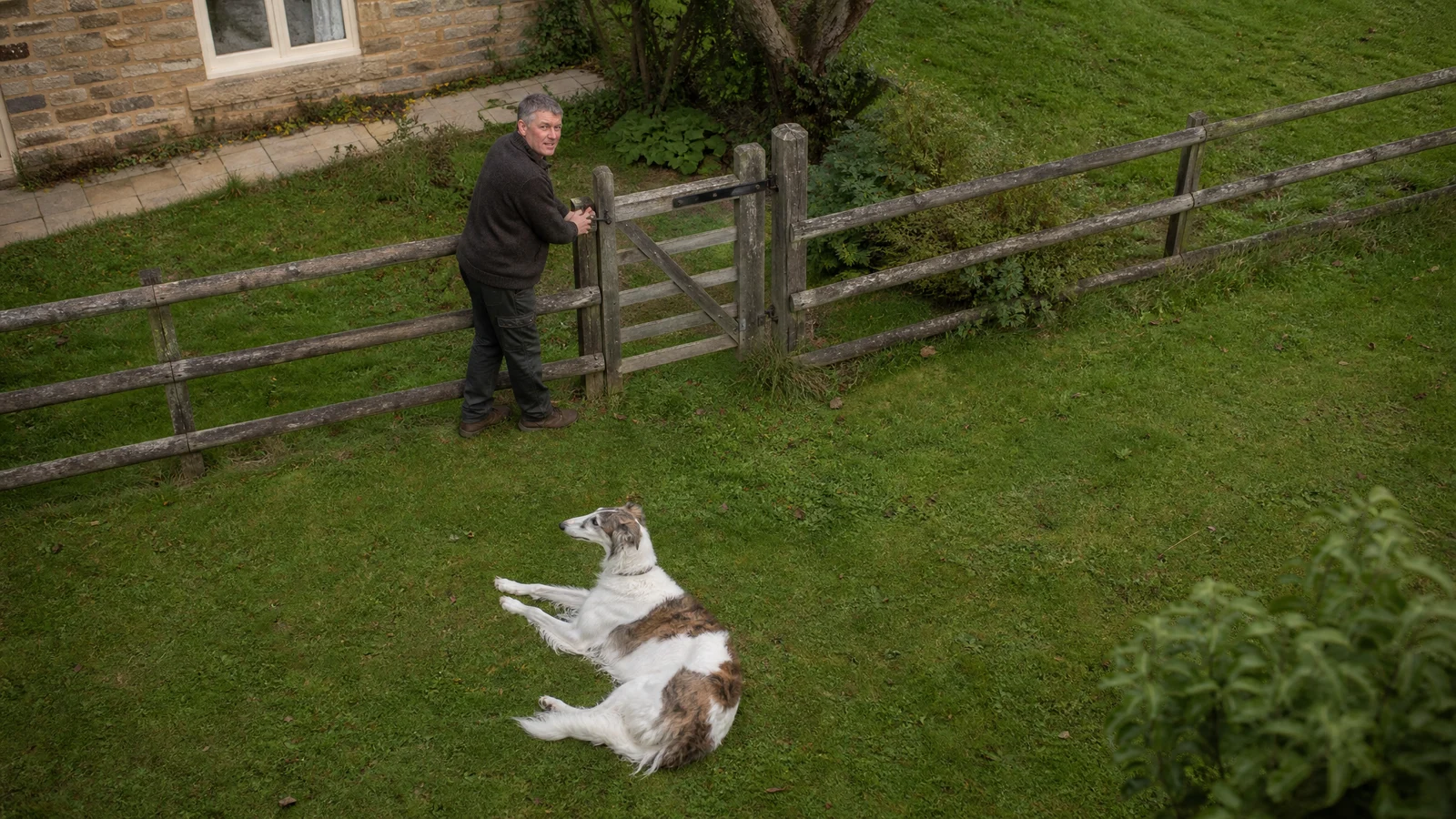
Daily exercise matters, either long walks or running in a securely fenced yard, but dogs differ widely. Owners with more than one Borzoi describe one who needs daily play and another who is a couch potato, and some low-energy adults and seniors do well on walks alone with almost no room to run. Watch your own dog, not the average.
Management and Trades
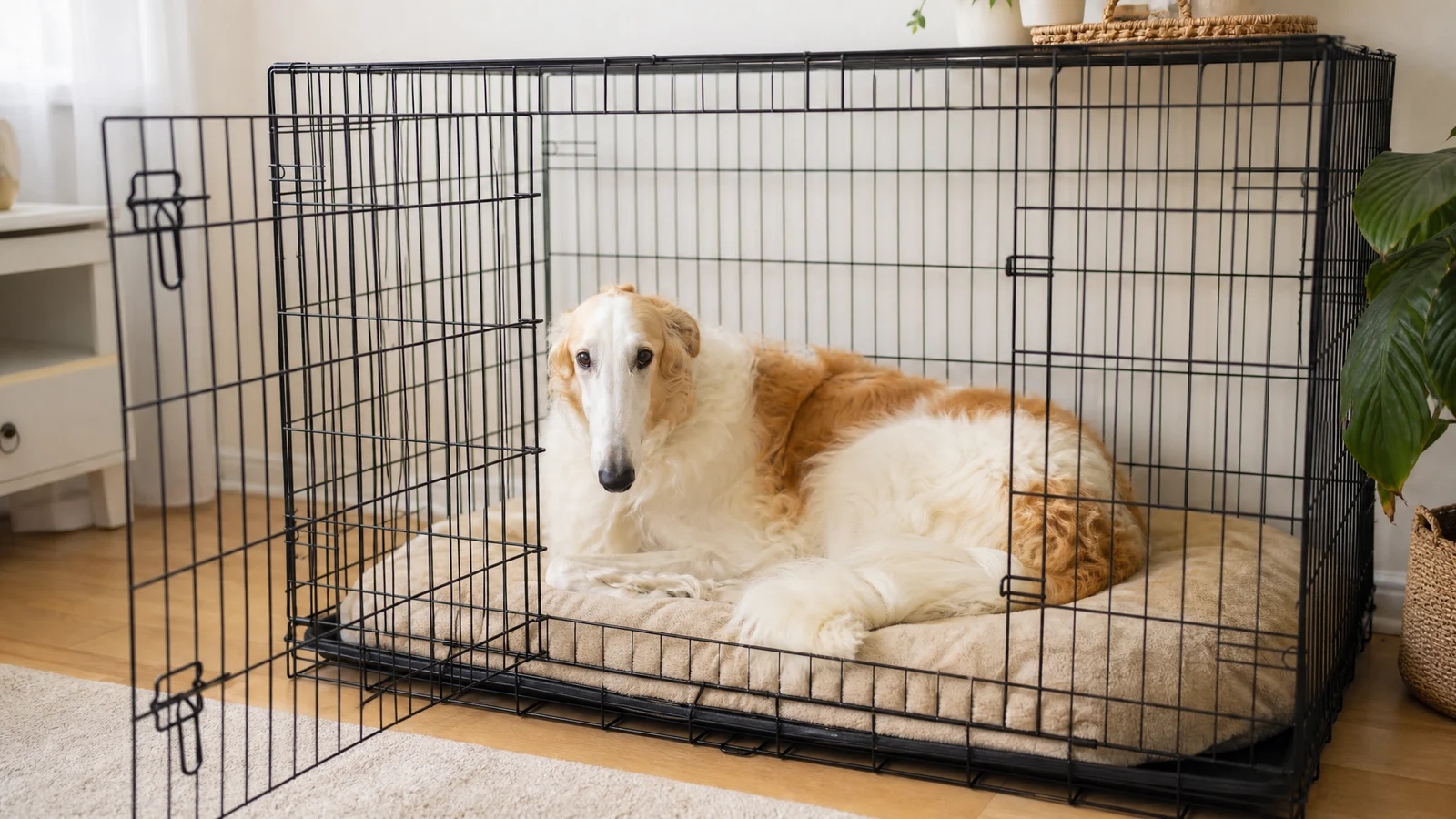
Plan crate and gate time for longer than you expect, with a crate sized for the adult dog, as we explain in our Borzoi crate training guide. A stuffed interactive toy keeps them busy inside.
When a forbidden item is already in their mouth, trade it for a toy or a tasty treat. Owners report a hard grip on found food or a prized chew, so a trade works far better than reaching in, and a "give" cue can come later.
Other Sighthound Behavior Owners Report Often
Beyond the big five, owners keep mentioning a handful of smaller habits, and each has a short, practical answer. Regular vet visits matter throughout, because a sudden change in any of these deserves a medical look before a training one.
Zooming Indoors
Many owners find that a day or two without a proper run is fine, but five or six days in a row can bring problems such as laps around the living room. Owners with daily routines of long walks plus a run in a fenced space or on a beach describe dogs who are calm indoors. Protect the run, even in bad weather.
Poop Eating
Puppy owners describe poop eating that training and quick clean-up have not stopped. VCA says it is common in some puppies and usually clears up by adulthood with good nutrition, direction and supervision. Keep cleaning promptly, reward leaving it alone, and be patient.
Counter-Surfing
Owners report Borzoi who lift take-out food straight off the countertop, and two dogs working together make it easier. Keep food out of reach, and reward four paws on the floor.
Crying When You Leave the Room
Some puppies cry as soon as their people are out of sight. Owners work on it with gradual, short absences, adding a little time only after the puppy stays settled.
Reading Borzoi Behavior as Instinct, Not Defiance
Nearly every problem above comes from the same working dog, a hound who chases by sight, thinks for themselves and takes a long time to grow up. Managing the chase, giving it a legal outlet, paying for the choices you want and meeting the need for exercise and attention will solve more than any amount of firmness. Work with the instinct and most of the apparent defiance quietly disappears.
Progress is often uneven, so look for these signs that your approach is working:
- Your Borzoi looks back at you when something moves, even if they cannot yet do more than that.
- Forbidden items get traded for toys and treats without a struggle.
- Play with children ends calmly when you step in.
- Indoor evenings are calmer after a good run.
- Chewing has shifted toward their own toys.
Sometimes the plan is not enough. Call in a qualified trainer or behaviorist if you notice any of these:
- Your dog growls, snaps or bites, especially around children.
- Chasing has led to injuries or close calls with other animals.
- A behavior appears suddenly or your dog seems distressed or unlike themselves, which calls for your veterinarian first.
- You have been consistent for weeks and nothing has changed.
 Training basicsCrate Training a Borzoi: Crate Size, Setup and Time Alone
 Exercise and jobsHow Much Exercise Does a Borzoi Need? Plus Brain Games
 Training basicsLeash Training a Borzoi: Pulling, Lunging and Loose-Leash Walking