 Borzoi
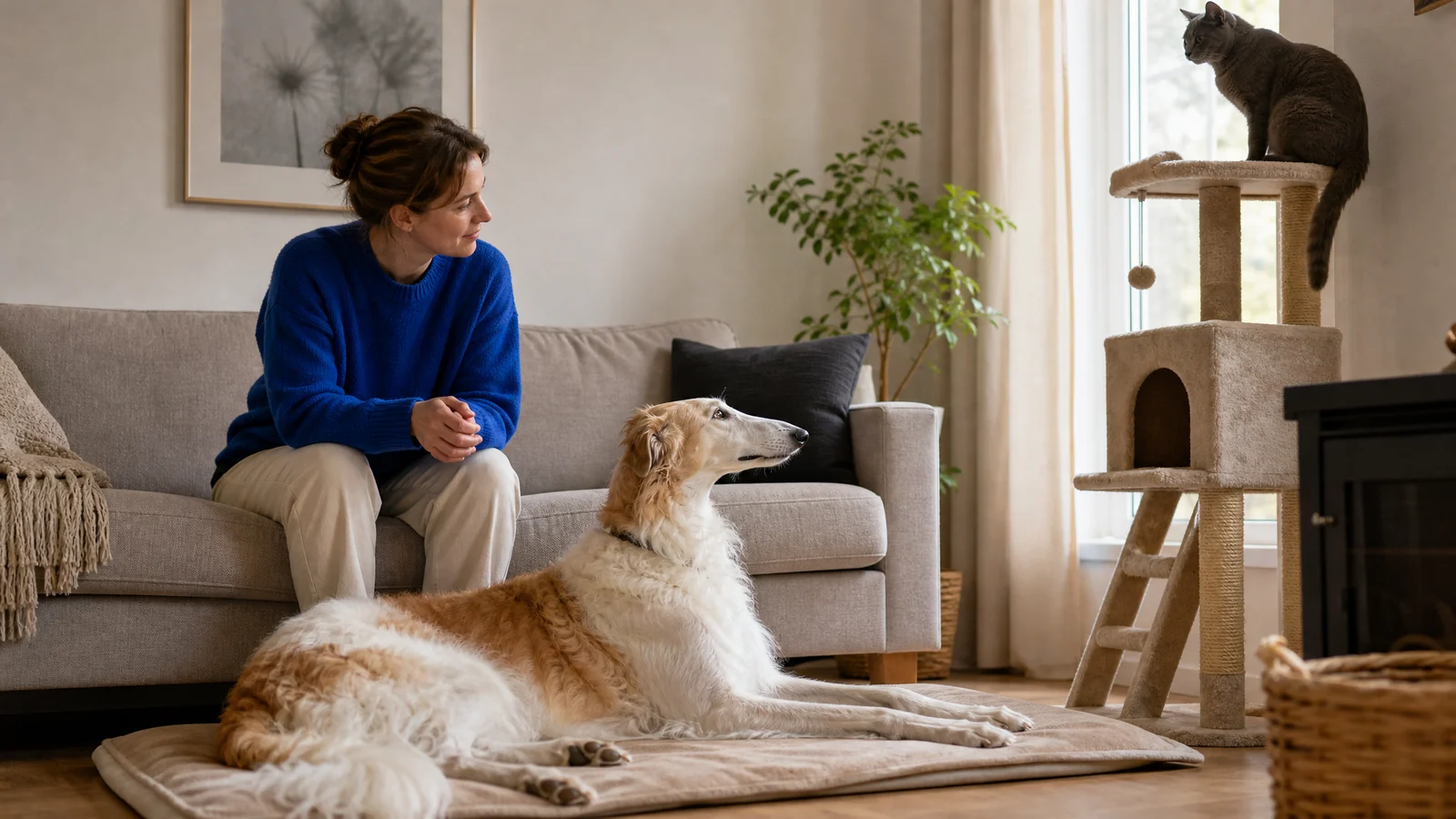
The mistake owners describe most often is trusting a friendly first sniff. The Borzoi nudges the cat, looks mildly bored, perhaps even play-bows, and the household decides everyone is now friends and lets them loose together, right up to the afternoon the cat bolts and the dog's whole body changes. The fix is management first, with rewards for calm layered on top, so the dog earns each step instead of being handed it.
Plenty of Borzoi live peacefully with cats, and others never can, and nobody can tell which kind they have from one meeting. We'll walk you through judging your own dog's prey drive honestly, then the barriers that prevent contact today, the rewards that build calm, the housing for smaller pets and a staged practice plan, and last the signs that tell you whether to advance, hold or call for help.
Prey Drive in Your Borzoi
Borzoi were bred to course wild game by sight on fairly open terrain, and the breed standard says they needed particular structure to chase, catch and hold their quarry. That history is the first thing to weigh before a cat shares a room with your dog, because the question is not whether the instinct exists but how strong it is in this individual and how it shows.
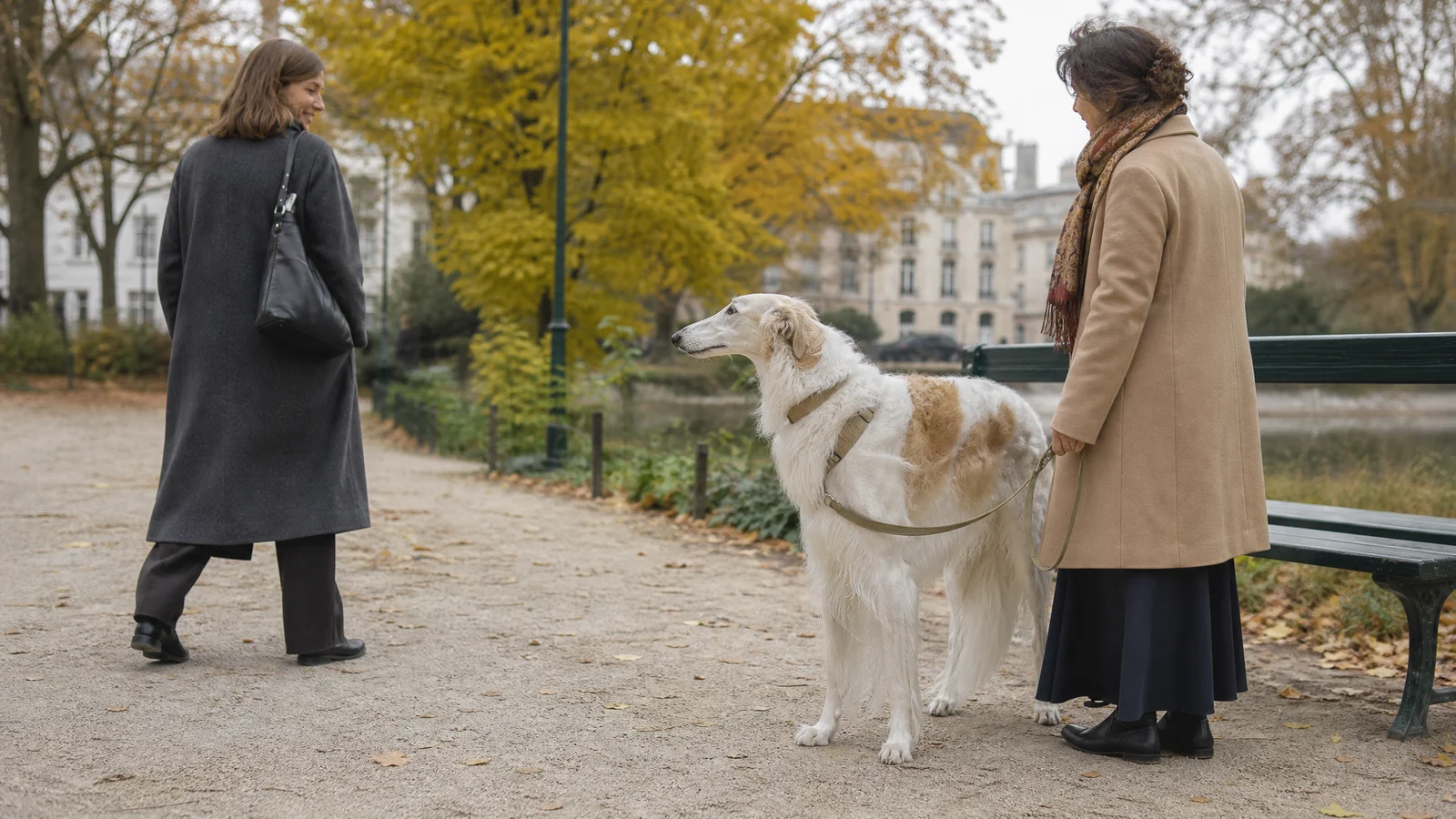
The trigger is movement seen at a distance. A running cat or squirrel quickly stirs pursuit, and the international standard says the visual response is well evident. Treat the chase as what the breed was built for rather than a bad habit to erase, and aim your advice at management and outlets, not at removing the drive.
Past Chasing History
Start with what the dog has actually done, not what they seem like on the couch. Ask the breeder or rescue about squirrels, rabbits, cats and anything else that ran, and watch your own walks for lunges, fixed stares and freezing at distant movement. Owners report lunges at cats strong enough to break a harness buckle on a large female, which tells you how much force a decent chase carries.
A few males have a drive so low they chase little beyond insects, but that is a minority, and a cat is a poor place to discover which kind you own. Assume the chase can appear until behavior proves otherwise.
Reactions to Cats
Owner experience splits sharply here. Many keep Borzoi peacefully with cats, including adult rescues introduced slowly, and puppies often bark and play-bow at the cat rather than stalk. Others describe dogs who always hated cats or simply cannot be kept with them, and some households find the cat sets the terms, with one good swat teaching a puppy limits.
Being raised around cats helps but does not settle it. The breed's parent club warns that a Borzoi may be fine with their indoor cat and change dramatically outdoors when a cat, even the same one, runs from them. Many owners whose dogs are gentle with their own cats still see them chase squirrels, rabbits and chipmunks.
Reactions to Small Animals
Small dogs, rabbits, rodents and birds each ask a slightly different question. Some owners describe early puppy classes with small dogs going well, and a young male who plays happily with dogs of every size. Yet a dog who is kind to a small dog on the sofa can still run down a rabbit in the yard, because what matters is whether the smaller animal moves quickly and flees.
Weigh all of this together, and then make the choice that protects everyone: treat your Borzoi as unproven around every cat and small pet, however sweet the first meeting, until months of calm behavior say otherwise.
Small Pets in a Borzoi Home
Hamsters, rabbits, birds, chinchillas and other small pets raise the stakes, since they are quick, quiet and fragile, and some of them are exactly the shape of the animal a sighthound was built to catch. You will not usually practice calm sharing with them the way you do with a cat. Instead you arrange their world so the two almost never meet.
Housing
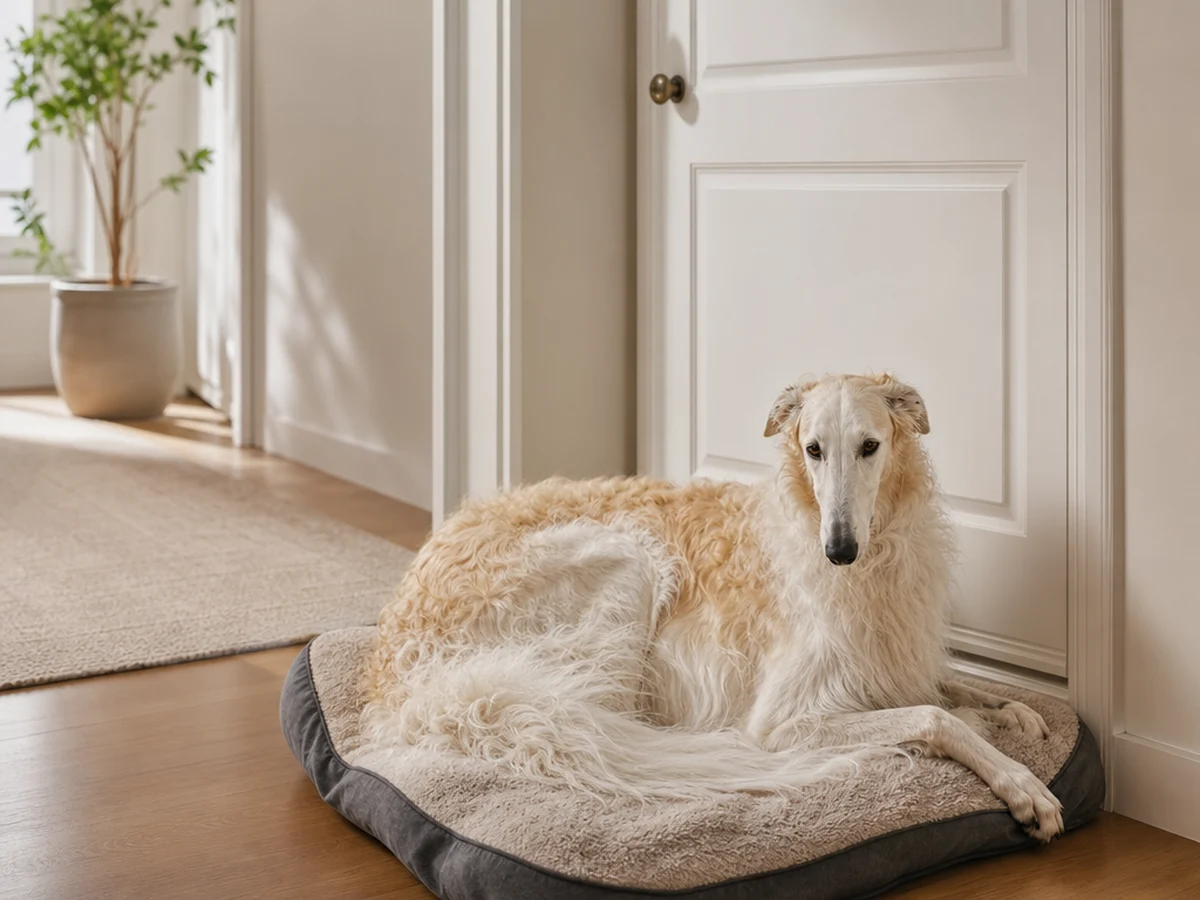
Keep small pets in a room with a real door, not on a low table in the family room. Owners with chinchillas describe keeping them behind a door, then a gate and a second door, so one open latch never ends in disaster. Choose cages that a tall dog cannot knock over, reach into, or push open with a nose.
Handling Times
Handle the small pet only when the Borzoi is in another room, behind a closed door or crated. A small animal in the hand, or one running across a floor, is exactly the cue that sets off the chase, and no leash makes that safe indoors. Keep the schedule consistent so the dog learns that pet time is a time to settle elsewhere, with a chew or a meal waiting.
Escape Risks
Small pets escape, and a small animal on the loose is an emergency for everyone. Check lids and latches daily, close the room before opening any cage, and tell guests the room is off limits. If a pet does get out, shut the dog away first and then retrieve the pet.
The decision is simple and concrete: house every small pet in dog-proof housing behind a closed door, and treat that arrangement as permanent. Training does not replace the barrier.
When Prey Drive Needs a Vet
Some signs mean more than a practice problem. Stiff, locked staring that does not break at any distance, repeated lunging at the barrier, or any injury scare involving the cat all deserve outside help. Regular vet visits matter anyway for a breed this size, and a sudden change in behavior is a good reason to book one sooner.
Start with the veterinarian, who can rule out pain or other medical causes behind a change in the dog's reactions. If the body checks out, a qualified behavior professional trained in reward-based training can then design a plan around your home. Our Borzoi trainability FAQ explains the independent streak that makes outside perspective so useful.
Some Borzoi cannot live with cats, and permanent separation is a humane, legitimate result. Set your threshold now: call for help if the stare never breaks, if the dog lunges at barriers, or if the cat hides, stops eating or avoids the home.
Separating Cats and Borzoi
Separation has two jobs that are easy to blur. One is prevention, which has to work today and never depends on the dog's mood. The other is skills training, which builds slowly and only ever sits on top of prevention. Keeping those apart in your mind is what stops a good practice session from turning into a risky free-for-all.
Prevention Right Now
Mixed households that succeed rely on boring hardware. They keep a baby-gated cat area, give the dog crate time when nobody can watch, and add a second barrier for the smallest animals, such as a gate and then a door. A Borzoi is tall and long-legged, so test every gate for height, and give the cat shelves and perches the dog cannot reach so the cat never needs to run.
Doors are the usual weak point. Owners report guests leaving the front door open, hidden boards pushed aside and gates opened, and some have watched a Borzoi clear a 6-foot fence. Our guide to fences, ID and a lost-dog plan covers the outdoor side, and the AKC advises leashes on outings because any small animal that runs may trigger the chase.
Skills Training Later
Skills are what you build behind those barriers. Fold training into the day: a sit for the food bowl, a sit while the leash goes on, a wait while the door opens. These tiny habits give you calm answers to ask for when a cat appears, and they cost almost nothing.
Leash work comes next, and it is slow, because Borzoi are independent, free-thinking hounds and consistency carries it. The core skill is not chasing while on leash, which our guide to Borzoi leash pulling and lunging develops, and most handlers describe it as ongoing work rather than a finished skill.
Now fix your routine in writing, because routine beats memory. Choose one barrier setup, tell everyone in the house exactly which doors and gates stay shut and who checks the latch, and treat that routine as non-negotiable no matter how well practice is going.
Rewarding Calm When Prey Drive Meets Cats
With the barriers in place, you can decide what you are going to pay for, and the answer is almost always small, quiet behaviors rather than anything dramatic. The most useful one is the look away. The dog spots the cat, then swings their gaze back to you without being asked. Close behind it comes a settle, where the dog lies down on a mat at a distance while the cat goes about the day.
Evidence supports reward-based methods across all dog training, even when you are treating a behavior problem, and a sensitive hound like the Borzoi is a good reason why. A handler who loses composure tends to end up with a frustrated person and a worried dog, so if frustration arrives, stop and try later.
Use food the dog truly loves, kept in a pouch you wear on every practice walk, since a cat in view competes with everything else. Waiting for the dog to offer the glance away and then paying at once teaches more than any cue you could repeat. Life rewards also work, such as a step closer to the window or the leash coming off after a good settle.
Do not reward the stare, even accidentally by letting the dog creep forward to look. Choose one reliable reward and one marker word, and stay with them for the whole plan, so the dog always knows exactly what has just earned the payment.
Signs of Prey Drive Progress
With a sighthound, progress rarely looks like a dog who has stopped noticing the cat. It looks like a dog who notices, and then lets go of it faster and more softly than before. Tracking these signs keeps you honest, since a calm week can hide a fixation that is simply waiting for the next movement.
- Quick disengagement: the dog glances at the cat and turns to you within a second or two, without being asked.
- A soft body: loose shoulders, an easy face and a relaxed tail, instead of a stiff neck and a lowered head.
- Taking treats in the same room as the cat without the stare coming back.
- Recovery after cat movement: a sudden dash from the cat produces a pause, not a lunge, and the body loosens again within seconds.
- Settling on the mat while the cat walks past at the distance you are practicing.
Measure by trend across several sessions, not by the best moment. A dog who recovers more quickly each week is moving forward even if the first glance still happens.
Then decide. Advance a stage only after several calm sessions at the current one. Hold if results are mixed, and step back a stage without fuss if the stare returns or recovery slows.
A Cat Practice Plan for Prey Drive
A practice plan turns separation into learning. Progress is fastest when the goal is broken into small steps, each rewarded before the next begins. Use a well-fitted harness, check the buckles often, and allow the cat a high route out of every session, since a cat who chooses to stay is a cat who stays still.
Stage One, Seeing the Cat Through a Barrier
Start with a gate or screen door, plenty of distance and the cat resting, not moving. Pay the dog each time they glance and turn away, and end the session while they are still relaxed, long before any stare appears.
Stage Two While the Cat Moves
Once the dog lies down easily behind the barrier, let the cat walk around at a distance. Movement is the real test for a breed built to answer it, so expect the old stare to return briefly and respond by adding distance and paying for the first soft face.
Stage Three Sharing a Room on Leash
Now the barrier comes down, but the dog stays on leash and on a mat, with you holding the other end calmly and the cat free to leave. Keep the sessions brief, reward settling over and over, and stop at the first hard look rather than pushing through it.
Stage Four Settling Together
Last, lengthen the time in the same room, still on leash, and allow the cat to move more normally. The leash stays for a long while, and the barrier routine stays forever.
Choose your starting stage by what the dog does today, not what you hope. Most dogs belong at stage one, and a slower pace costs nothing, whereas a skipped step can undo weeks of calm in one afternoon.
One Gate Between Borzoi and Cat
Everything here comes back to the same fact about the breed: Borzoi were built to see movement and answer it, and no amount of affection, early exposure or couch-side calm takes that away. Management is what holds, and training builds on top of it, one rewarded step at a time, for a dog who is calm indoors and still entirely a sighthound when the cat runs.
So do one thing today. Put a gate or a closed door between your Borzoi and the cat, check that the latch holds, and then give a treat for the first calm glance across it.
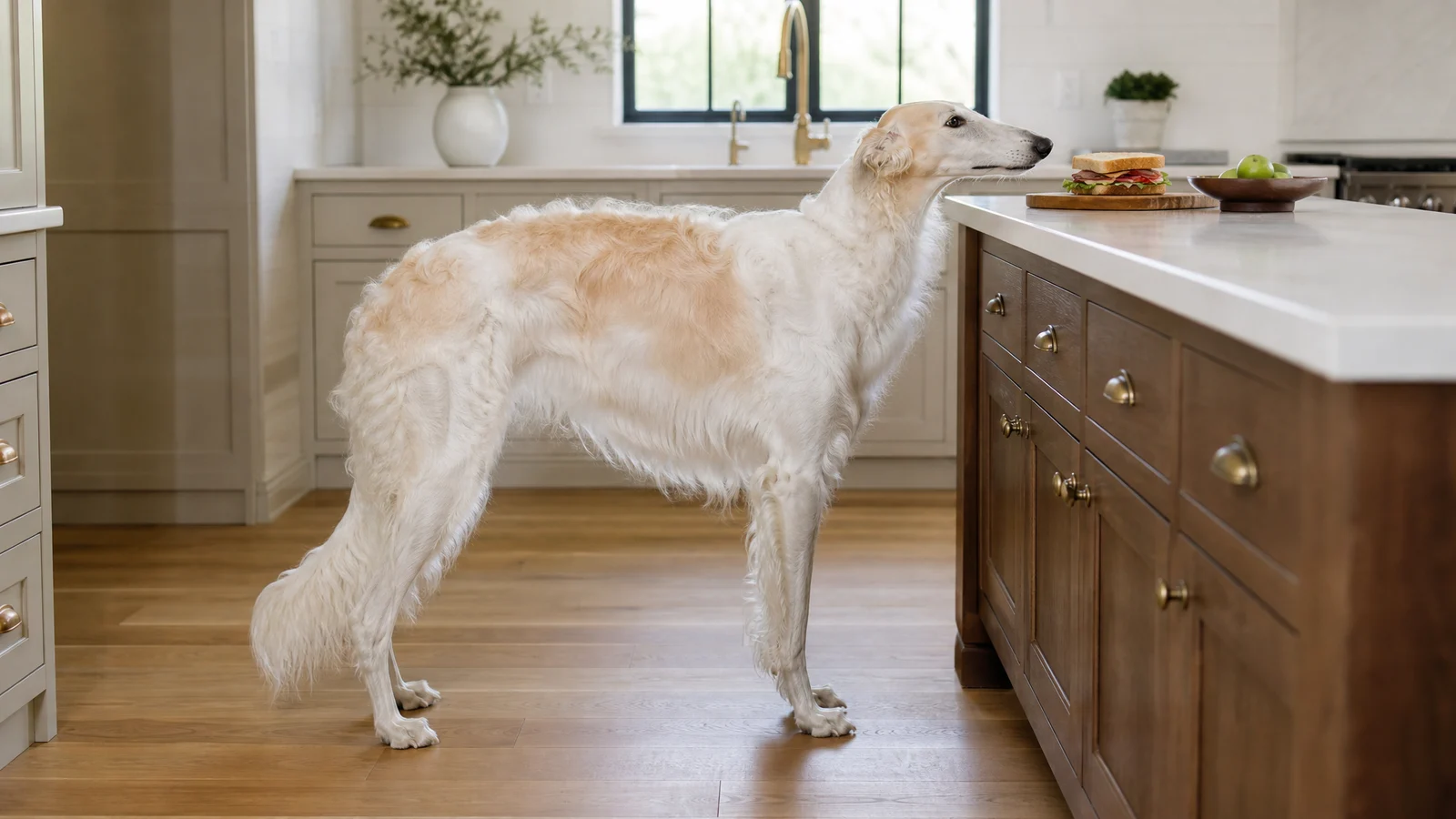 BehaviorKitchen Manners for a Borzoi Who Can Reach the Counter
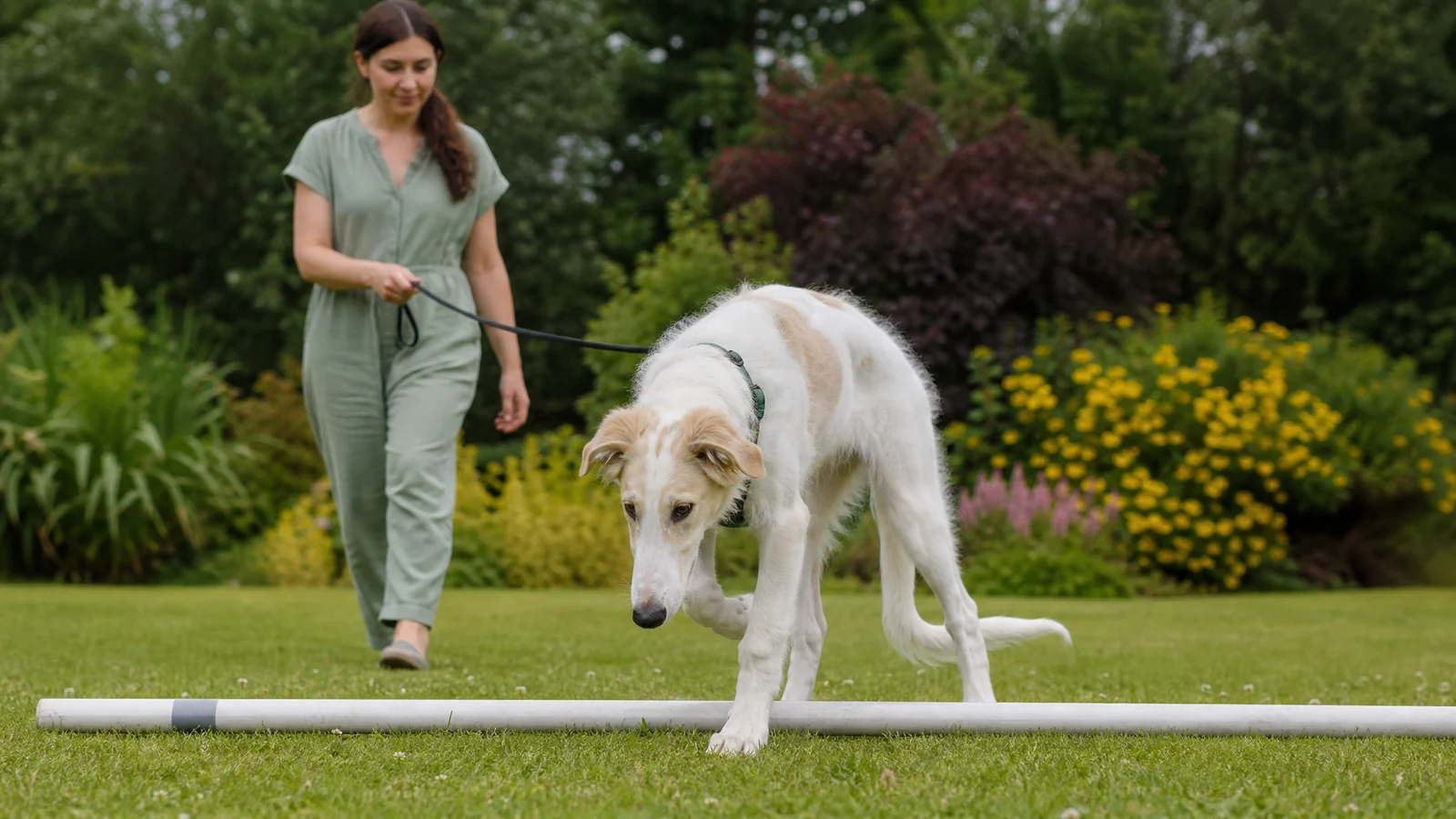 HealthGrowing a Sound Borzoi: Puppy Exercise, Low Jumps and Calm Crate Rest
 BehaviorSocializing a Borzoi With Kids, Dogs and Strangers