 Borzoi
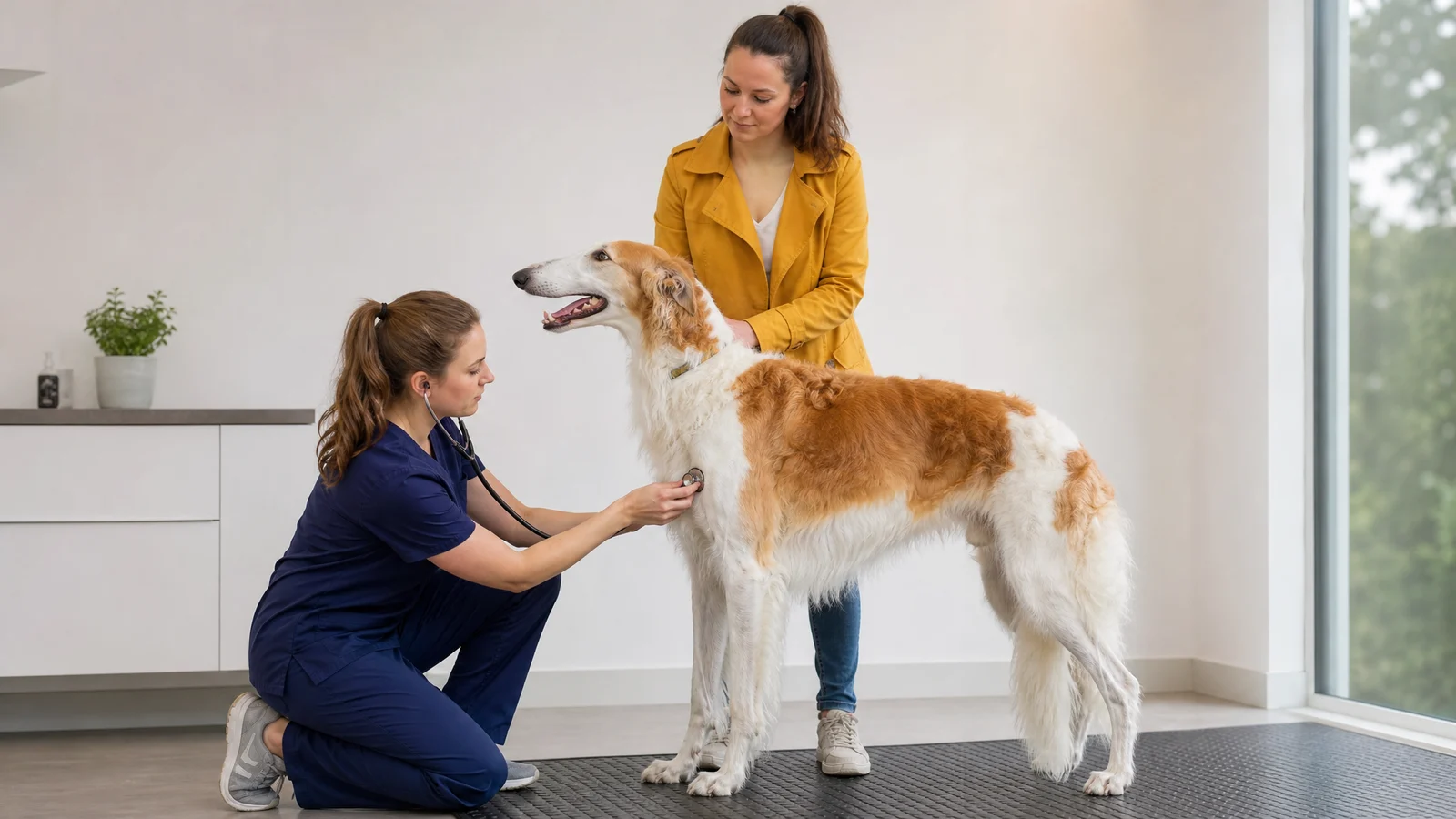
From the puppy months through the senior years, a Borzoi's health worries change shape more than once. Puppies get growing-bone injuries and sometimes car sickness. Young adults reach the age for heart and eye screening, and for the social choices that keep them from getting hurt. Bone cancer and bloat can appear at various ages, and spinal disease typically comes later in life.
None of this predicts what any one dog will face, but the order tells you what to watch now. Timing matters more for a tall, sensitive sighthound, because these dogs react differently to anesthesia and some owners report that their dogs do not forgive rough handling.
We have trained this breed for many years, and a dog who has practiced being examined makes every later medical decision easier. Read on for the life-stage map, the two issues the breed survey flagged most, heart and other screenings, and the handling skills that keep vet visits calm.
Health Risks by Borzoi Life Stage
The breed is generally healthy, so the realistic picture is a short list of named concerns that cluster at different ages. Sorting them by stage keeps you from worrying about everything at once.
Puppy Months
Puppies are more at risk from accidents than from inherited disease. Owners describe serious limb injuries from a knock in play, one kind healing with crate rest and another needing surgery and a long rehab. The hardest part of recovery, by their account, was keeping a lively puppy calm and confined.
Some owners report that an injury during growth left a lasting change in gait. Owners also report car sickness in puppies, which sometimes lasts into adulthood and leaves a dislike of the car. That matters because every vet trip begins there.
Young Adults
This is when heart and eye screening come up. A DNA test for degenerative myelopathy exists, and your vet can advise on when it makes sense for your dog. Social plans matter for health here too, since some owners have limited dog parks after their Borzoi was chased, attacked or hurt, and those who still go choose large parks, quiet hours and known regulars. Our guide to socializing a Borzoi covers safer outings.
Middle and Senior Years
Bone cancer and bloat can appear at various ages, so watch for them throughout your dog's life. Degenerative myelopathy typically begins late in life, somewhere between ages 8 and 14, first as lost coordination in the hind legs. AKC gives a lifespan range of 9 to 14, while the parent club describes 9 or 10 as common with many dogs reaching 12 to 14. Owners also describe lively seniors who act years younger than their age.
Verdict: a generally healthy breed with one or two things to watch at each stage. The screening plan changes as your dog ages.
Osteosarcoma and Your Borzoi's Health
Osteosarcoma is bone cancer, and the club's informal survey named it, alongside bloat, as one of the two issues reported most often, each in more than a small share of dogs. An informal survey is a signal, not a statistic about your dog, so use it to know what to watch for and nothing more.
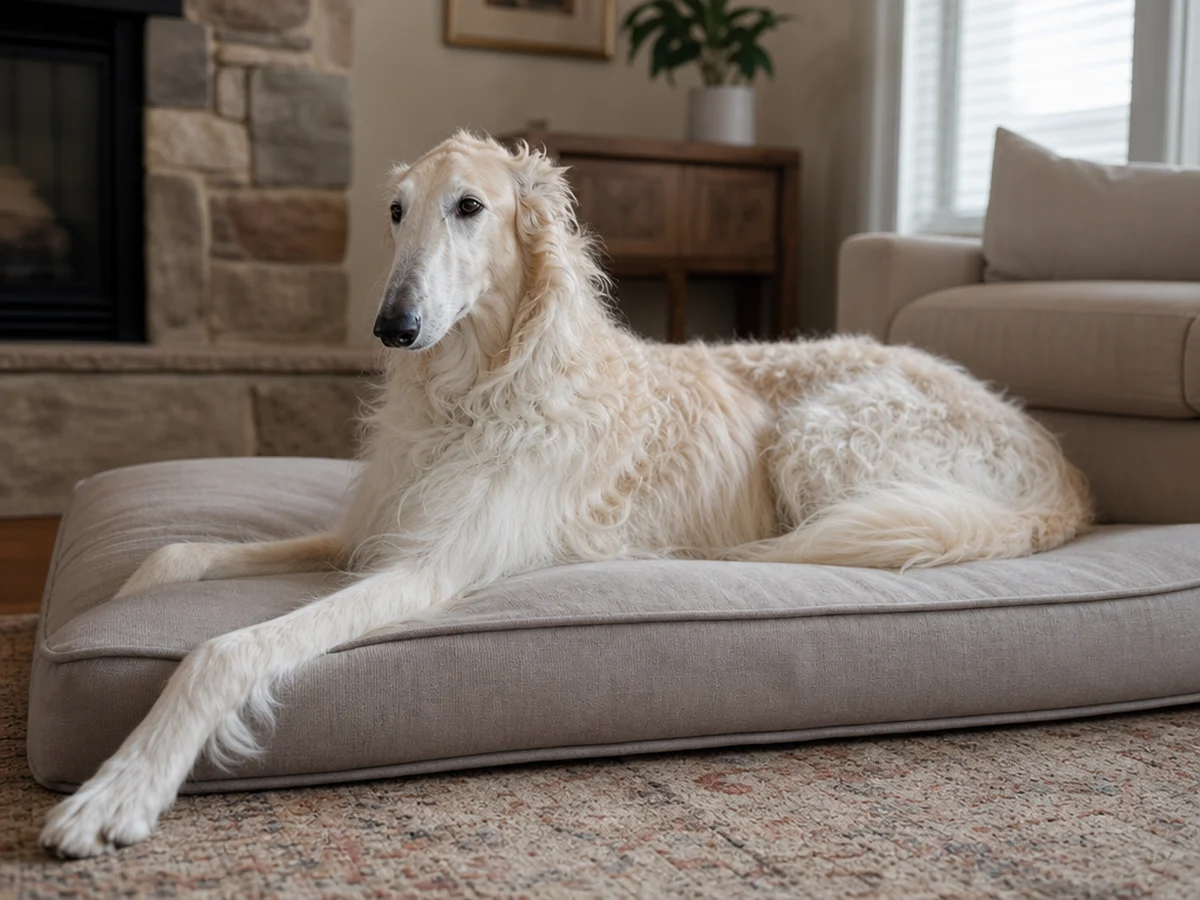
Owners describe bone cancer that showed up as a limp or trouble walking, in dogs of different ages. A limp is easy to excuse in a dog who runs hard, because a strain and a tumor can look identical from the living room. Only an exam and imaging can tell them apart.
Waiting to see whether it passes can cost time you do not get back. Any limp that lingers, and any swelling on a leg, goes to the vet and is never walked off.
How Serious Is Bloat for Borzoi Health?
Serious enough that your plan should exist before the night you need it. Bloat is the other issue in that survey's top group, and it is the one that cannot wait until morning.
What Bloat Is
Bloat is a sudden stomach emergency, which vets call gastric dilatation and volvulus. We leave the medicine to your veterinarian, including the warning signs, because a vet can show you what to look for in a dog of this shape and size. Learn them in a calm appointment, not from a search at midnight.
Why Speed Matters
Once your vet has shown you the signs, treat any of them as an emergency and go. An emergency is only as fast as your preparation, so ask your regular vet to walk you through the signs, find out which clinic is open overnight, and post that number where everyone in the house can see it. A dog who is used to being handled also lets the emergency team examine them faster when you arrive frightened.
Heart Health and Screening Tests
Heart disease in the breed means cardiomyopathy, a disease of the heart muscle, and arrhythmias, meaning irregular rhythm. Two tests come up. An echocardiogram is an ultrasound picture of the heart. A Holter test records the rhythm continuously, with the monitor worn in a vest for about 24 hours while you watch the dog closely so they do not chew the equipment.
Screening matters because disease can be found before any symptoms appear, which is why the breed has a 24-hour Holter program. A 2018 article on that program said what counts as normal on a Borzoi Holter was not yet known. It advised that a dog with more than a handful of extra beats, or any pairs or runs of them, should get a cardiologist's interpretation, an echo, or a repeat Holter in 6 months.
It also said no dog should be judged on the summary page alone. The lesson is humility: a report needs a specialist to read it, and your vet can tell you whether and when this testing makes sense for your dog.
Which Health Screenings Are Worth Doing?
The answer depends on your dog, and the decision belongs to your vet. This table sorts the named screenings by what to ask.
| Screening | What to ask your vet |
|---|---|
| Heart (echocardiogram, Holter) | Whether it suits a pet, at what age, and who should read the results |
| Eyes | Whether an eye exam belongs in routine checkups and when to begin |
| Thyroid | Whether results are read against norms for sighthounds |
| Degenerative myelopathy DNA test | What a result would change for a pet with no signs |
The thyroid row has a breed reason. The UK breed club notes that sighthounds run lower thyroid levels than many dogs, so a number that looks low on a general chart may be ordinary here. Tell the vet you own a sighthound before any thyroid test.
Degenerative myelopathy is a debilitating spinal disease that typically worsens over six months to a year into hind-leg paralysis. Testing is recommended for every Borzoi who may be used for breeding. For a pet, the result is mainly a conversation to have with your vet. Adult-onset heart clearances for breeding dogs are repeated yearly, but a pet's schedule is for your vet to set.
This is general information, not veterinary advice. Screening, anesthesia, feeding and any medication decisions should be made with your veterinarian, and regular checkups are the best place to start.
Calm Vet Visits for a Tall Dog
Every exam asks a big dog to stand or lie still while a stranger handles their body. Dogs who have practiced each piece with rewards cope, and dogs who meet it all for the first time under stress remember it. For a sensitive sighthound, that memory shapes every visit afterward.
Practice Visits
Start with visits where nothing happens. Go to the lobby, hand out treats, and leave before anything is done, so the clinic predicts food and not procedures. Teach vest wearing early as well, with short rewarded sessions building toward longer wear, because a Holter vest is only tolerable to a dog who already ignores one.
For the car, call your vet as soon as car sickness begins, since it tends to worsen if left alone. Some owners found chews in the car, or vet-advised medication before longer rides, helped.
In the Exam Room
Each skill below is a short, rewarded game you can practice at home, in the brief sessions Borzois prefer. Stop while the dog remains relaxed.
- Lying still on one side, the position an echocardiogram needs, rewarded for a few seconds of calm at a time.
- Letting you and then strangers handle the eyes, ears and mouth, with treats arriving as the hands do.
- Standing on a scale for a treat, so weighing becomes routine.
- Counting breaths while the dog rests, the same way each week, so you can show your vet the trend.
- Tooth brushing, because heavy tartar has to be removed under anesthesia and sighthounds are more sensitive to it.
Owners describe dogs who do not forgive rough handling, so ask clinic staff to restrain gently and pause when the dog tenses. Say aloud, before any procedure, that sighthounds are sensitive to anesthesia.
If panic or mouthiness at the clinic worries you, the instincts in common Borzoi behavior problems explain much of it. A little calm practice now saves a stressful hour later.
Book the Baseline Health Visit Today
Borzoi are generally healthy, but they are tall, sensitive dogs with a short list of named concerns and an anesthesia sensitivity your vet needs to hear about early. The best use of that knowledge is a baseline visit while your dog is well, so any change later has something to be measured against.
Call your vet today and book it. Bring a printed list of the concerns named here: osteosarcoma, bloat, heart disease, eyes, thyroid, degenerative myelopathy and anesthesia sensitivity. Regular checkups after that let your vet notice changes sooner, and a dog who has practiced lying still, wearing a vest and having their mouth handled will meet each of those decisions far more calmly.
 BehaviorStop Destructive Chewing in a Borzoi
 Training basicsHow to Potty Train a Borzoi Puppy
 BehaviorBorzoi Prey Drive: Living With the Chase