 Borzoi
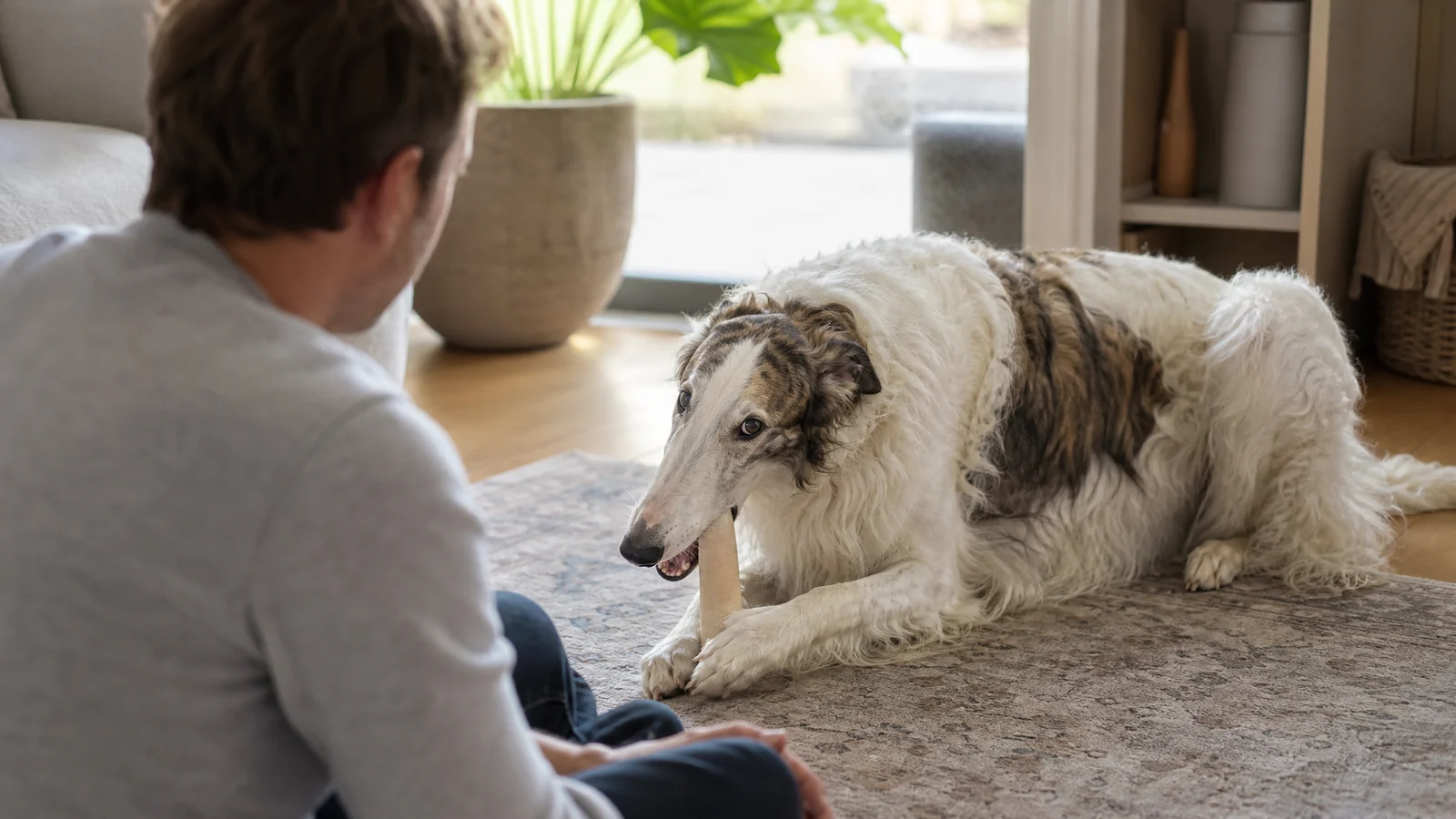
Ordinary chewing advice leans on three habits: repeat one cue until it sticks, drill it daily, and exercise the dog into exhaustion. A Borzoi is a sensitive, independent sighthound, and that toolkit fits poorly. Repetition bores them, insisting on the item often makes it more valuable, and a long walk alone does little for a very large puppy. Management and short, rewarded skills replace all three.
The stakes are practical. Borzoi stay in puppyhood for a long time, so destructive chewing can run for months, and a gnawed door frame or a swallowed sock costs money and sometimes an emergency visit.
We specialize in this breed's behavior, so this guide is built around that long stretch. Read on for a symptom map of what you see and why, fixes for gnawed wood, shredded bedding and mouthed sleeves, same-day prevention, four chew skills in order, and the signs that call for a vet.
Borzoi Destructive Chewing Sorted by What You See
Chewing looks different depending on why it happens, so the damage itself is your best clue. The cause families are teething and development, a need that is going unmet (boredom or too little attention), arousal (excitement that rises faster than self-control), a payoff the dog wants, isolation stress, and medical causes.
The table pairs common sights with the likely families and a first move. Treat it as a map of probabilities, since one dog can show two causes at once.
| What you see | Likely cause families | First move |
|---|---|---|
| Gnawed door frames, table legs, baseboards | Teething, boredom, reach | Block the spot and set a chew there |
| Shredded bedding or cushions while you are out | Isolation stress, trouble settling | Shorten absences and add a stuffed toy |
| Leashes, sleeves or shoes grabbed in excited moments | Arousal, play | Stop play and swap for a toy |
| One forbidden item chosen again and again over a pile of toys | Attention payoff | Reward the approved chew before the grab |
| Swallowed fabric, vomiting, or sudden new chewing | Medical | Call your veterinarian |
We reviewed 89 Borzoi owners' first-hand accounts, and one pattern shapes how to read this map. Owners describe stubbornness centered on what the dog wants, such as the couch, the owner's warm spot or play, rather than on training in general. A dog who learns other cues easily may still ignore the off cue or go dead weight.
Some go straight for the one forbidden item, or push a toy onto the laptop until someone plays. Chewing aimed at attention follows the same pattern and can pass for boredom. Our Borzoi trainability FAQ explains why a quick learner still digs in on certain things.
Destructive Chewing of Door Frames and Furniture Legs
Wood gnawing is the most visible damage, and it usually has overlapping causes. Reading which ones are in play tells you where to put your effort.
Why the Wood Gets Chewed
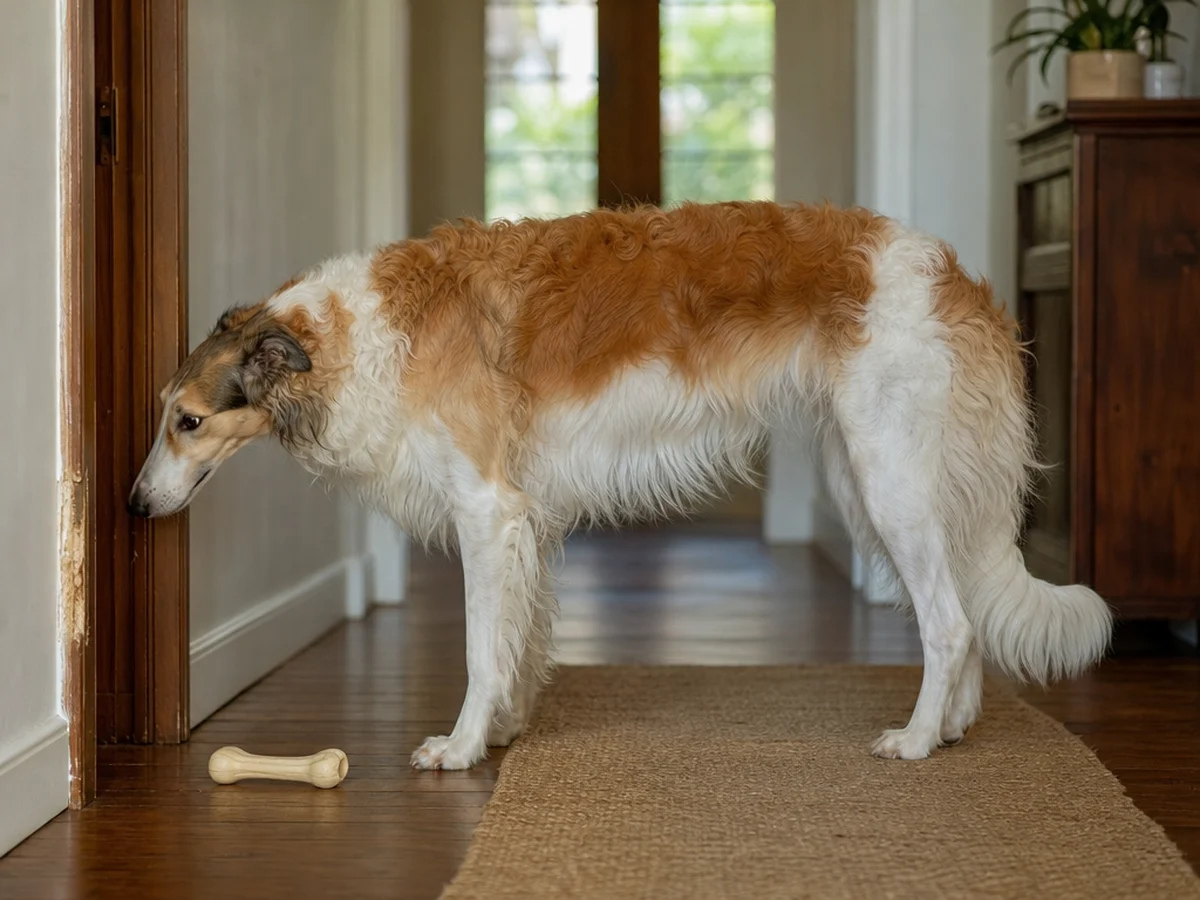
Teething drives it first, because sore gums want something firm with a little give. Boredom adds to it, and reach matters too, since a tall puppy finds door edges and table rungs right at mouth height. The breed club notes that boredom can cause some destructive behavior, that attention and exercise often help, and that the crate is a great benefit during the teething stage.
Because Borzoi are puppies for so long, expect wood gnawing to outlast the timeline most guides promise. Training, temperament and bloodline all play a part, and owners with more than one Borzoi report very different energy from dog to dog, one needing daily play while another is a couch potato. Exercise lowers the pressure, but it does not end teething or move the table leg.
Fixes at the Spot
Fixes work best at the exact place where the damage happens. Block the frame or leg with a gate or pen when you cannot watch, and set a chew down at that location so the behavior has somewhere legal to go. When your Borzoi picks the chew, quietly deliver a treat or a bit of attention, since attention is often the goal.
Note which spot gets chewed and when. Gnawing that happens only when you are in the room points toward an audience, while gnawing that happens mostly in the evening points toward teething soreness or pent-up energy.
Why Does My Borzoi Shred Bedding When Alone?
Bedding is soft, easy to rip and smells like home, which makes it a common target during absences. Two explanations fit most cases. Isolation stress means the dog is upset by being separated from people, and settling trouble means they cannot switch off without company and work on the nearest soft thing. The damage looks the same either way, so the clues matter.
Telling Stress From Restlessness
Stress clues include panting, drooling, trembling, pacing and an over-the-top greeting when you return. The ASPCA describes these stress signs and advises shortening absences to the length where the dog stays relaxed, then progressing more slowly. Nothing we can point to shows Borzoi as a breed are prone to separation distress, so judge your own dog and not the stereotype.
Dogs differ here. Owners describe puppies who cry the moment people leave sight and who improve with gradual, short absences. Some owners say a second Borzoi eased a dog's boredom and distress, while others raised single Borzoi who did fine alone, so a companion is a maybe and not a plan.
First Fixes for Bedding
Start with the setup. Offer a stuffed interactive toy so your leaving predicts something good, and remove any bedding the dog is shredding for now so a swallowed scrap is not the price of practice. Keep departures and returns calm and brief. For longer absences, a crate indoors or an outdoor kennel run are both options, and our guide to Borzoi crate training and time alone covers the steps.
Destructive Chewing by Mouthing Leashes, Sleeves and Shoes
Mouthing things you carry or wear is mostly an arousal problem and less a chewing problem. The dog is not hunting for texture. The mouth simply takes over when excitement outruns self-control.
Why Excitement Turns Into Mouthing
Owners describe young Borzoi who mouth or bite in play when excited, even when they know not to, and who nibble clothing. Movement may add fuel. A swinging leash and a flapping sleeve are moving targets, and the breed standard notes a well-evident visual response, so a sighthound may find them hard to ignore.
The Swap That Pays
At the first grab, go still, end the game, and put a toy or chew where the sleeve was. When the mouth closes on the toy, say your marker word (a short, crisp sound like "yes") so your Borzoi knows exactly which choice earned the reward, then offer a treat or restart the game. Keep a toy in your pocket for the usual hotspots, like walking in the door or clipping on the leash.
Where food alone does not hold a Borzoi, a chase toy can be the reward. Toy interest varies, and some Borzoi ignore thrown toys, so test a few textures. Calm greetings at the door, with a treat on a mat, lower the arousal that sets the mouthing off.
Expect partial results at first. Owners who redirect with toys, chews and treats, and who end play when the puppy gets too wound up, report improvement rather than a clean finish, and shoes and shirts often outrank toys for a long while.
Immediate Destructive Chewing Prevention Before Any Training
Prevention teaches nothing, but it stops the rehearsal today, and every successful chew is practice that strengthens the habit. Set these up first and begin skills once the setup is running. In a breed with such a long puppyhood, plan to keep management in place for longer than feels necessary.
Control Access and Size the Crate
Owners report Borzoi going over and through barriers, from a jumped fence to boards pushed aside and a gate opened. Pick gates and pens with that in mind and test them while you are home. The breed club's ideal adult crate is 26 inches wide, 36 high and 48 long, so a grown Borzoi can stand, turn around and lie down uncramped. A crate sized for an ordinary large breed will be too small.
Put the crate in the room you use most, door open, and feed meals inside with a cue such as "crate" as the dog steps in. Close the door only after a few days, once they enter comfortably on their own, and never force them in. Most Borzoi grow to love their crate, so the setup is usually easy.
Safe Chews, Rotation and Supervision
Next, decide what is allowed and who is watching. These steps work the same day:
- Put shoes in a closet, laundry in a lidded hamper, and remotes, glasses and food out of reach each night, because owners report Borzoi who lift take-out from countertops.
- Offer a few approved chews at a time, such as a stuffed rubber toy or a slow feeder, and swap them daily so a plain toy feels new again.
- Take away long edible chews once they are small enough to swallow, and trade rather than grab, since owners describe a hard grip on found items.
- Keep your dog in sight or in the crate or pen, and leave a stuffed toy in the crate so confinement has a good job.
- Skip rope and plush toys when you are not watching, because swallowed threads and stuffing turn into a vet problem.
Which Chew Skills Should a Borzoi Learn First?
Teach these in order, because each skill builds on the one before and the first pays off fastest. The evidence so far backs only reward-based methods for training dogs, and that suits a sensitive hound whose owners say they do not forgive rough handling. Stop each session early while your dog still wants more, since repetitive drills bore this breed.
- Trade comes first. Hold a treat better than the item at nose level, and when the mouth opens, say your marker and give the treat. Start with boring objects, hand the item back sometimes, then add a cue like "trade" once the release is smooth. Owners report a very high-value treat working well for on and off cues.
- Take it and drop builds on the trade. Offer a toy, say "take it," then ask for "drop" and reward the release so that giving up an item means the game continues. Work up from toys to chews to tempting objects such as socks, one step at a time.
- Settle on a mat teaches what to do once the chew is in hand. Start by rewarding a down on the mat, then ask for a little longer each time, then offer a chew while they stay put. Our guide to settling indoors adds detail.
- Chew choice finishes the set. Present two approved items, reward the dog for picking one, and swap the loser out tomorrow. Because toy interest varies, keep notes on which texture wins.
Move to the next skill when the current one works in a different room. One sighthound-specific tip: if your dog grabs a prize and bolts, do not chase. A running Borzoi turns a stolen sock into a game, so walk away, rustle the treat bag, and trade when they come to you. Bringing things to you then becomes the better deal.
Measuring Progress and Spotting Medical Chewing
Progress rarely looks like chewing stopping overnight, especially in a breed with a long puppyhood. It looks like fewer successful grabs, quicker recoveries and more chewing of the right things, so check weekly against these markers.
Markers of Real Progress
- Damage is falling while your management stays steady, which tells you the plan is working rather than luck.
- Your dog picks an approved chew first, or settles with one after a walk or play.
- They hand over a found item for a treat, with a loose, relaxed body.
- Mouthing of sleeves and leashes comes in shorter bouts and stops sooner after the swap.
Signs That Call for the Vet
Some chewing is medical rather than behavioral. Call your veterinarian if chewing begins suddenly in a dog who had not done it, if they swallow fabric or other non-food items, if vomiting appears, or if you see signs of mouth or gut pain such as dropping food, pawing at the mouth, refusing chews or a tense, hunched belly. Regular vet visits also give you a chance to ask about teeth and mouth health as your Borzoi grows.
If steady management has not moved things after weeks, or you see stress when the dog is alone, ask your vet first and then a behavior professional. Titles are loose. The word "behaviorist" is restricted to board-certified veterinarians, while anyone else can use it with no required education. Choose someone who uses reward-based methods.
Management Holds, Skills Finish Borzoi Destructive Chewing
Management holds the line and skills finish the job. Gates, a right-sized crate and a nightly put-away routine stop the rehearsal now, but only a dog who trades, settles and picks an approved chew will keep their teeth off the furniture once the gate comes down. Expect a gradual taper and not a switch. Over the next two weeks, this schedule puts that into practice.
On days 1–3, set up prevention: gates or a pen, the crate in your main room with meals inside, the nightly reset, and a small rotation of safe chews plus a stuffed toy. On day 4, start the trade with boring items and reward every release. Around day 7, add take it and drop, and move the trade up to chews.
On days 9–10, begin the mat and offer a chew while your dog settles on it. By days 12–13, run the chew choice game. On day 14, check the progress markers above. If damage is falling, keep the setup going for months. If chewing is sudden, involves swallowed items or ignores steady management, book the vet visit.
Chewing in a Borzoi is rarely defiance. It is a very large, slow-maturing youngster meeting an open floor, plus a sighthound's own opinion about what is worth having. A closed gate prevents the damage while you teach, and a calm trade, a mat and a good chew give them something better to want, so the chewing fades because the right option pays.
 Training basicsHow to Potty Train a Borzoi Puppy
 BehaviorBorzoi Prey Drive: Living With the Chase
 BehaviorIs the Dog Park Safe for a Borzoi? Chase Play and Gang-Ups